History of the Iranian Ayatollah
Safavid Clerical Roots
The Birth of a Clerical State
The story of modern Iran's clerical power begins in 1501. A charismatic young leader, Shah Ismail I, conquered Tabriz and declared his new Safavid Empire would have a state religion: Twelver Shi'ism. This was a radical move. At the time, the vast majority of Persians were Sunni Muslims. Ismail's declaration was more than a spiritual choice; it was a political act designed to carve out a unique identity for his empire, distinct from the powerful Sunni Ottoman Empire to the west.
This created an immediate problem. Iran lacked the homegrown Shi'a religious scholars, or Ulama, needed to teach the population, run the courts, and administer the new faith. To solve this, the Safavid shahs launched a massive recruitment drive. They invited hundreds of eminent Shi'a scholars from the Arab lands of Jabal Amil (in modern Lebanon), Bahrain, and southern Iraq to migrate to Iran. In exchange for their expertise, the state offered them land, high-ranking positions, and financial support. This migration fundamentally reshaped Persian society.
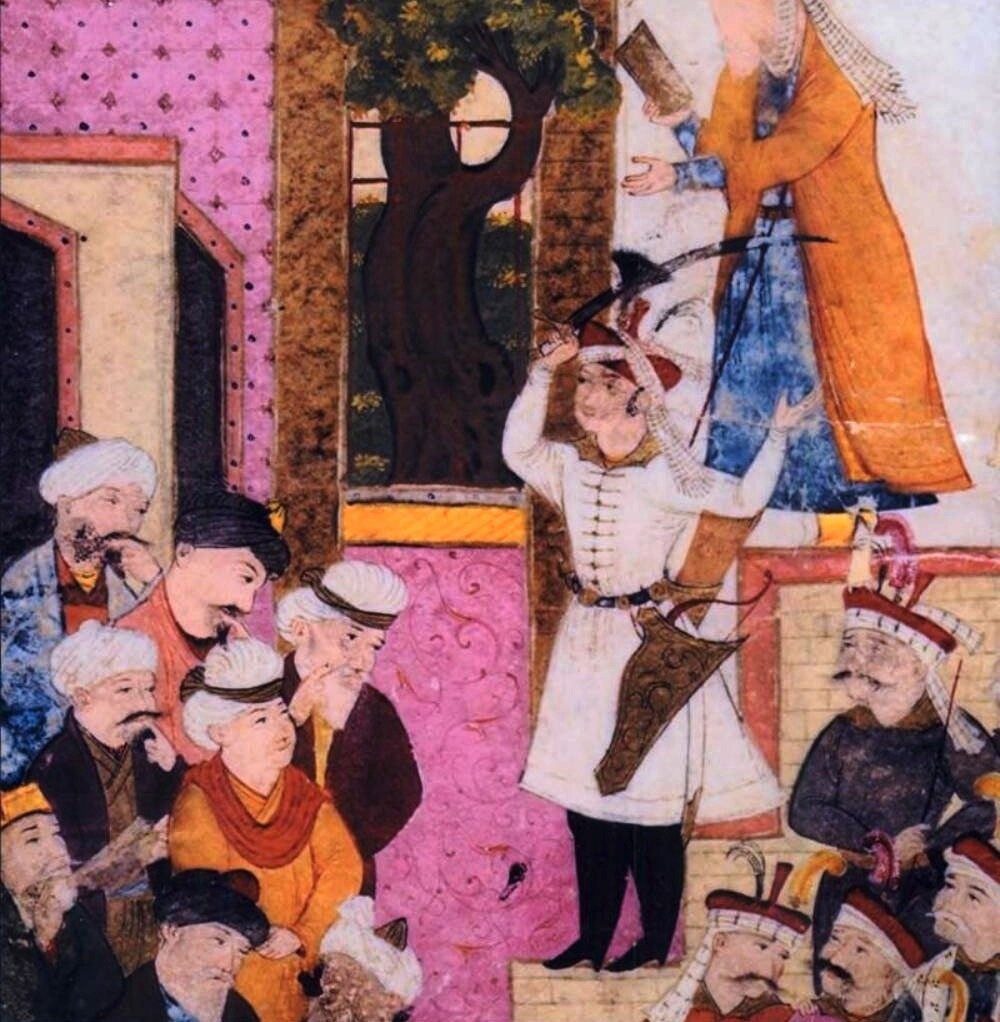
These newly arrived scholars were tasked with building a nationwide religious infrastructure. They established madrasas (seminaries) to train a new generation of Iranian clerics, took control of the legal system, and managed vast religious endowments called 'waqf'. A formal partnership was born: the Safavid state provided the power and funds, and the Ulama provided the religious legitimacy and social governance. This alliance cemented the clergy's position not just as religious guides, but as a distinct and powerful social class with deep roots in law and education.
The School of Isfahan
By the early 17th century, the Safavid capital had moved to Isfahan, which quickly blossomed into a stunning centre of art, architecture, and intellect. Here, a new philosophical movement known as the 'School of Isfahan' emerged, led by thinkers like Mir Damad and his brilliant student, Mulla Sadra. Their project was ambitious: to synthesise Shi'ite theology with the rationalist traditions of Greek philosophy, particularly the ideas of Plato and Aristotle, along with Islamic mysticism (Irfan).
This intellectual flourishing wasn't just an academic exercise. It gave the Iranian clergy a sophisticated and unique theological framework. They weren't simply enforcing religious law; they were engaging in complex metaphysical debates about the nature of existence, knowledge, and God. This elevated the status of the top clerical ranks, who became known not just as jurists, but as philosophers and sages.
The Two Pillars of Power
The Safavid system created a 'dual structure' of authority that would define Iranian society for centuries. On one side stood the Shah, who controlled the military, the bureaucracy, and foreign policy—the power of the 'sword'. On the other stood the Ulama, who controlled the legal system, education, and public morality—the power of the 'pen'.
This was less a rivalry and more a symbiotic alliance. The Shahs needed the clergy to grant their rule religious legitimacy in the eyes of the populace. The clergy, in turn, relied on the Shah's power and patronage to fund their institutions and enforce their legal rulings. This arrangement created a powerful, semi-independent clerical establishment.
By taking over the entire judicial system, the clergy gained a monopoly on the application of Sharia law. All contracts, marriages, divorces, and criminal cases went through their courts. This gave them immense influence over the daily lives of every person in the empire. It wasn't the Shah's decree but the cleric's ruling that settled a property dispute or validated a will. This deep-seated judicial authority was a key source of their power and prestige, establishing a precedent for clerical involvement in state affairs that would echo through Iranian history.
Time to check your understanding of these foundational concepts.
What was the most significant reason that Shah Ismail I's declaration of Twelver Shi'ism as the state religion in 1501 was considered a radical act?
How did the Safavid shahs solve the initial shortage of Shi'a religious scholars (Ulama) needed to establish the new state religion?
The Safavid experiment demonstrates how a political decision—to adopt a new state religion—can fundamentally restructure a society. It created a powerful, educated, and wealthy clerical class whose influence was woven into the very fabric of Iranian life through law, education, and philosophy.