History of the Canary Islands
Guanche Civilization
The First Islanders
Long before Spanish ships arrived, the Canary Islands were home to a unique people known as the Guanches. They were the original inhabitants, a civilization with deep roots and a culture perfectly adapted to the volcanic landscapes. While the term "Guanche" originally referred only to the indigenous people of Tenerife, it is now commonly used for all the pre-colonial inhabitants of the archipelago.
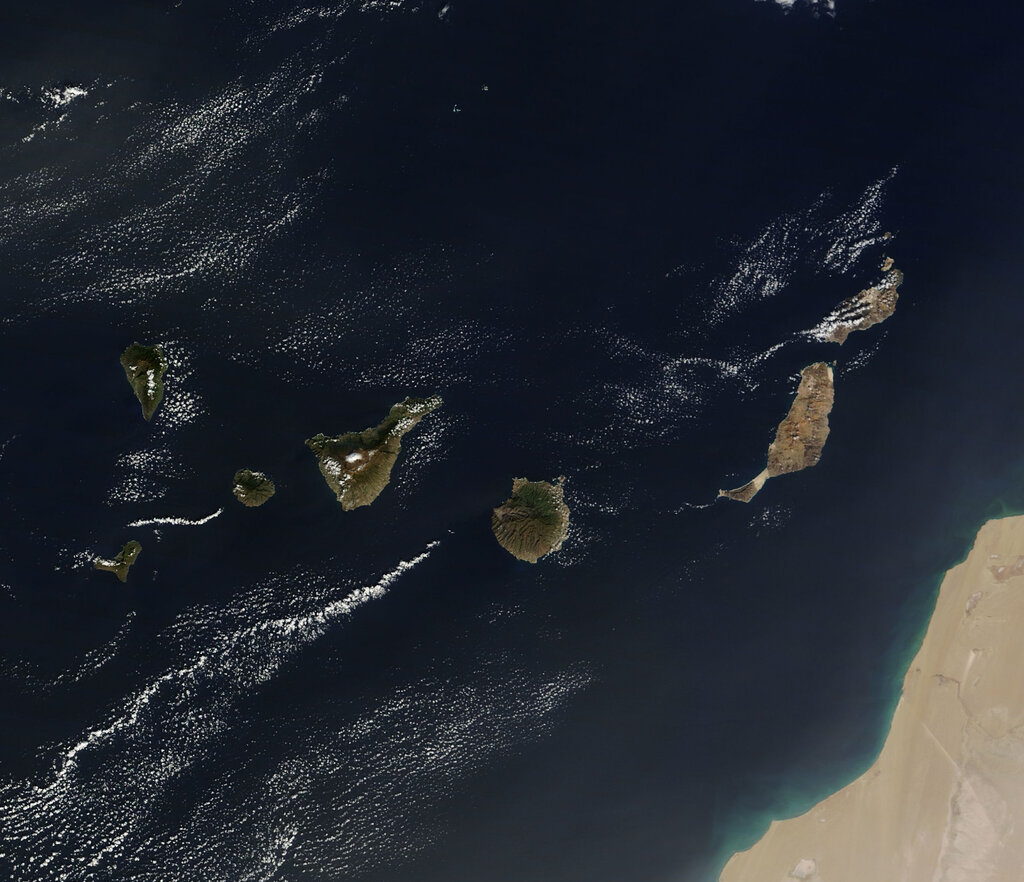
So where did they come from? The evidence, from linguistics to genetics, points strongly to North Africa. The Guanches were descendants of the Amazigh, or Berber peoples, who have inhabited North Africa for millennia. It’s believed they migrated to the islands in several waves, likely beginning around the 1st millennium BCE. How they made the 60-mile sea crossing is still a mystery, as they appear to have had limited knowledge of seafaring by the time Europeans arrived, suggesting they may have lost the skill over centuries of isolation.
Guanche
noun
The indigenous Berber people who inhabited the Canary Islands before the Spanish conquest in the 15th century.
A Society of Kingdoms
Guanche society was not a single, unified entity. Each island was a world of its own, often divided into several territories or kingdoms. On Tenerife, these were called menceyatos, each ruled by a king known as a mencey. Other islands had similar structures with their own local titles.
Society was hierarchical. At the top was the king, who held both political and religious authority. Below him was a class of nobles, and the majority of the population were commoners who farmed, herded livestock, and fished. A council of elders often advised the king, and justice was administered through a set of laws and customs passed down through generations.
Each island functioned as an independent political unit, often subdivided into smaller kingdoms that sometimes cooperated and other times clashed.
Culture and Beliefs
The spiritual world of the Guanches was rich and complex. They were polytheistic, worshipping various gods and spirits associated with nature. Their supreme being was often a sky god, known as Achamán on Tenerife, the creator of all things. They also believed in malevolent spirits, like Guayota, the demon who was said to live inside the Teide volcano.
Rituals and ceremonies took place in specific natural sites, like mountains or caves, which were considered sacred. These places, called almogarén, were used for offerings and prayers.
One of the most fascinating aspects of Guanche culture is their treatment of the dead. Like the ancient Egyptians, they practiced mummification, particularly for their nobility. The deceased were carefully embalmed using a mixture of resins, herbs, and other materials, then wrapped in animal skins and placed in burial caves. This practice shows a deep respect for their ancestors and a belief in an afterlife.
Living with the Land
Daily life for the Guanches was tied to the land and the resources of the islands. Their economy was based on a mix of agriculture and animal husbandry. They cultivated barley, wheat, and beans, often on terraced fields built into the hillsides. Goats were their most important livestock, providing milk, cheese, and meat. They also raised sheep and pigs.
A staple food was gofio, a flour made from roasted grains, which is still a key part of the Canarian diet today.
Many Guanches lived in natural caves, which provided excellent shelter from the elements. They also built simple stone houses with roofs made of wood and branches. Their material culture was functional, crafted from what the islands provided. They made pottery by hand without a potter's wheel, created tools from volcanic stone and bone, and fashioned clothing from tanned goat skins and woven plant fibers.
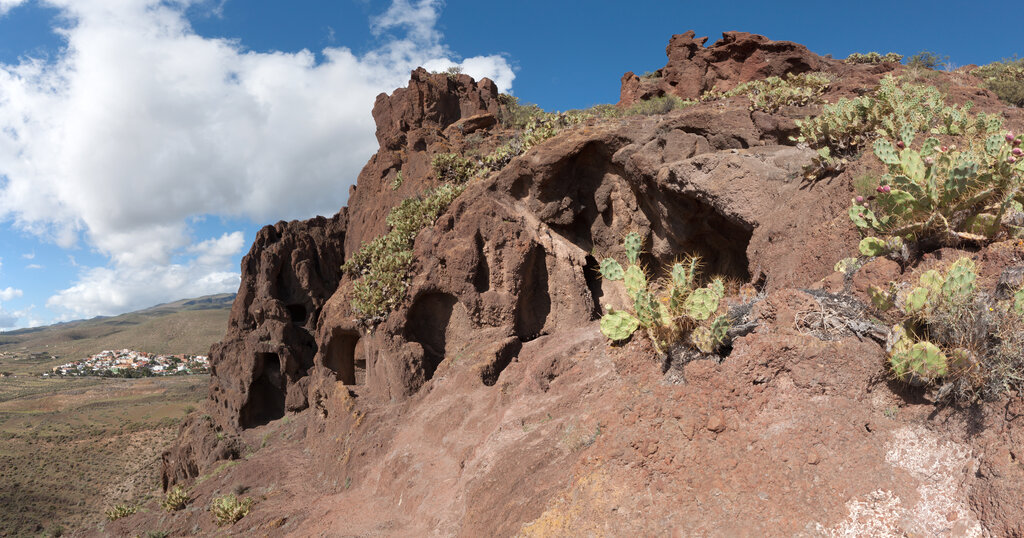
Archaeological findings, from rock carvings called petroglyphs to the remains found in burial caves, continue to provide invaluable insights into this lost civilization. They paint a picture of a resourceful and resilient people who built a thriving culture in isolation for over a thousand years.
Ready to test your knowledge? Let's see what you've learned about the original inhabitants of the Canary Islands.
What is the most widely accepted origin of the Guanche people?
On the island of Tenerife, Guanche territories were known as...
The Guanche civilization provides a crucial foundation for understanding the history of the Canary Islands, showcasing a culture uniquely adapted to its island environment long before the arrival of Europeans.