History of Disney's Animal Kingdom
Rohde's Living Philosophy
The 'Nahtazu' Philosophy
To understand Disney's Animal Kingdom, you first need to understand the philosophy of , the lead Imagineer behind its creation. From the very beginning, the park was designed to be something different. It wasn't just another collection of rides and shows. It was an argument, a statement about the intrinsic value of nature.
The team coined a phrase to capture this idea: Nahtazu. It's a playful, slightly slurred pronunciation of "not a zoo," and it became the park's guiding principle. A traditional zoo often presents animals in sterile, scientific enclosures for human observation. A traditional theme park presents a perfected, fictional world for human entertainment. Animal Kingdom aimed for a third path. It would be a place built around the needs and realities of the animals, where the human guest is the visitor in their world, not the other way around.
The park's core message is simple: nature holds value in and of itself, separate from any utility it might provide to humans.
Birth of a Kingdom
The concept for the park was born during a now-legendary brainstorming retreat in Santa Barbara, California, in 1989. Michael Eisner, then Disney's CEO, wanted a new park with a theme centered on animals. The gathered to figure out what that could mean. It was here that the foundational structure of the park took shape, built upon what they called the 'three pillars' of animal life.
These pillars were: animals of the present (the Real), animals of the past (the Extinct), and animals of the imagination (Imaginary). This framework gave them a powerful way to organize their ideas. The 'Real' would be the live animals from Africa and Asia. The 'Extinct' would bring dinosaurs back to life. And the 'Imaginary' would explore mythical creatures like dragons and unicorns. Every major land in the park, both on opening day and in later expansions, springs from one of these three categories.
Landscape as the Star
A key part of the 'Nahtazu' strategy was to flip the script on typical theme park design. In the Magic Kingdom, the architecture is the star. Cinderella Castle is an icon, a pristine landmark that dominates the view. In Animal Kingdom, the landscape is the star. The architecture is designed to be subservient, to look weathered, aged, and even secondary to the lush, sprawling habitats.
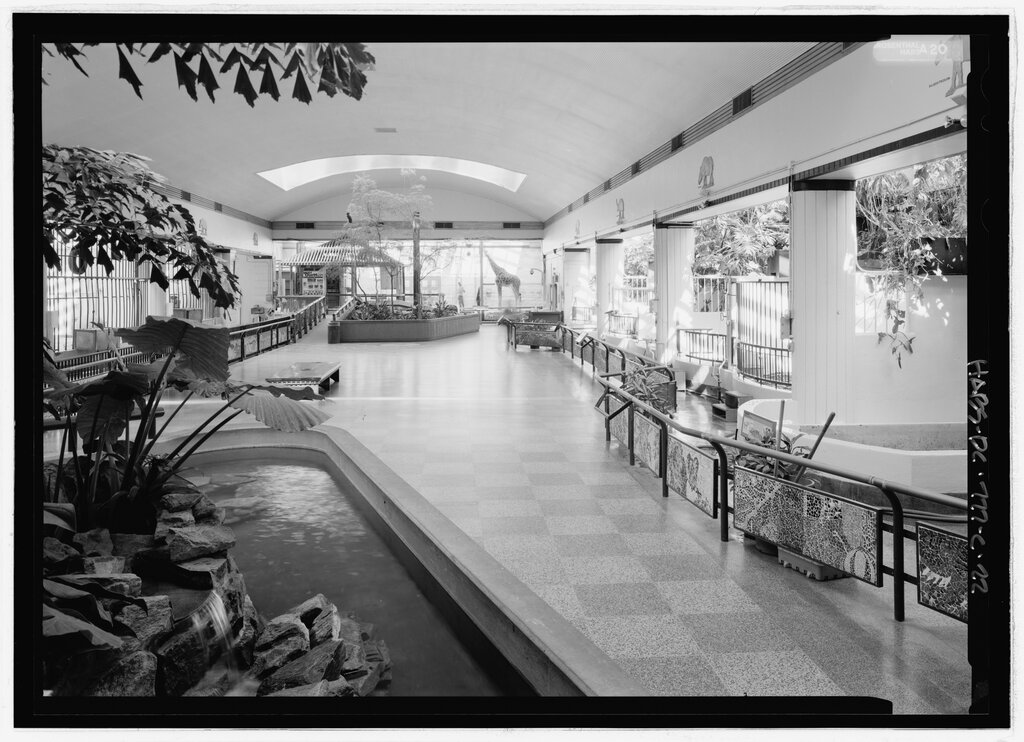
This is a deliberate choice to create what Rohde calls 'dirty' realism. The paths are cracked. The walls are stained. The paint is peeling. This isn't because of neglect; it's a storytelling technique. It creates a sense of history and authenticity, making guests feel they've stumbled upon a real place with a past, not a freshly built attraction. By prioritizing biological realism and letting the landscape dominate, the park reinforces its central theme: this is the animals' world, and we are just passing through.
This philosophy of a living, unpredictable environment, where the story is told through authentic detail and the dominance of the natural world, is what sets Animal Kingdom apart.