History and Natural Wonders of Argentina, Chile, and Patagonia
Pre-Columbian Patagonia
The First Peoples of Patagonia
Long before European ships charted its rugged coastline, Patagonia was home to resilient and resourceful peoples. This vast region at the southern tip of South America, with its windswept plains, jagged mountains, and frigid islands, was not an empty wilderness. It was a homeland, navigated and understood by diverse cultures who adapted masterfully to its demanding environments.
These groups were not a single entity but a collection of distinct societies. The most prominent were the Tehuelche, who roamed the vast steppes; the Mapuche, who expanded from the west; and the Selk'nam, who inhabited the isolated island of Tierra del Fuego.
Nomads of the Steppe
The Tehuelche people were the quintessential Patagonian hunters. Their world was the immense, semi-arid steppe east of the Andes. They lived in small, mobile family groups, following the seasonal migrations of their primary prey: the guanaco, a wild relative of the llama. Every part of the guanaco was used—its meat for food, its hide for clothing and shelter, and its bones for tools.
Their social structure was flexible and built for movement. Shelters, called toldos, were temporary structures made from guanaco hides stretched over a wooden frame, easily dismantled and transported. This nomadic lifestyle was a direct response to an environment where resources were scattered and constantly shifting.
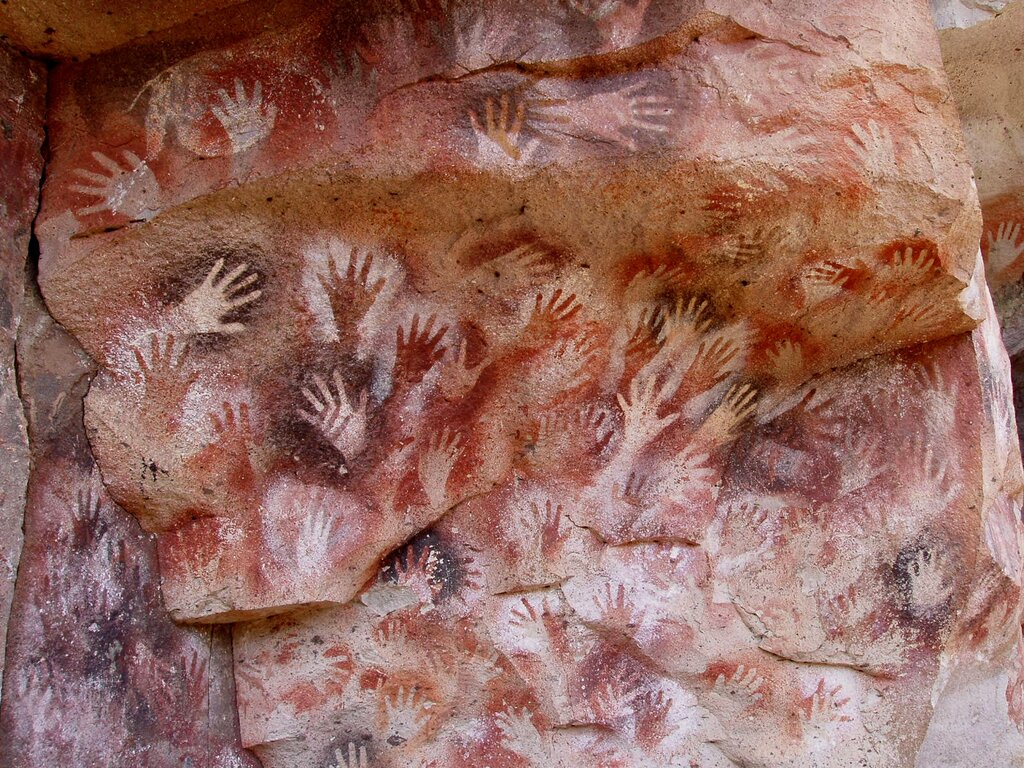
Rock art, like that found in the Cueva de las Manos, offers a window into their world, depicting hunting scenes and the hands of community members, a record of life stretching back thousands of years.
Mapuche Influence
To the west, in the forested valleys of the Andes and beyond, lived the Mapuche. Originally from what is now central Chile, their influence and population began expanding into Patagonia in the centuries before European arrival. Unlike the nomadic Tehuelche, many Mapuche groups practiced agriculture, cultivating crops like potatoes and maize, and had more settled lifestyles.
Their social organization was more complex, based on larger family lineages and led by chiefs known as loncos. As they moved eastward, they brought their language, beliefs, and technologies, leading to a process of cultural exchange with the Tehuelche. This interaction, sometimes peaceful and sometimes violent, reshaped the cultural landscape of northern Patagonia.
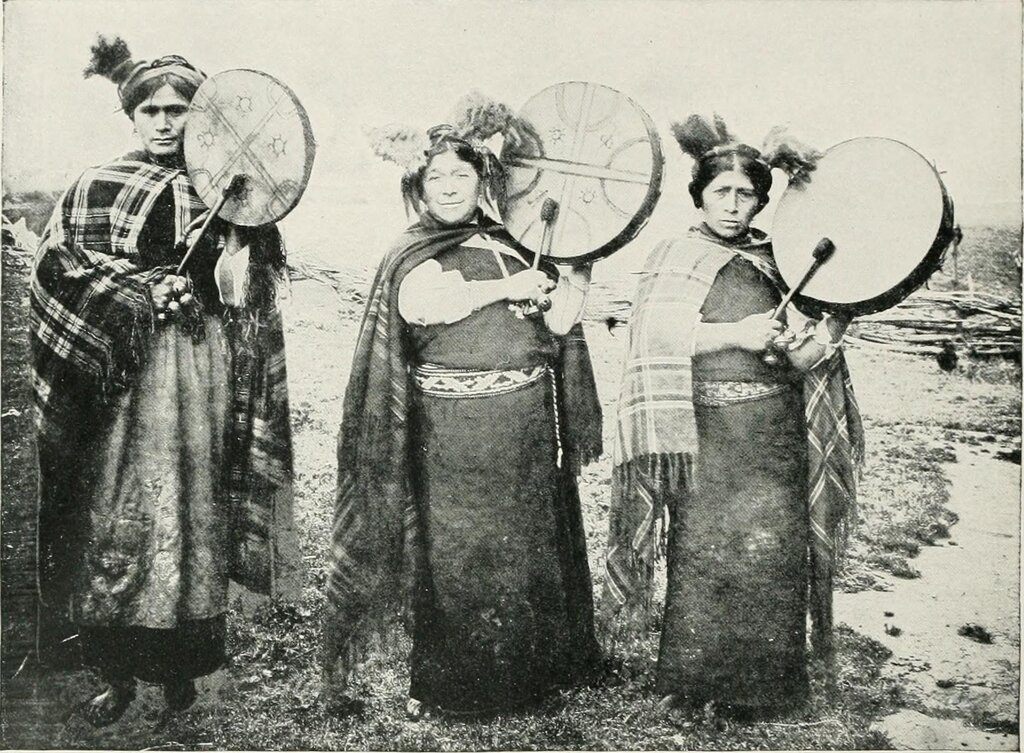
Life at the End of the World
On the island of Tierra del Fuego, separated from the mainland by the treacherous Strait of Magellan, lived the Selk'nam. They were hunter-gatherers who lived in complete isolation from mainland groups for millennia, developing a unique culture adapted to one of the world's harshest climates.
Like the Tehuelche, the Selk'nam relied heavily on hunting guanacos. However, their territory was smaller and more rugged. They lived in family units, moving between the forests and coastlines of the island. They endured frigid temperatures with minimal clothing, relying on animal grease for insulation and the warmth of constant fires, which gave the island its name, "Land of Fire."
The Selk'nam had a remarkably rich spiritual and ceremonial life. Their most important ritual was the Hain, an elaborate initiation ceremony for young men that involved intricate body paint and masked spirits.
Masters of a Harsh Land
The indigenous peoples of Patagonia were not simply surviving; they were thriving. Each group developed a deep, practical knowledge of their environment, allowing them to build complex societies in a region many would later consider uninhabitable. Their lifestyles were elegant solutions to the challenges of the land.
| Group | Primary Region | Lifestyle | Key Resource |
|---|---|---|---|
| Tehuelche | Patagonian Steppe | Nomadic Hunter-Gatherer | Guanaco |
| Mapuche | Andean Forests/Valleys | Settled/Semi-Nomadic | Agriculture |
| Selk'nam | Tierra del Fuego | Nomadic Hunter-Gatherer | Guanaco, Marine Life |
These societies represent a profound story of human adaptation and cultural diversity, written across the vast landscapes of southern South America long before the arrival of outsiders.
Now, check your understanding of these resilient cultures.
What was the primary lifestyle of the Tehuelche people who lived on the vast steppes of Patagonia?
Which of the following describes a significant difference between the Mapuche and the Tehuelche societies?
The story of these first peoples is a crucial part of understanding Patagonia's deep and complex history.