Historiography Unpacked
Introduction to Historiography
What is Historiography?
History isn't just about what happened in the past. It’s also about how we know what happened. That’s where historiography comes in. It’s the study of how history is written and interpreted. Instead of looking at past events, historiography looks at the historians themselves.
Think of it this way: History is the story. Historiography is the study of how that story has been told over time.
Why does this matter? Because the way a story is told shapes our understanding of it. Two historians can look at the exact same event—say, the American Revolution—and come to very different conclusions. One might focus on the political leaders and their ideals of liberty. Another might focus on the economic motivations of merchants, or the experiences of enslaved people. Neither is necessarily wrong, but they are telling different stories based on the questions they ask and the evidence they prioritize.
Historiography
noun
The study of the methods of historians in developing history as an academic discipline, and by extension, any body of historical work on a particular subject.
Understanding historiography allows us to read history with a more critical eye. It helps us see that historical narratives are not simply collections of facts, but are crafted arguments made by interpreters with their own perspectives and methods.
A Story of Storytelling
The way we write history has evolved significantly. Early historical accounts, like the epic poems of ancient Greece or the chronicles of medieval monks, often blended myth with fact. Their goal wasn't always objective truth, but to glorify a king, teach a moral lesson, or explain a divine plan.
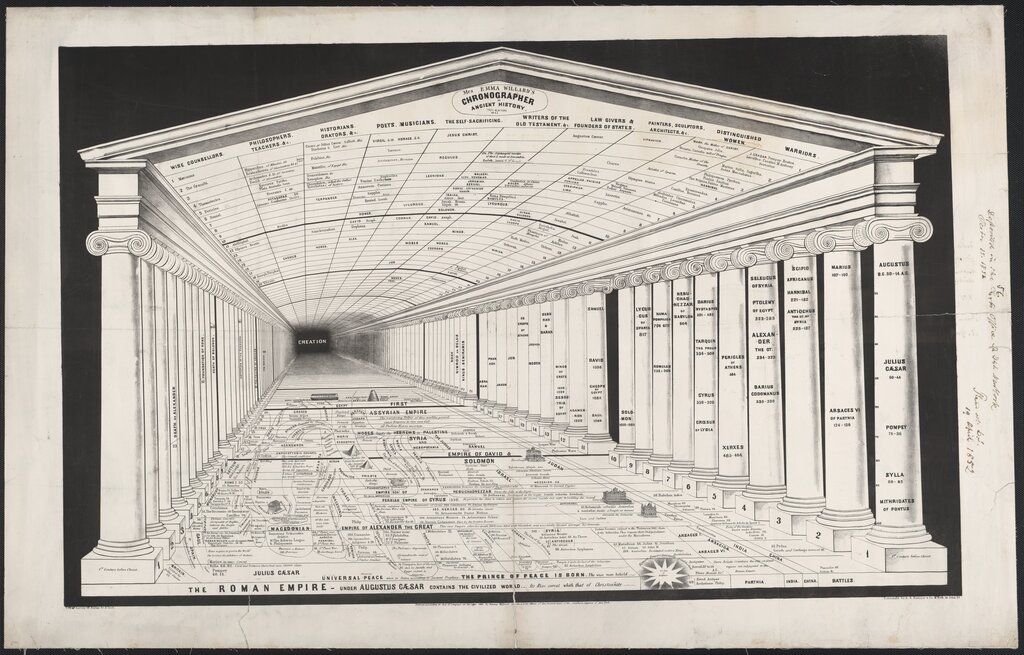
Thinkers like Herodotus and Thucydides in ancient Greece began to change this. They started asking critical questions about their sources and tried to explain events in terms of human actions rather than the whims of the gods. This was a major shift toward a more analytical approach.
In the 19th century, history became a professional academic field. Historians like Leopold von Ranke championed a "scientific" approach. They believed historians should use primary sources—firsthand accounts and original documents—to reconstruct the past exactly "as it actually was." The focus was on objectivity, detailed evidence, and political history.
But the story didn't stop there. In the 20th century, new schools of thought emerged. The Annales School in France began looking at long-term social and economic structures instead of just politics and wars. Marxist historians focused on class conflict as the main driver of history. More recently, historians have started paying more attention to the stories of women, minorities, and everyday people, whose experiences were often left out of traditional narratives.
The Historian's Craft
So how do historians build their narratives? It's a process of interpretation. They don't just find facts and line them up. They select, arrange, and analyze evidence to build a coherent argument.
History is what’s produced when a historian looks at the residue of the past – the fragments, material, sources, or clues left behind – and analyzes, interprets, and pieces together a story or argument about what happened.
This process involves several key steps:
- Asking a Question: Historical inquiry starts with a question. For example, not just "What happened in the French Revolution?" but "How did the price of bread influence the outbreak of the French Revolution?"
- Gathering Evidence: Historians seek out primary sources (letters, laws, artifacts) and secondary sources (books and articles by other historians).
- Analyzing Sources: They evaluate the evidence, considering who created it, why they created it, and what biases it might contain.
- Constructing an Argument: Finally, they weave the evidence into a narrative that answers their initial question. This narrative is their interpretation.
Because this process relies on interpretation, historiography is a conversation. Historians are constantly building on, challenging, and refining the work of those who came before them. By understanding this, we can appreciate history not as a fixed set of facts, but as a dynamic and ongoing effort to understand our past.
What is the primary focus of historiography?
Two historians study the industrial revolution. One focuses on the inventions and economic growth, while the other focuses on working conditions and class conflict. Historiography suggests that...
Studying historiography gives us the tools to think like a historian and to understand the many ways the past can be seen.