Historical Echoes Hitler's Rise and Modern Politics
Post-WWI Germany
The Aftermath of Defeat
World War I ended in November 1918, leaving Germany in a state of shock and chaos. The German Empire had collapsed, and Kaiser Wilhelm II had fled the country. In its place, a new democratic government was forming, but it was born into a nation grappling with the humiliation of defeat, widespread hunger, and political turmoil.
For the German people, the end of the war was not a moment of relief but the beginning of a period of profound uncertainty and hardship.
The Treaty of Versailles
In 1919, the victorious Allied powers gathered in Paris to decide Germany's fate. The resulting Treaty of Versailles was not a negotiation but a list of terms Germany was forced to accept. Germans referred to it as the Diktat, or dictated peace. Its conditions were severe and would shape German politics for years to come.
| Provision | Impact on Germany |
|---|---|
| War Guilt Clause | Germany had to accept sole blame for the war. |
| Reparations | Forced to pay crippling sums to the Allies for war damages. |
| Military Restrictions | Army limited to 100,000 men; no air force, tanks, or submarines. |
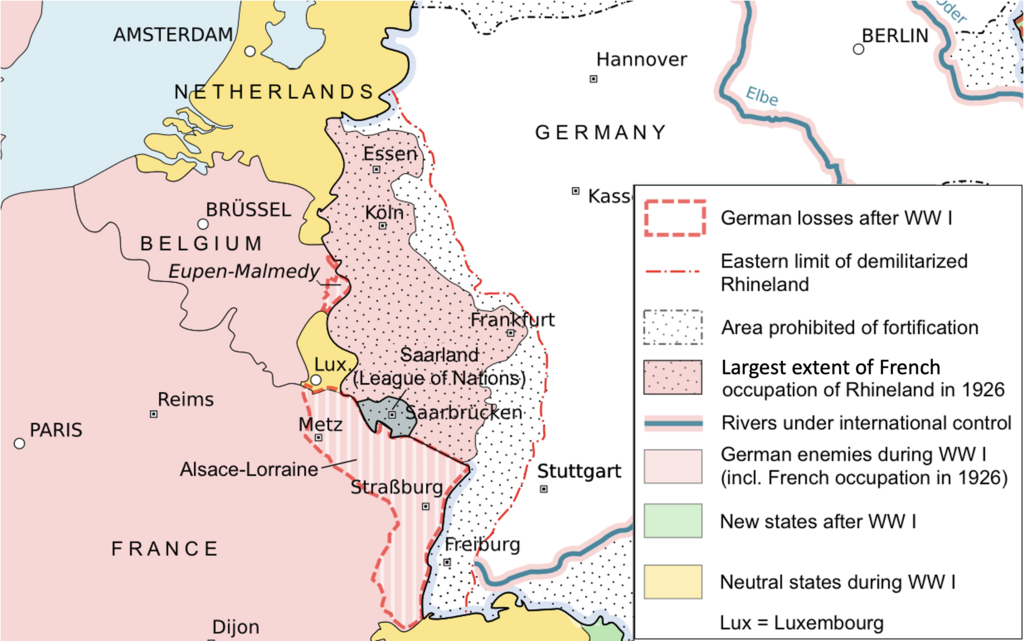
| Territorial Losses | Lost 13% of its territory, including Alsace-Lorraine and all overseas colonies. |
These terms were deeply resented across Germany. The loss of industrial regions like the Saarland and colonies crippled the economy, while the war guilt clause was seen as a national humiliation. The new government, by signing the treaty, was immediately associated with this perceived betrayal.
A New Democracy
The government that signed the treaty was the Weimar Republic, named after the city where its constitution was drafted. It was a bold democratic experiment. For the first time, all German men and women over 20 could vote. The constitution established a parliament, the Reichstag, and a directly elected president. It was one of the most progressive democratic systems in the world at the time.
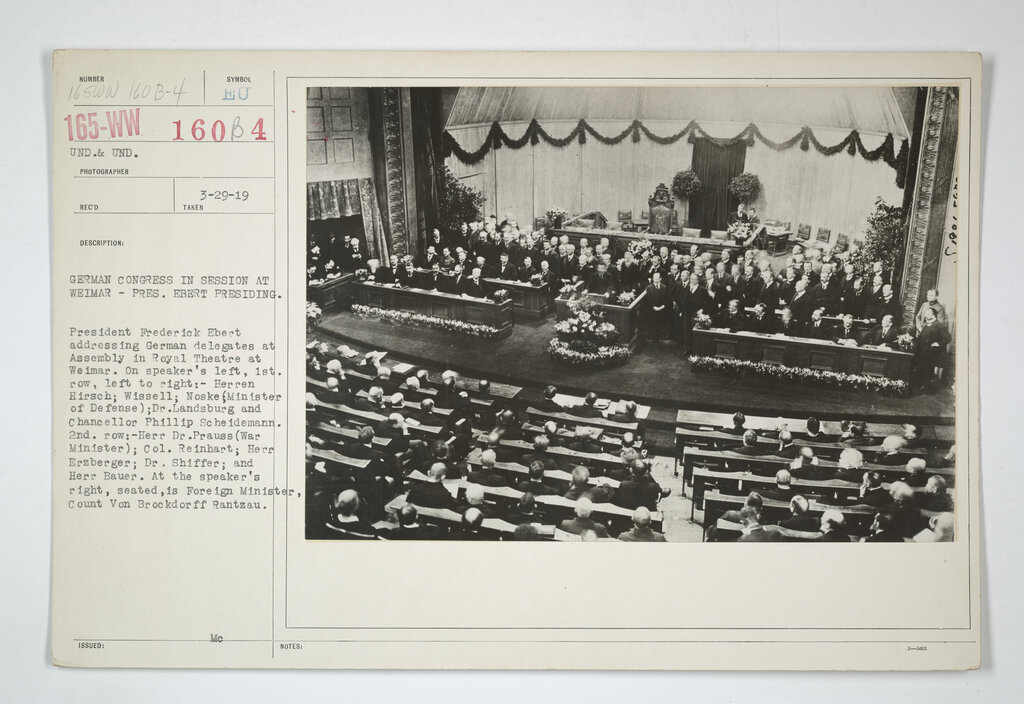
Despite its modern structure, the Republic was fragile. It faced opposition from both the far-left, who wanted a communist revolution like Russia's, and the far-right, who despised the democracy and longed for a return to authoritarian rule. The government's connection to the hated Treaty of Versailles made it an easy target for blame.
Crisis and Instability
The economic challenges were immense. Germany struggled to make the massive reparation payments demanded by the Allies. In 1923, when Germany defaulted on a payment, French and Belgian troops occupied the Ruhr, Germany's industrial heartland. The German government's response was to print more money to pay striking workers, which triggered one of the worst cases of hyperinflation in history.
The economic chaos wiped out the savings of the middle class and fueled political extremism. The political system itself was also unstable. The Weimar electoral system, based on proportional representation, led to a fragmented Reichstag with dozens of small parties. No single party could ever win a majority, meaning governments were weak, short-lived coalitions. This constant political infighting made it difficult to address the country's deep-seated problems, creating a sense of perpetual crisis that many Germans blamed on democracy itself.
Ready to check your understanding? This quiz covers the key challenges faced by post-WWI Germany.
Why was the Treaty of Versailles commonly referred to as the Diktat by Germans?
What major economic event was triggered when the German government printed massive amounts of money to pay striking workers in the occupied Ruhr region?
The combination of the harsh Versailles treaty, economic devastation, and political instability created a volatile environment in Germany, setting the stage for future turmoil.