Hippocratic Corpus Deconstructed
Causality Ontological Shift
The Body Reterritorialized
The 5th-century BCE shift in medical etiology was not a gentle evolution from myth to reason. It was an ontological rupture, a violent re-drawing of the map of the human body. Prior to the Hippocratic turn, the body was permeable territory, a space subject to divine incursions—theia. Sickness was an external event, a punishment or possession. The Hippocratic project performed a radical , closing the borders of the body and declaring it an autonomous state governed by internal, natural laws, or physis.
This was more than a change in theory; it was a redefinition of what constituted a valid explanation. The move from theia to physis asserted that causality was immanent, not transcendent. The cause of disease was to be found within the patient and their environment, not in the whims of a distant pantheon. This established a new ontology of naturalism that demanded a specific techne—a rational art of medicine based on observation and logical inference. The physician's task was no longer to placate gods but to decode the logic of nature.
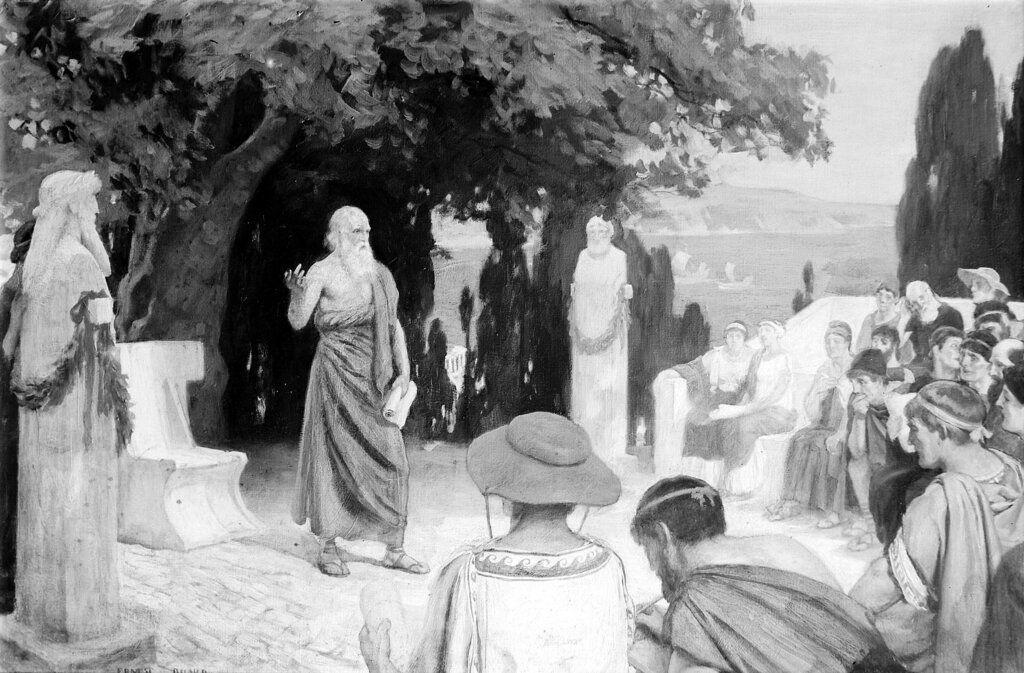
Critique of the Sacred
The treatise On the Sacred Disease is the key battlefield for this ideological war. The author's target is the magico-religious etiology of epilepsy. The brilliance of the text lies in its rhetorical strategy. It does not deny the divine outright. Instead, it redefines it. The author argues that epilepsy is no more 'sacred' than any other ailment. If nature itself is an expression of divine order, then all diseases are divine, and all are equally natural.
It seems to me that the disease is no more divine than any other. It has a natural cause, and its supposed divine origin is due to men's inexperience and to their wonder at its peculiar character.
The author's critique is aimed squarely at the 'magicians, purifiers, charlatans, and quacks' who profit from superstition. By claiming to manipulate the divine through rituals and charms, they, not the naturalistic physician, are the truly impious ones. The Hippocratic argument is a masterstroke of polemic: it frames the naturalist as the genuinely pious figure, one who respects the consistent, intelligible order of the cosmos () rather than attempting to barter with capricious deities.
The Logic of the Invisible
To supplant divine causality, the Hippocratic school needed an alternative framework. Humoralism provided this new ontology. The system of humors—blood, phlegm, yellow bile, and black bile—created a closed, self-regulating model of the body. Health was eucrasia (good mixture), and disease was dyscrasia (bad mixture). This was the techne required by the new ontology.
The true innovation of humoralism was not its chemical specifics, which were speculative, but its diagnostic logic. It made the invisible visible. One could not directly see the humors inside a living patient. But by observing the visible—urine, sweat, feces, vomit, the patient's temperament, the season—the physician could infer the invisible state of the internal humoral balance. For epilepsy, the Hippocratic author located the cause in a flow of phlegm from the brain. This was a radical move. It replaced a divine invasion with a physiological dysfunction, an occult event with a mechanical process, however conjectural.
Such an emphasis on physical explanations marked a break with more traditional ways of thinking that indicated the gods as primary causes.
This shift established the foundation of Western clinical practice: the move from the seen to the unseen through a chain of rational inference. The body was no longer a sacred text to be read for signs of divine pleasure or wrath. It became a machine to be logically debugged.
What was the fundamental shift in medical etiology during the 5th-century BCE, as described in the text?
According to the Hippocratic treatise On the Sacred Disease, epilepsy is caused by a blockage of phlegm originating from the brain.