Hip Power for Bouldering
Hip Anatomy
Your Climbing Powerhouse
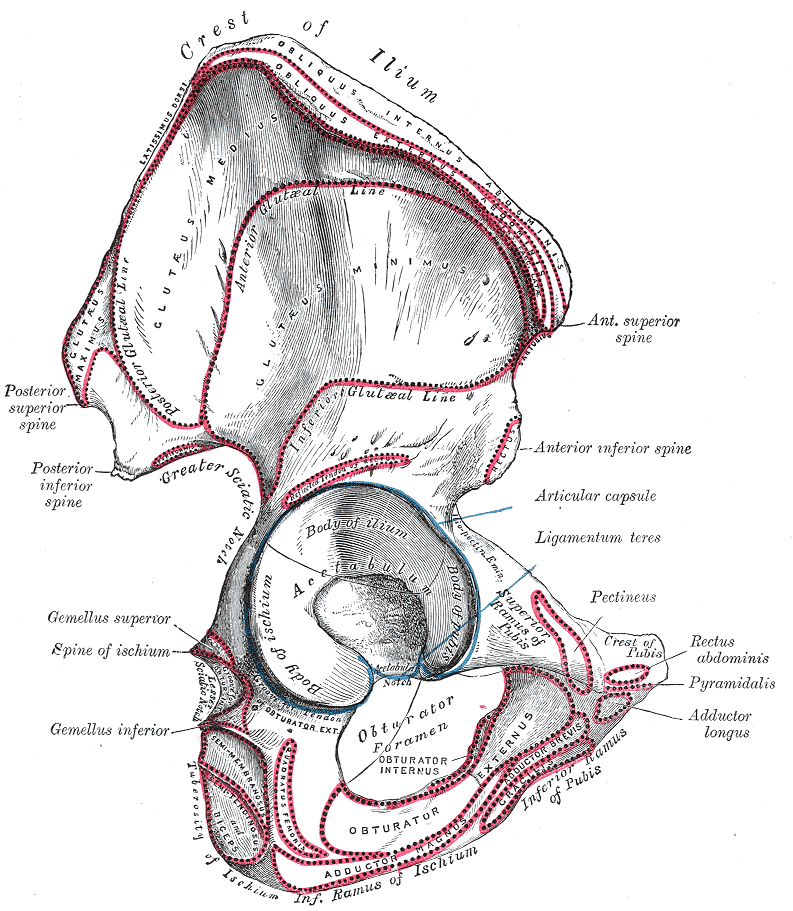
The hip is a ball-and-socket joint, one of the most mobile and stable joints in your body. The “ball” is the head of your femur (thigh bone), and it fits snugly into the “socket,” a cup-shaped cavity in your pelvis called the acetabulum. This design allows for a huge range of motion: forward, backward, side-to-side, and rotation. For a climber, this means you can lift your knee to your chest for a high step, press your hips into the wall for balance, or swing a leg out wide to reach a distant foothold. The joint is reinforced by a network of strong ligaments and a deep socket, giving it the stability needed to support your entire body weight on a single tiny foothold.
The Glutes: More Than Just Cushion
When you think of powerful leg muscles, you probably think of the glutes. They’re a group of three muscles that form your buttocks, and they are critical for generating force in climbing.
The largest of the group is the gluteus maximus. This is the primary muscle for hip extension, which means straightening your hip or pulling your leg backward. Every time you push down on a foothold to propel yourself upward, you’re firing your gluteus maximus. Think of it as the main engine for high steps and powerful lock-offs.
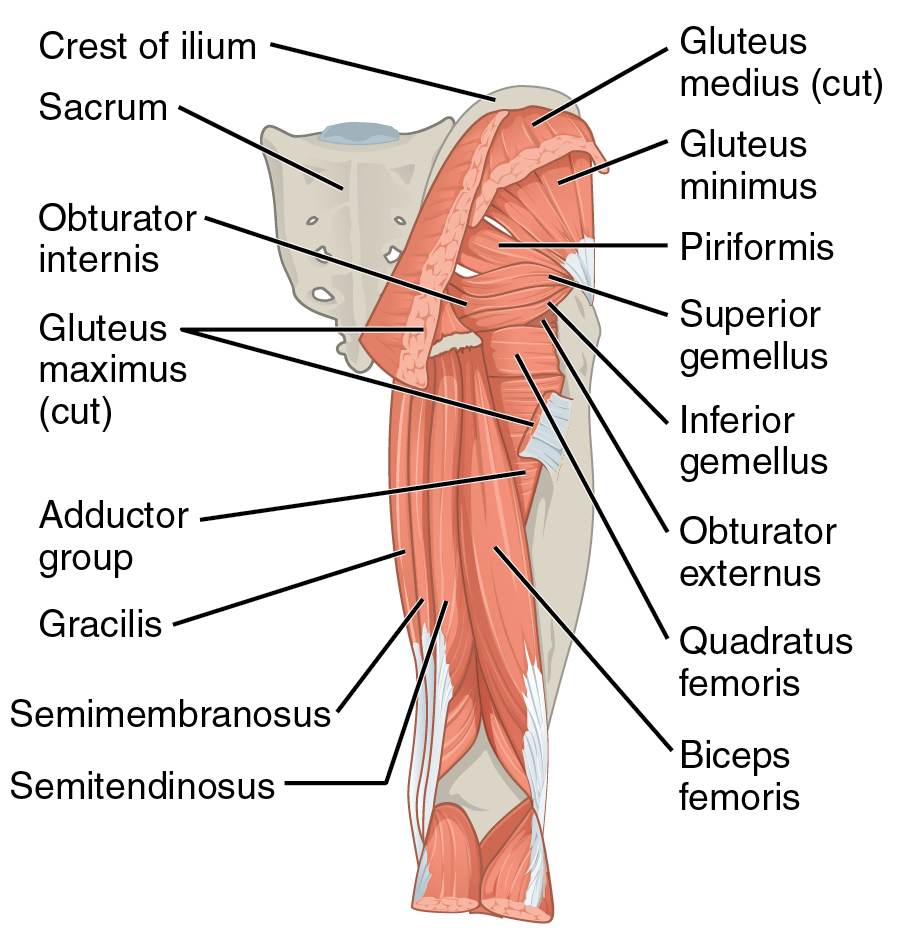
Working alongside it are the gluteus medius and gluteus minimus. These two smaller muscles are located more on the side of your hip. Their main jobs are hip abduction (moving your leg out to the side) and stabilization. When you're standing on one leg, these muscles work hard to keep your pelvis level. On the wall, they prevent your hip from dropping away as you shift your weight, keeping you stable and efficient. They are essential for wide, frog-like positions and for maintaining tension through your feet on overhanging routes.
Your glutes are the engine for powerful upward movements and the stabilizers that keep your pelvis level on the wall.
Flexors and Rotators
While the glutes push you up, another group of muscles pulls your legs toward your body. The primary hip flexor is the iliopsoas, a deep muscle that connects your spine and pelvis to your femur. It’s responsible for lifting your knee towards your chest. This is the key movement for bringing your foot up to a high hold. A strong iliopsoas allows for controlled, precise foot placements without needing to jerk your body around.
Two other important muscles help control hip movement: the tensor fasciae latae (TFL) and the sartorius.
The TFL is a small muscle on the outside of your hip. It assists with hip flexion and abduction, but it also helps rotate your thigh inward. It works with the gluteus medius and minimus to provide stability during single-leg movements.
The sartorius is the longest muscle in the body, running like a ribbon from the outside of your hip down across your thigh to the inside of your knee. It's unique because it acts on two joints. At the hip, it helps with flexion, abduction, and external rotation—the exact combination of movements needed to place your foot on a hold out to the side and turn your knee outward, a classic climbing position known as a “frog leg.”
| Muscle Group | Primary Action(s) | Climbing Example |
|---|---|---|
| Gluteus Maximus | Hip Extension | Powering up from a high step |
| Gluteus Medius/Minimus | Hip Abduction & Stabilization | Keeping hips level while standing on one foot |
| Iliopsoas | Hip Flexion | Lifting your foot to a high hold |
| Tensor Fasciae Latae (TFL) | Hip Flexion, Abduction, Internal Rotation | Assisting in stabilizing the pelvis |
| Sartorius | Hip Flexion, Abduction, External Rotation | Executing a “frog leg” position |
Understanding these individual muscles and their roles is the first step toward moving more intentionally on the wall. When you know what's supposed to be working, you can focus on engaging the right muscles to climb with more power, stability, and control.