Hindustani Classical Music Foundations and Science
Historical Foundation
The Earliest Rules
To understand Hindustani Classical Music, we have to go back in time. Way back. Around 2,000 years ago, a scholar named Bharata Muni wrote a comprehensive text on the performing arts called the Natya Shastra. Think of it as the original instruction manual for Indian drama, dance, and music.
This ancient Sanskrit text wasn't just about abstract ideas. It laid out practical rules. It detailed musical scales, instruments, and the emotional responses that different notes could evoke in a listener. The Natya Shastra established the very grammar of Indian performance, a foundation that artists still build upon today. It introduced core concepts like Sangeet, which encompasses more than just melody.
Sangeet
noun
A comprehensive term in Indian classical music that includes vocal music, instrumental music, and dance.
One of the most fundamental ideas from this era is the concept of Shruti.
Shruti
noun
The smallest interval of pitch that the human ear can detect and a musician can produce. In Indian music, an octave is divided into 22 shrutis.
Instead of the 12 semi-tones found in a Western octave, ancient theorists identified 22 distinct microtones, or shrutis. This incredible level of detail allowed for a much richer and more nuanced melodic palette. These ancient texts formed the bedrock of all Indian classical music.
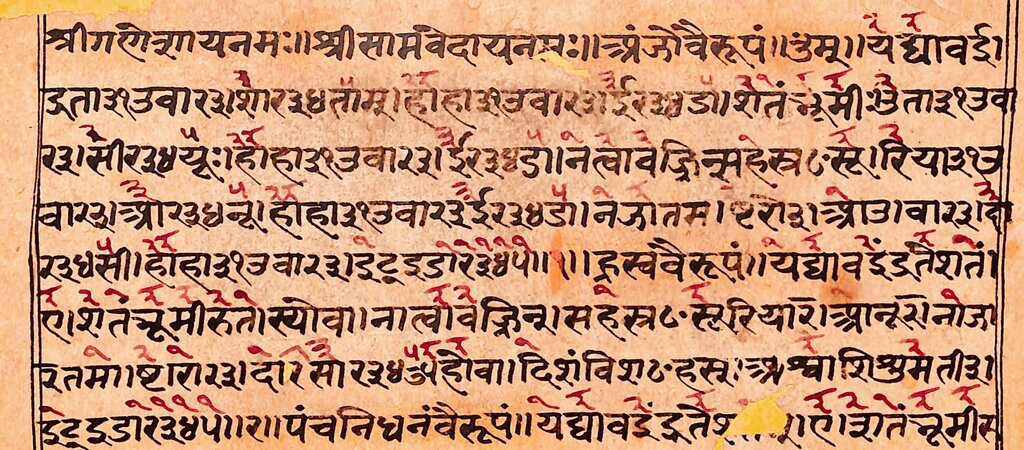
The Ocean of Music
For centuries, musical knowledge evolved and spread across India. Then, in the 13th century, a scholar named Sharngadeva did something remarkable. He collected, organized, and detailed all the musical knowledge of his time into a single, massive text: the Sangita Ratnakara, which translates to "The Ocean of Music and Dance."
This book is hugely important because it acts as a bridge. It connects the ancient theories of the Natya Shastra to the musical practices that would eventually become modern Hindustani and Carnatic music. The Sangita Ratnakara describes musical forms, scales (ragas), and rhythms in immense detail. It’s so comprehensive that scholars and musicians from both North and South India consider it a definitive reference.
Passing the Torch
As musical traditions became more complex, a unique system for passing down knowledge emerged: the Gharana system. A Gharana is essentially a school or lineage of musicians. It's not a physical building, but a community of performers who share a distinct musical style.
Knowledge in a Gharana is passed directly from a teacher (guru) to a student (shishya). This apprenticeship is deep and personal, often spanning decades. The student doesn't just learn techniques; they absorb the teacher's philosophy, style, and specific compositions that belong to that Gharana. This ensures that a musical legacy remains alive and intact through generations.
Think of a Gharana like a family's secret recipe. The core ingredients are the same, but the specific preparation, spices, and techniques are unique and passed down from parent to child.
These three pillars—the ancient theories of the Natya Shastra, the organizational brilliance of the Sangita Ratnakara, and the teaching tradition of the Gharana system—provide the historical and cultural context for everything that follows in Hindustani classical music.
Ready to check your understanding?
Who is credited with writing the Natya Shastra, the foundational text on Indian performing arts?
According to ancient Indian musical theory, how many distinct microtones, or shrutis, are there within an octave?