Hinduism Fundamentals
Introduction to Hinduism
The Oldest Living Religion
Hinduism has no single founder, no specific starting point, and no single scripture that all followers accept. It's more of a family of traditions that grew and blended over thousands of years on the Indian subcontinent. Because of this, it’s often called the oldest living major religion in the world.
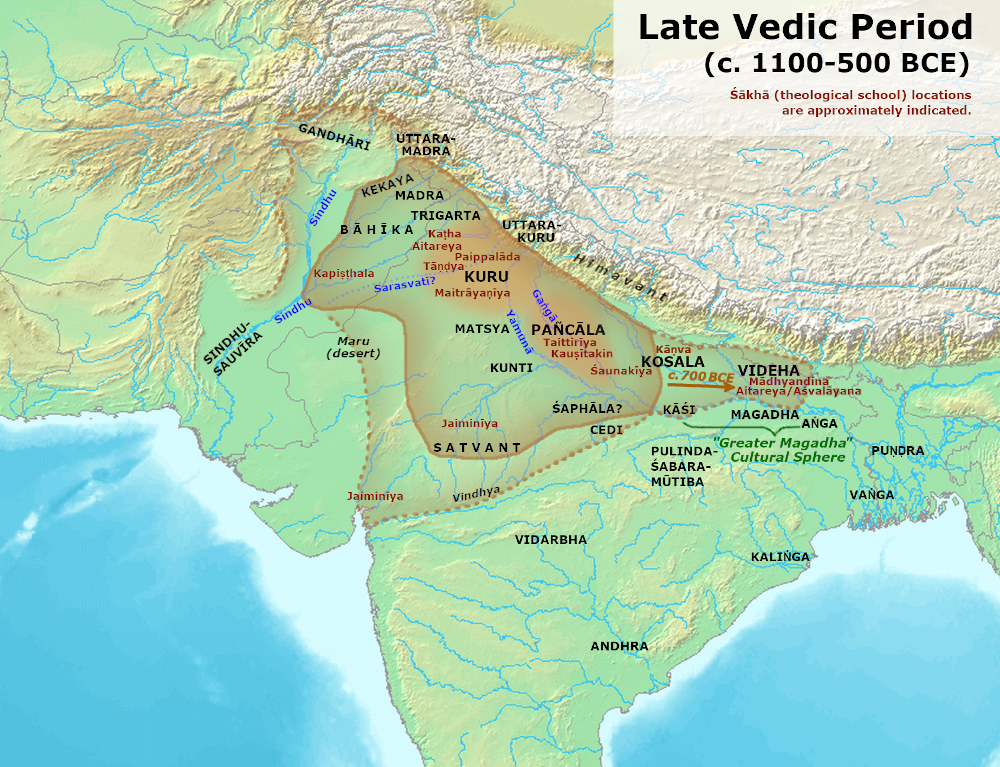
Its roots are incredibly deep, tracing back at least 4,000 years. Some scholars see connections to the ancient Indus Valley Civilization, a sophisticated urban culture that thrived around 2500 BCE. Later, during the Vedic Period (c. 1500–500 BCE), foundational ideas and texts began to form, creating a rich spiritual and philosophical base. Over centuries, these early beliefs mixed with local customs and new ideas, evolving into the complex and diverse faith we know today.
Life, Action, and Liberation
While Hindu beliefs are incredibly diverse, a few core concepts tie them together. These ideas shape a worldview centered on a cyclical journey of the soul. Three of the most important are dharma, karma, and moksha.
These concepts are interconnected. Living according to one's dharma helps generate good karma, which moves the soul closer to moksha. It's a framework for living a meaningful life while aiming for ultimate spiritual freedom.
dharma
noun
One's duty, ethical conduct, or righteous path in life. It's not a single set of rules for everyone, but a personal responsibility that depends on one's age, social position, and stage of life.
Karma is the universal law of cause and effect. Every action, thought, and word has a consequence that ripples out, affecting one's future in this life and the next. Good deeds lead to positive outcomes, while harmful ones lead to negative results. It’s not about divine punishment, but about the natural consequences of one's own actions.
The ultimate goal in Hinduism is moksha, which means liberation. It’s the release of the soul from the endless cycle of birth, death, and rebirth, known as samsara. Achieving moksha is the final reunion of the individual soul (Atman) with the ultimate reality (Brahman).
The soul is not born, it does not die; it has not come from anywhere, it has not become anyone. Unborn, eternal, ever-lasting, and primeval, it is not slain when the body is slain.
A Family of Traditions
Hinduism is not a single, unified religion but a collection of distinct traditions. These sects have their own philosophies and focus on different deities, yet they share the core concepts we just discussed. Four of the largest and most influential traditions are Vaishnavism, Shaivism, Shaktism, and the Smarta tradition.
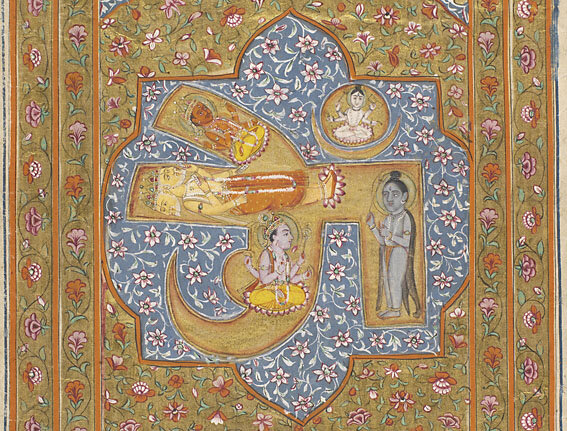
Each tradition offers a unique path. Vaishnavism is centered on devotion to Vishnu and his many incarnations, like Krishna and Rama. Shaivism focuses on Shiva as the supreme being, representing both destruction and creation. Shaktism worships the divine feminine, known as Shakti or Devi, as the ultimate power of the universe.
The Smarta tradition is more eclectic. Smartas worship five principal deities—Vishnu, Shiva, Devi, Ganesha, and Surya—as different manifestations of the one, formless ultimate reality. This approach highlights the Hindu capacity for seeing unity in diversity.
| Tradition | Primary Deity | Core Idea |
|---|---|---|
| Vaishnavism | Vishnu | Devotion to the preserver god and his avatars. |
| Shaivism | Shiva | Worship of the god of transformation and destruction. |
| Shaktism | Shakti/Devi | Focus on the divine feminine as the ultimate power. |
| Smarta | Five Deities | Worship of the five main deities as forms of one reality. |
These traditions are not mutually exclusive. Many Hindus might participate in rituals from different traditions, celebrating the rich variety that makes up their faith.
Now, let's test your understanding of these foundational concepts.
Why is Hinduism often considered to have no single starting point or founder?
Which of the following best describes the concept of karma?
Hinduism's blend of ancient history, core philosophical concepts, and diverse traditions provides a deep framework for understanding one of the world's major faiths.