High Voltage for Data Centers
High-Voltage Fundamentals
What Is High Voltage?
Think of electricity like water flowing through a pipe. The pressure pushing the water is called voltage. The amount of water flowing is the current. High voltage, then, is simply a very high electrical pressure. While there's no single universal number, it's generally considered to be anything above 1,000 volts for alternating current (AC) or 1,500 volts for direct current (DC).
Why bother with such high pressures? It's all about efficiency. Transmitting electrical power over long distances is a challenge. The wires themselves resist the flow of electricity, which causes some energy to be lost as heat. The higher the current, the more heat is lost.
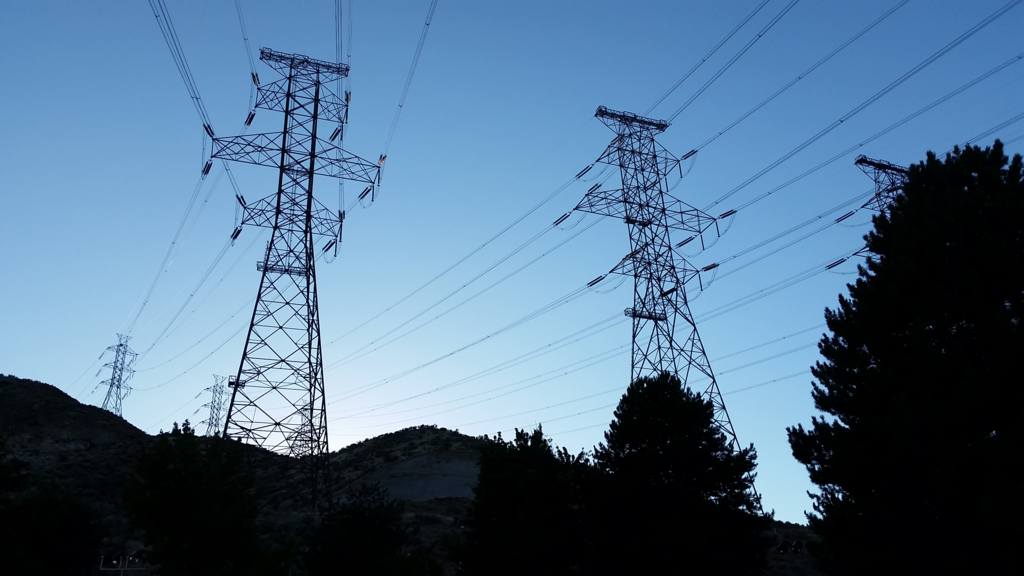
This is where high voltage becomes a game-changer. By increasing the voltage, we can transmit the same amount of power with much less current. Less current means less energy lost to heat, making the whole system far more efficient. It's the reason we can build power plants far from cities and still get electricity to our homes and businesses without losing most of it along the way.
The Building Blocks
To really understand high voltage, we need to be clear on three fundamental properties of electricity: voltage, current, and resistance.
- Voltage (V): As we said, this is the electrical pressure or potential difference that pushes electrons through a circuit. It's measured in volts.
- Current (I): This is the rate of flow of electric charge. It's the actual movement of electrons through the wire, measured in amperes (amps).
- Resistance (R): This is a material's opposition to the flow of current. It's like friction for electricity. It's measured in ohms (Ω).
These three properties are linked by a fundamental rule called Ohm's Law.
This equation says that the voltage is equal to the current multiplied by the resistance. Another crucial concept is power (P), which is the rate at which electrical energy is transferred. It's measured in watts and calculated as:
From this, you can see that for a constant amount of power (P), if you increase the voltage (V), the current (I) must decrease. This is the simple but powerful reason high voltage is used for power transmission.
Behavior and Safety
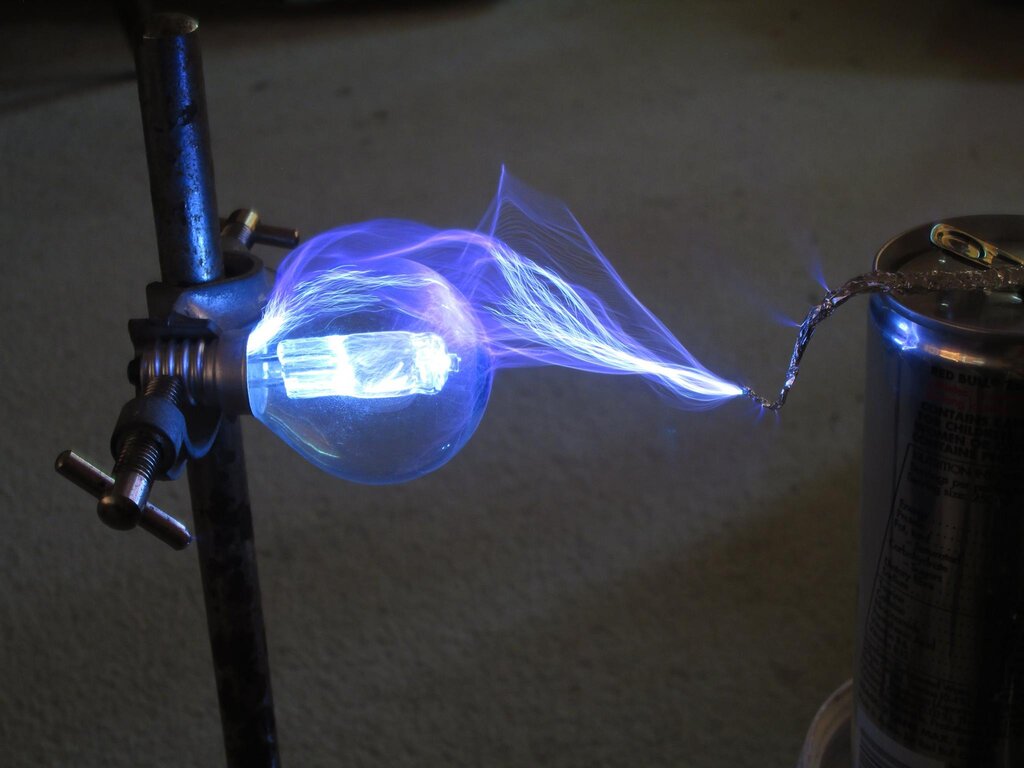
High voltage behaves differently than the low-voltage electricity in your home. The immense electrical pressure can force current through materials that are normally insulators, like air, plastic, or glass. When an insulator can no longer withstand the voltage, it experiences what's called a dielectric breakdown.
This breakdown can be dramatic. In the air, it can create a bright, loud electrical arc, which is essentially a miniature lightning bolt jumping between two points. This is why high-voltage components need to be spaced far apart and surrounded by specialized, heavy-duty insulators.
Because of these dangers, working with high-voltage systems is strictly regulated. Safety is the absolute priority. Organizations like the Occupational Safety and Health Administration (OSHA) in the United States and the International Electrotechnical Commission (IEC) globally set strict standards. These rules cover everything from the minimum safe distance to approach live components (the 'arc flash boundary') to the required personal protective equipment (PPE), such as insulated gloves and flame-resistant clothing.
Engineers also design high-voltage systems with multiple safety features, like grounding, circuit breakers, and physical barriers, to prevent accidents and ensure the system fails in a predictable, safe way.
In the common analogy comparing electricity to water flowing through a pipe, what does electrical voltage represent?
What is the primary reason for using high voltage to transmit electricity over long distances?