High Throughput Screening Facility Essentials
Introduction to High Throughput Screening
What Is High Throughput Screening?
Imagine you have a single lock, representing a disease, and a warehouse full of millions of keys. Your job is to find the one key that opens it. Testing each key one by one would take a lifetime. High Throughput Screening, or HTS, is like having a sophisticated robot that can test thousands of keys simultaneously, telling you which ones click.
High Throughput Screening (HTS)
noun
An automated method used in drug discovery and other biological research to rapidly test a large number of chemical or biological compounds for a specific activity.
In drug discovery, the “lock” is a biological target, like a protein or enzyme that plays a crucial role in a disease. The “keys” are a vast library of chemical compounds. The goal of HTS isn't to find a perfect drug right away. It's to find a “hit”—a compound that interacts with the target in a desirable way. These hits are the starting point, the promising leads that scientists can then study, modify, and potentially develop into new medicines. It's all about sifting through immense chemical diversity to find a few promising candidates.
A Quick History
Before HTS, drug discovery was a much slower, more manual process. Scientists would painstakingly prepare and test compounds individually in the lab. This hands-on approach, known as low-throughput screening, was limited by human speed and endurance. A researcher might only test a few dozen compounds in a week.
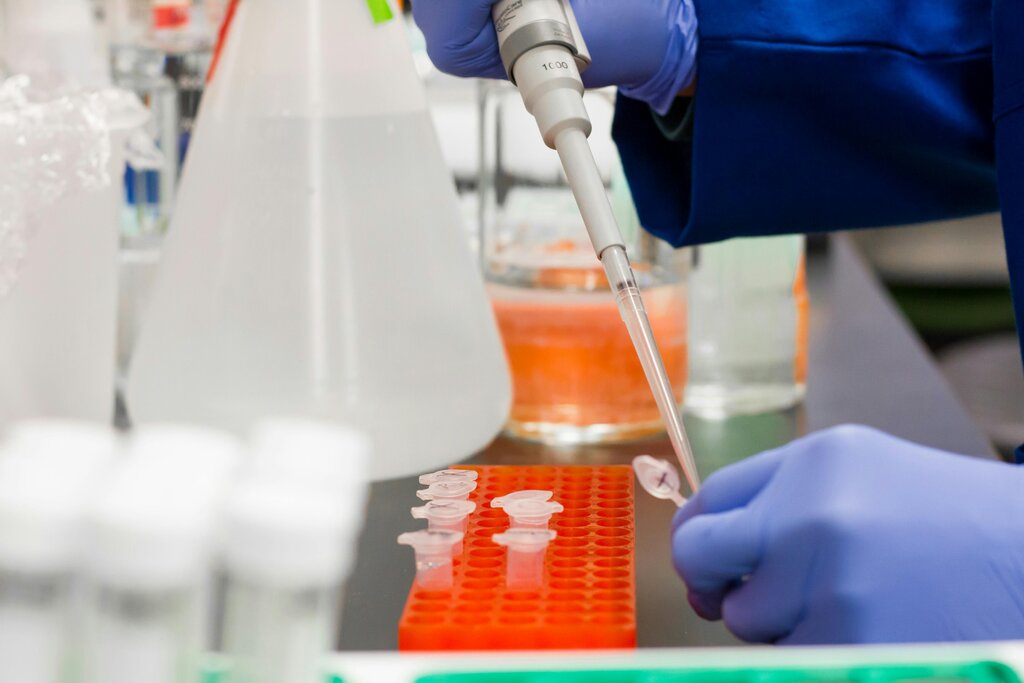
The game changed in the late 1980s and 1990s. Advances in robotics, data processing, and miniaturization came together to revolutionize the process. Scientists could now use tiny volumes of materials in plates with hundreds or even thousands of small wells. Robotic arms could add compounds and reagents with incredible speed and precision. This shift allowed labs to screen massive libraries of molecules, dramatically increasing the odds of finding a promising lead.
The HTS Workflow
While the technology is complex, the basic workflow of an HTS campaign is logical and systematic. It transforms the search for a drug candidate into a streamlined, industrial-scale process.
This diagram shows the core steps. First, you need a target (the lock) and a test, or assay, to measure if a compound has an effect. Next, the screening begins. Robotic systems dispense the target and compounds from the library into multi-well plates and measure the results. Powerful software then flags the “hits.” Finally, scientists take a closer look at these hits to confirm they work and begin the long process of optimizing them into potential drugs.
The essence of HTS is miniaturization and automation. By using tiny volumes in high-density plates, labs can screen more compounds faster and at a lower cost.
Applications Beyond Drug Discovery
While HTS is a cornerstone of modern drug development, its applications don't stop there. The ability to perform massive numbers of tests quickly is valuable in many areas of biological research.
For example, HTS is used in genomics to understand the function of different genes. By systematically knocking out or overexpressing thousands of genes and observing the effects, researchers can map out complex cellular pathways. It is also used in toxicology to screen chemicals for potential toxicity to human cells or the environment.
Essentially, anywhere a biological question can be answered with a simple, repeatable test, HTS can provide the scale to find answers that would otherwise be out of reach.
Ready to check your understanding?
What is the primary goal of High Throughput Screening (HTS) in the initial phase of drug discovery?
In the 'lock and key' analogy for HTS, the 'lock' represents the ____.
HTS transformed drug discovery from a slow, manual craft into a high-speed, data-driven science, opening the door to finding treatments for countless diseases.