High-Throughput Event System Design
Event-Driven Architecture
Reacting to a Changing World
Imagine a traditional system as a phone call. One component directly calls another, asks for something, and then waits for a response. The two are tightly connected. If one is busy or unavailable, the whole process grinds to a halt. This is a synchronous, tightly coupled connection.
Event-driven architecture (EDA) is a design pattern in which decoupled services communicate by emitting and responding to events.
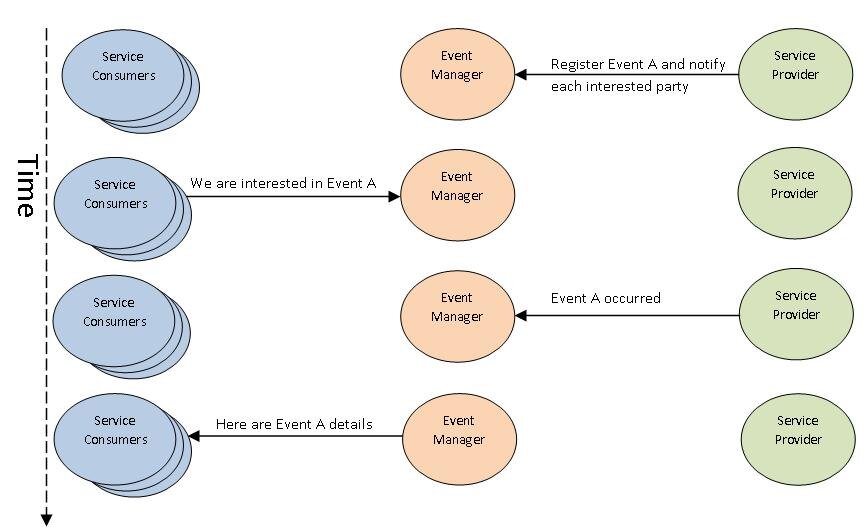
EDA changes the model from a phone call to a broadcast announcement. Instead of one component directly contacting another, it simply announces that something happened. Other components can listen for these announcements and decide for themselves if they need to act on them. This creates a system where components are independent and can operate without waiting on each other, a concept known as loose coupling.
The Core Components
An event-driven system is made up of a few key parts that work together to enable this flexible communication style.
Event
noun
A significant change in state. It's a record of something that has happened, like an item being added to a shopping cart or a payment being processed.
Beyond the event itself, there are three main roles in this architecture:
-
Event Producers: These are the components that generate and publish events. When an online store's order service successfully processes a purchase, it becomes a producer by creating an "OrderPlaced" event.
-
Event Consumers: These components subscribe to, or listen for, specific types of events. When an "OrderPlaced" event occurs, consumers like the inventory service (to update stock), the shipping service (to prepare a package), and the notification service (to email a receipt) can all react simultaneously.
-
Event Broker: This is the intermediary that receives all events from producers and routes them to the correct consumers. It acts as a central hub, ensuring that producers don't need to know which consumers exist, and consumers don't need to know where the events came from. This decoupling is what makes the architecture so powerful.
Key Benefits
Adopting an event-driven approach brings several significant advantages, making systems more robust and adaptable.
Scalability: Producers and consumers can be scaled independently. If your shipping service is getting overwhelmed, you can add more instances of it without touching any other part of the system. The event broker simply distributes the work among the available consumers.
The second major benefit is flexibility. Because components are loosely coupled, you can easily add, remove, or update services without disrupting the entire system. Want to add a new service that analyzes purchasing trends? Just have it subscribe to "OrderPlaced" events. The original order service doesn't need to be modified at all.
Real-Time Processing: Systems can respond to events as they happen. This is crucial for applications that require immediate feedback, like fraud detection systems that analyze transactions in real-time or IoT devices that need to react instantly to sensor data.
This ability to build decoupled, scalable, and responsive systems is why EDA is a foundational pattern for modern applications, from e-commerce platforms to large-scale data processing pipelines.
The provided text contrasts a traditional, synchronous system with an event-driven system using which analogy?
In an e-commerce platform using EDA, a service that sends a confirmation email after an "OrderPlaced" event is published is best described as what?