High Net Worth Clients in Private Equity
Private Equity Basics
What Is Private Equity?
At its core, private equity is an investment in companies that are not publicly traded on a stock exchange. Think of it as the opposite of buying shares of Apple or Google. Instead of purchasing small pieces of massive, public corporations, private equity firms buy entire companies, or at least a controlling stake in them.
Private equity refers to investments in privately held companies — those not listed on public stock exchanges.
The goal is simple: buy a company, make it better, and sell it for a profit years later. PE firms don't just provide cash; they take an active role in managing and improving the businesses they own. They might streamline operations, bring in a new management team, or expand into new markets. After a holding period, typically three to seven years, the firm sells the improved company, aiming to generate high returns for its investors.
The Key Players
The world of private equity revolves around three main groups: General Partners, Limited Partners, and Portfolio Companies.
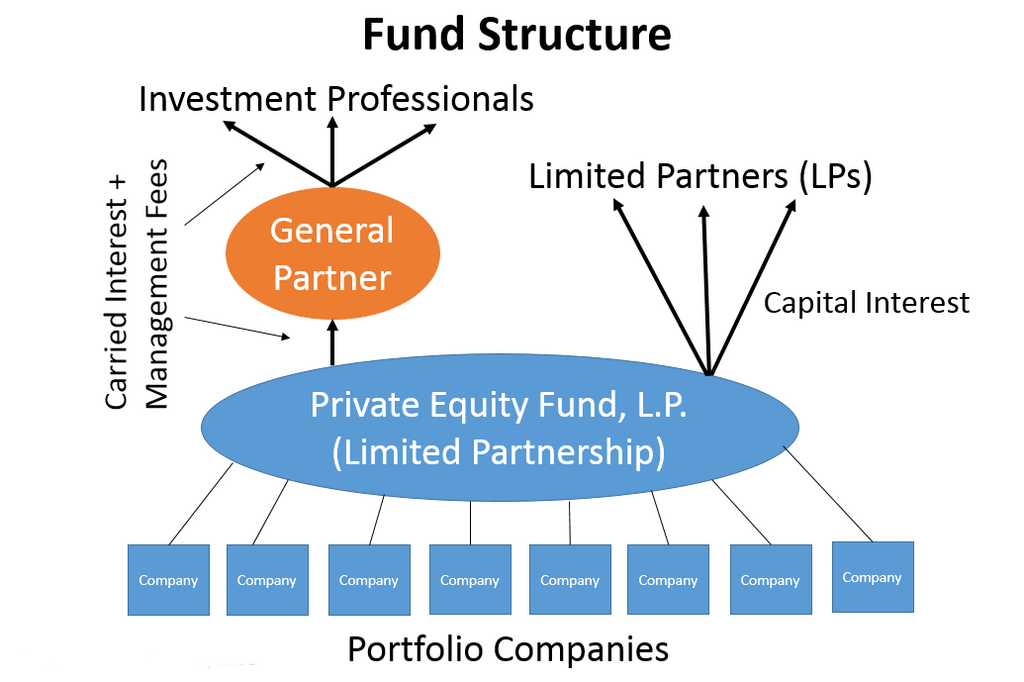
General Partners (GPs) are the private equity firm managers. They are the experts who raise the money, find the investment opportunities, and do the hands-on work of improving the companies. They make all the key decisions.
Limited Partners (LPs) are the investors who provide the capital for the private equity fund. These can be large institutions like pension funds, university endowments, or insurance companies. They are called "limited" because their role is passive and their liability is limited to the amount they invest.
Portfolio Companies are the businesses that the private equity fund buys and operates. These companies are the assets within the fund's "portfolio."
The Investment Lifecycle
A private equity investment follows a distinct cycle that can last a decade or more.
1. Fundraising: The cycle begins when a GP decides to raise a new fund. They create a legal structure and pitch to potential LPs, securing commitments for a specific amount of capital. This money isn't all collected at once; it's "called" by the GP as investment opportunities arise.
2. Sourcing and Deal Execution: With the fund established, the GPs hunt for suitable companies to acquire. They perform intense due diligence, analyzing a company's financials, management, and market position. If a company is a good fit, the PE firm negotiates a purchase, often using a mix of LP money and borrowed funds (debt) in what's known as a leveraged buyout (LBO).
3. Value Creation: This is where PE firms work their magic. Once they own a portfolio company, they actively work to increase its value. This isn't a passive investment. They might improve operational efficiency, cut costs, expand product lines, or make strategic acquisitions.
PE firms are active owners and are very focused on maximizing both the efficiency and profitability of portfolio companies.
4. Exit: After several years of improvements, the GP seeks to sell the portfolio company to realize a profit. There are three common exit strategies:
- Strategic Sale: Selling the company to another business, often a competitor or a larger player in the same industry.
- Secondary Buyout: Selling to another private equity firm.
- Initial Public Offering (IPO): Taking the company public by listing its shares on a stock exchange.
How PE Differs from Other Investments
It’s easy to confuse private equity with other types of investing, particularly public equity and venture capital. The distinctions are important.
| Feature | Private Equity (Buyout) | Public Equity | Venture Capital |
|---|---|---|---|
| Company Type | Mature, established businesses | Publicly-listed companies | Early-stage startups |
| Investment Size | Large (millions to billions) | Small to large (any size) | Smaller (thousands to millions) |
| Control | Significant or full control | No control (minority stake) | Minority stake, board seat |
| Liquidity | Highly illiquid (long hold) | Highly liquid (daily trading) | Highly illiquid (long hold) |
| Risk Profile | Moderate to high | Varies (generally lower) | Very high |
Venture Capital (VC) is technically a subset of private equity, but it operates differently. VCs fund new, high-growth ideas with high failure rates, hoping one investment will become the next big thing. Traditional PE firms, on the other hand, typically buy established companies with stable cash flows, using operational improvements and financial engineering to generate returns.
What is the primary objective of a private equity firm after acquiring a company?
In a private equity fund, who are the Limited Partners (LPs)?
Understanding these fundamentals provides a solid base for exploring how different types of investors participate in this unique asset class.