High-Intensity Strength Training Business Models
High-Intensity Strength Training Fundamentals
The HIST Philosophy
High-Intensity Strength Training, or HIST, is an approach built on a simple premise: the stimulus for muscle growth is intensity, not duration. It's about working your muscles as hard as possible for a very short period, then allowing them ample time to recover and grow stronger.
Unlike traditional workouts that involve multiple sets and many repetitions, HIST focuses on performing just one set of each exercise. The catch? That single set must be taken to the point of momentary muscular failure. This is the point where, despite your greatest effort, you cannot complete another repetition with proper form. This intense, brief stimulus is the signal your body needs to adapt.
The goal of HIST is to trigger the body's adaptive response in the most efficient way possible, making workouts brief, intense, and infrequent.
Because the intensity is so high, recovery is a massive part of the equation. Workouts are typically performed only once or twice a week. This isn't about spending hours in the gym; it's about providing a powerful, targeted stimulus and then getting out of the way to let your body do the work of building muscle and strength.
Why It Works
The magic of HIST lies in how it triggers muscle hypertrophy. Pushing a muscle to true failure creates microscopic tears in the muscle fibers. In the days following the workout, your body repairs these fibers, making them thicker and stronger to better handle a similar stressor in the future. This is the fundamental process of muscle growth.
Hypertrophy
noun
The enlargement of an organ or tissue from the increase in size of its cells. In strength training, it refers to the growth of muscle cells.
This intense effort also creates a significant metabolic demand. The body burns a substantial number of calories both during and after the workout as it works to repair muscle tissue and restore its systems to a state of balance. The effectiveness of HIST hinges entirely on reaching that point of failure safely. It's an all-out effort that recruits the maximum number of muscle fibers, ensuring no capacity is left in reserve.
HIST vs. Other Methods
It's easy to confuse High-Intensity Strength Training (HIST) with High-Intensity Interval Training (HIIT), but they are very different. HIIT is a cardiovascular training method that alternates short bursts of intense anaerobic exercise with less-intense recovery periods. HIST is purely a strength training protocol focused on muscular overload.
Compared to traditional volume-based weightlifting, HIST is almost an opposite approach.
| Principle | High-Intensity Strength Training (HIST) | Traditional Volume Training |
|---|---|---|
| Intensity | Maximum effort to momentary muscular failure | Sub-maximal effort (e.g., 70-85% of max) |
| Volume | Very low (typically 1 set per exercise) | High (typically 3-5 sets per exercise) |
| Frequency | Low (1-2 sessions per week) | High (3-5+ sessions per week) |
| Duration | Brief (20-30 minutes per session) | Longer (45-90 minutes per session) |
While traditional methods can be effective, they require a much greater time commitment. HIST proposes that much of the volume in a traditional workout is unnecessary if the intensity of the stimulus is high enough.
The Anatomy of a HIST Session
A HIST workout is brutally simple in its structure, which is a key part of its appeal. The focus is on quality, not quantity.
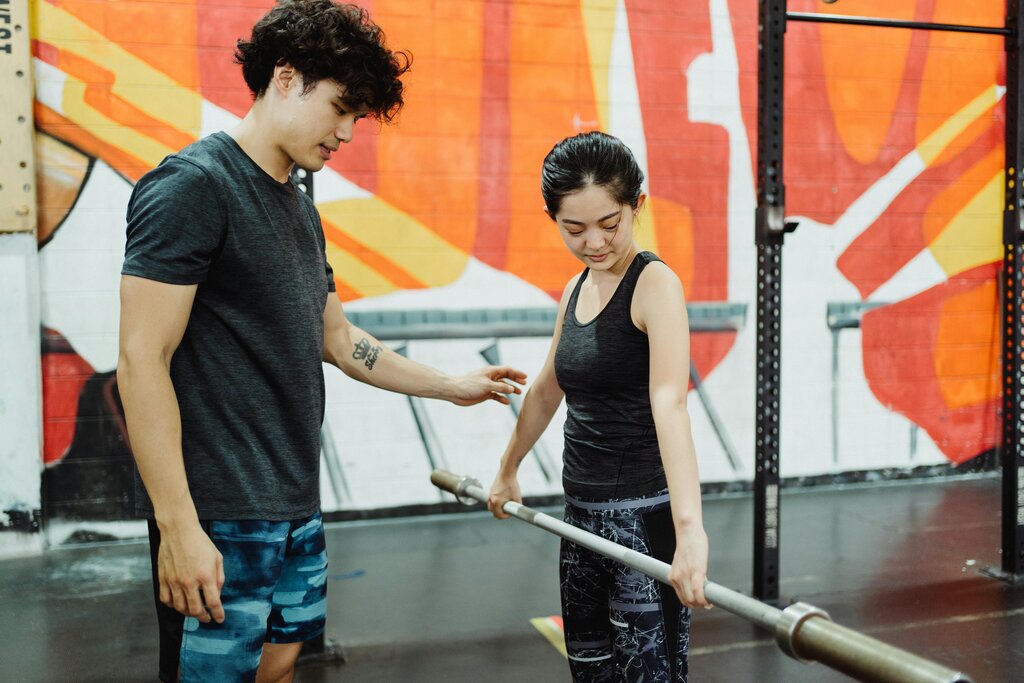
A typical session includes:
-
A Minimal Warm-up: Some practitioners perform the first repetition of an exercise very slowly to warm up the target muscle. Extensive warm-ups are often avoided to conserve energy for the working set.
-
Full-Body Routine: The workout usually consists of 5 to 8 compound exercises that cover all the major muscle groups. Think leg press, chest press, pull-downs, and overhead presses.
-
One Set to Failure: This is the core of the workout. Each exercise is performed for a single set until no more repetitions can be completed with perfect form.
-
Slow, Controlled Repetitions: To maximize muscle tension and minimize momentum, repetitions are performed slowly and deliberately. A common cadence is 4 seconds on the lifting phase and 4 seconds on the lowering phase.
-
Minimal Rest: The trainee moves quickly from one exercise to the next to keep the heart rate elevated and the overall workout brief.
Because you are pushing to your absolute limit, safety is paramount. Having a spotter or using well-maintained machines is crucial for preventing injury, especially on free-weight exercises.
Now, let's test what you've learned about the fundamentals of high-intensity strength training.