High Frequency Trading Explained
Introduction to High-Frequency Trading
Trading at Lightspeed
Financial markets have always been about speed. In the past, the fastest trader was the one who could shout the loudest or run the quickest across the trading floor. Today, the race is measured in microseconds, and the traders are sophisticated computer programs. This is the world of high-frequency trading, or HFT.
High-frequency trading (HFT) is a type of algorithmic trading characterized by extremely fast order execution, high order-to-trade ratios, very short holding periods (seconds to microseconds), and sophisticated technology infrastructure.
HFT is a specialized subset of algorithmic trading where computers make complex decisions and execute trades at speeds impossible for a human to match. Instead of holding stocks for days, weeks, or years, HFT firms might hold a position for less time than it takes to blink. They aim to profit from tiny price differences and market inefficiencies, executing millions of orders in a single day.
| Characteristic | High-Frequency Trading | Traditional Investing |
|---|---|---|
| Speed | Microseconds to seconds | Days to years |
| Decision Maker | Computer Algorithm | Human |
| Trading Volume | Extremely high | Low to moderate |
| Holding Period | Extremely short | Long-term |
The Need for Speed
The rise of HFT wasn't an overnight event. It's the result of decades of technological evolution. The story begins with the shift from physical trading floors to electronic exchanges in the 1980s and 90s. This digitization opened the door for computers to participate directly in the market.
As computing power grew exponentially and network speeds increased, the time it took to send an order to an exchange plummeted. What once took several seconds could now be done in milliseconds, and then microseconds. HFT firms co-locate their servers in the same data centers as the exchanges' own servers to shave off even more time. In this game, a few feet of fiber optic cable can make all the difference.
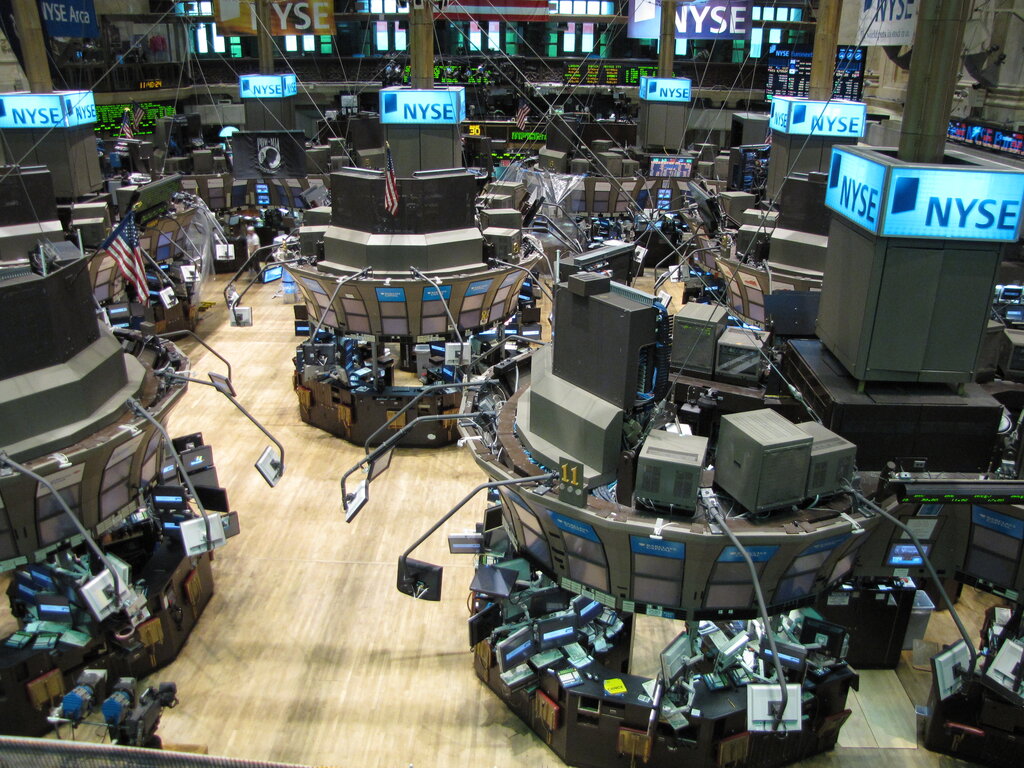
This technological arms race is about minimizing latency, the delay between sending an order and its execution. The lower the latency, the faster a firm can react to new market information.
Think of it like this: If two people see a 💲100 bill on the ground, the one who can react and grab it faster gets the money. In HFT, the "money on the ground" is a tiny, fleeting price discrepancy, and the "reaction time" is network and processing latency.
Market Maker or Market Breaker?
HFT plays a significant, and often debated, role in modern markets. One of its primary functions is to provide liquidity. Liquidity is the ease with which an asset can be bought or sold without affecting its price. HFT firms act as market makers, constantly placing both buy and sell orders for a wide range of stocks. This makes it easier for regular investors to execute their trades quickly and at a fair price.
Imagine you want to sell 100 shares of a company. In a market with low liquidity, you might have to wait a while to find a buyer, or accept a lower price. With HFT firms providing a constant stream of orders, a buyer is almost always available instantly. This narrows the gap between the highest price a buyer will pay (the bid) and the lowest price a seller will accept (the ask), which is known as the bid-ask spread. A smaller spread means lower transaction costs for everyone.
However, HFT is not without its critics. A common misconception is that all HFT is about predicting the market's long-term direction. In reality, most HFT strategies are market-neutral, focusing on short-term arbitrage and market-making rather than long-term bets.
Another concern revolves around market stability. Because so much trading is automated and happens so quickly, there are fears that it could lead to sudden crashes. While HFT has been a factor in some market volatility events, the systems also have sophisticated risk controls to prevent runaway trading. The overall effect of HFT on the market remains a subject of ongoing study and discussion.
Time to test your knowledge.
What is the primary objective of most high-frequency trading (HFT) strategies?
Why do high-frequency trading firms often place their servers in the same data centers as stock exchanges, a practice known as co-location?
High-frequency trading is a complex and fascinating corner of the financial world, born from the intersection of technology and markets. It has fundamentally changed how trading works, making markets faster and, in many ways, more efficient.