Hierarchical Reasoning Models Explained
Introduction to Hierarchical Reasoning Models
Thinking in Layers
How do you solve a complex problem, like planning a long road trip? You probably don't start by mapping every single turn. Instead, you think in levels. First, you decide on the major destinations—the big picture. Then, you break that down into daily driving segments. Finally, you might plan out specific stops for gas or food along each day's route. You move from a high level of abstraction to specific details.
This natural, layered approach to thinking is the core idea behind hierarchical reasoning models. These are frameworks that process information and solve problems by breaking them down into a series of nested levels, or a hierarchy.
The purpose is to make overwhelming tasks manageable. Instead of trying to find a single, perfect solution all at once, the model first creates a high-level strategy. Then, it refines that strategy by working on smaller, more concrete sub-problems. Each layer of the hierarchy handles a different level of detail, from abstract concepts down to specific actions.
Inspired by the Brain
This layered approach isn't just a clever programming trick; it's inspired by how our own brains work. Human cognition is deeply hierarchical. Think about how you recognize a friend's face. You don't consciously process every pixel of light. Your visual cortex automatically detects basic elements like lines and edges. The next level of neurons combines these into more complex shapes and textures. Further up, these features are assembled into eyes, a nose, and a mouth. Finally, a high-level cognitive process integrates all this information to produce the recognition: "That's Sarah."
This happens so fast it feels instant, but it's a multi-stage process of building simple information into complex understanding. Each layer handles a specific level of abstraction.
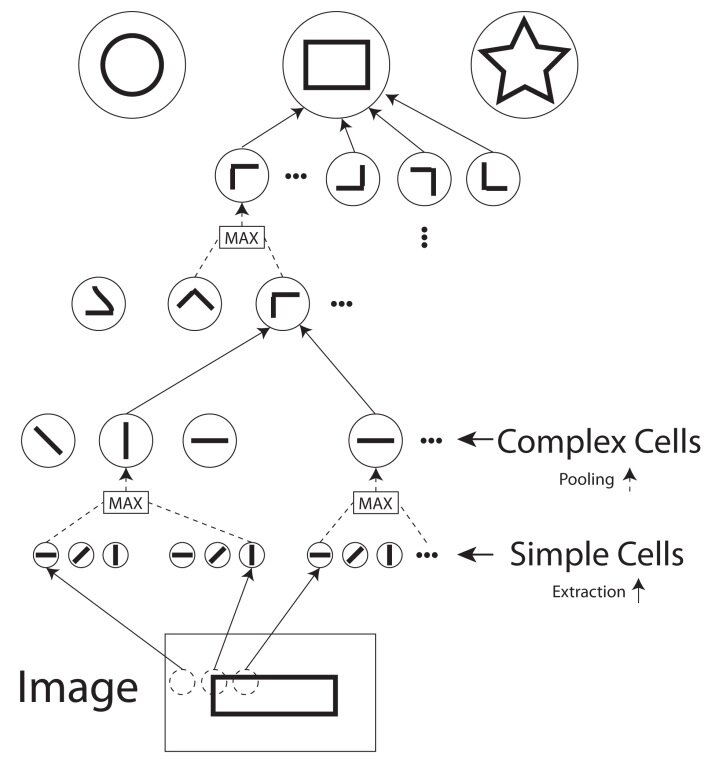
By mimicking this structure, AI models can tackle problems that are too complex for a single, flat processing model. This multi-timescale processing, where different layers operate on different levels of detail and complexity, is a key feature observed in the brain that these models try to replicate.
Why Layers Matter
Hierarchical reasoning is vital for solving any problem that requires planning, strategy, or understanding deep context. Imagine asking an AI to write a summary of a novel. A non-hierarchical model might just pick out important-sounding sentences. It lacks a deeper understanding of the book's structure.
A hierarchical model would approach it differently. At the highest level, it would identify the overall plot and main themes. At the next level, it would analyze the character arcs and key events within each chapter. At the lowest level, it would select specific sentences and phrases to construct the summary. This allows for a much more coherent and meaningful result.
Breaking down a problem into nested sub-tasks is the key to solving complex challenges efficiently.
This decomposition makes problem-solving far more efficient. Instead of exploring every possible path, the model can make high-level decisions first, pruning away entire branches of bad solutions. It focuses its computational power where it matters most, moving from a rough draft of a solution to a polished final product, one layer at a time.