Hero MotoCorp Product Ecosystem and Strategy
Historical Evolution
The Hero Honda Era
In 1984, India's Hero Group and Japan's Honda Motor Co. formed a partnership that would reshape the Indian two-wheeler market. The joint venture, Hero Honda, combined Hero's deep understanding of the Indian consumer with Honda's world-class engineering. The result was a series of motorcycles that became household names.
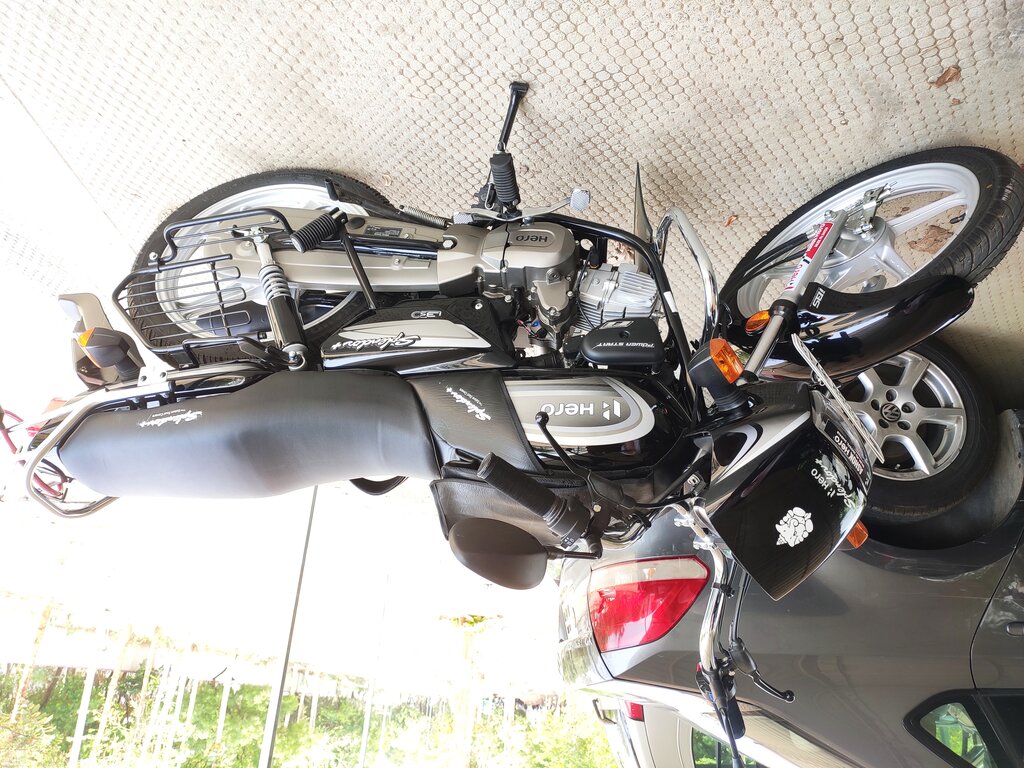
Models like the CD 100 and the original Splendor weren't just vehicles; they were symbols of reliability and incredible fuel efficiency. For millions of Indians, a Hero Honda motorcycle was an aspirational and practical first purchase. The partnership dominated the market for over two decades by consistently delivering what customers valued most: affordability and dependability.
The Road to Independence
Despite its immense success, the joint venture had inherent limitations for Hero. As the Indian company's ambitions grew, the terms of the partnership became restrictive. One major constraint was on exports. The agreement largely prevented Hero Honda from selling its products in international markets where Honda already had a presence, boxing Hero into the Indian subcontinent.
Furthermore, all critical technology and R&D came from Honda. This dependency meant Hero couldn't innovate on its own or develop products tailored specifically for new market segments without Honda's involvement. To become a true global player, Hero needed to control its own destiny, from product design to international sales.
The core conflict was simple: Hero's global ambitions could not be realized while it remained a regional partner dependent on licensed technology.
The partners agreed to part ways in 2010, marking the end of a 26-year relationship. This strategic split was not a failure but a necessary evolution. It set the stage for Hero to build its own identity and capabilities.
Forging a New Identity
In 2011, the company was reborn as Hero MotoCorp. The rebranding was a massive undertaking, handled by the renowned global consultancy Wolff Olins. The challenge was to create a new identity that could stand on its own, shedding the powerful 'Honda' association that had defined it for a generation of customers.
The new brand was launched with a powerful marketing campaign and a new logo, signaling a clean break from the past. The company's leadership was central to navigating this pivotal moment.
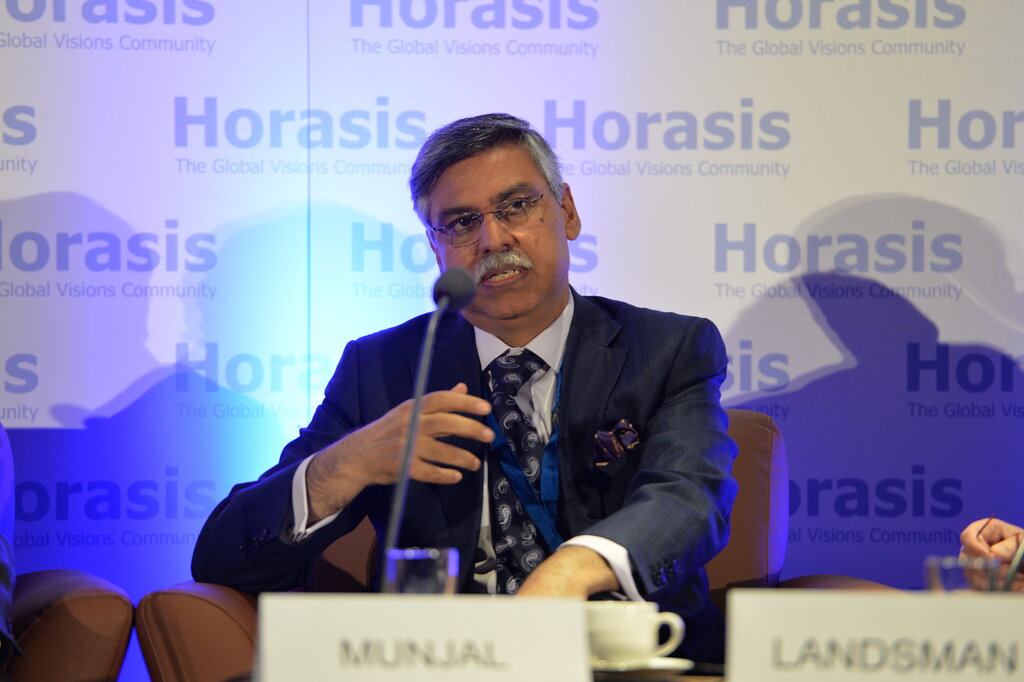
The transition wasn't just cosmetic. Hero knew that long-term success depended on technological self-reliance. The licensing agreement with Honda officially terminated in June 2014, ending Hero's access to its former partner's technology. This was the final push needed to become truly independent.
To fill the technological void, Hero MotoCorp made a significant investment in its own R&D infrastructure. The company established the Center of Innovation and Technology (CIT) in Jaipur. This state-of-the-art facility became the heart of Hero's product development, housing everything from design studios and test tracks to advanced prototyping labs. The CIT was Hero's definitive statement that it was no longer just a manufacturer, but an innovator.
What were the primary factors behind the massive success of the Hero Honda joint venture in India?
What was a major strategic limitation that prompted Hero to end its partnership with Honda?
This transformation from a regional partner to a self-sufficient global entity laid the foundation for Hero MotoCorp's future growth and expansion.