Hermeticism in Modern Esotericism
Introduction to Hermeticism
The Thrice-Great Hermes
In the ancient world, cultures often blended. When Alexander the Great's empire spread Greek culture across Egypt, the gods of both civilizations began to merge. The Greeks had Hermes, the quick-witted messenger of the gods. The Egyptians had Thoth, the ibis-headed deity of wisdom, writing, and magic. In the bustling intellectual melting pot of Greco-Roman Egypt, these two figures were combined into a single, revered sage: Hermes Trismegistus, which means “Hermes the Thrice-Greatest.”
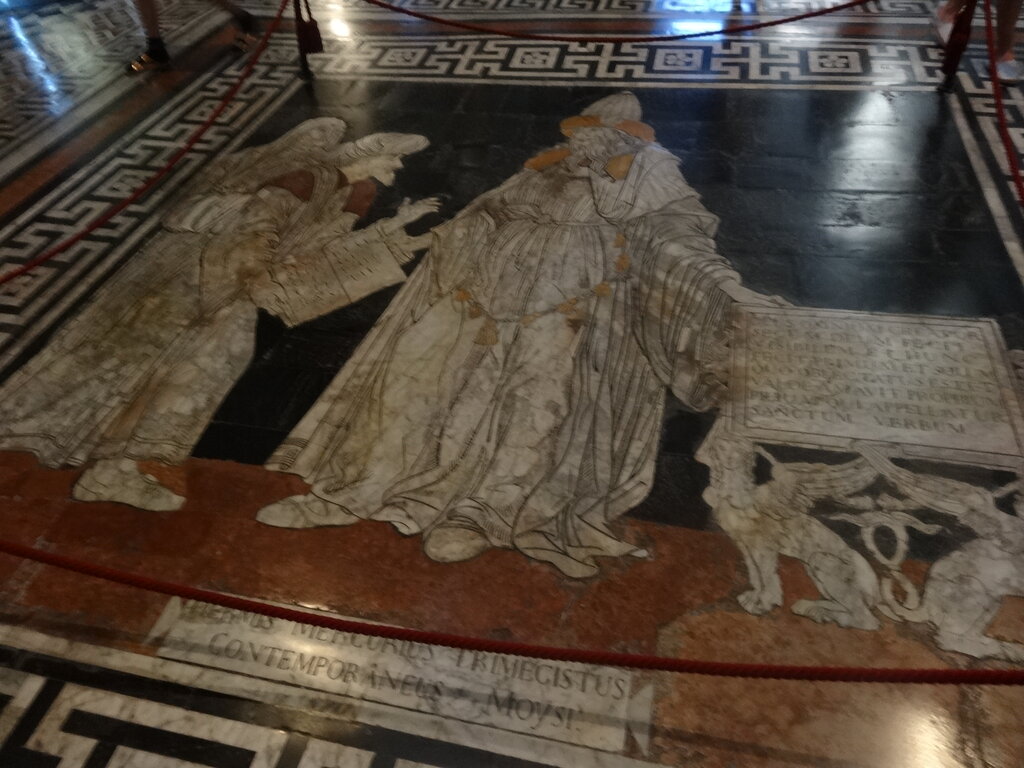
This legendary figure was seen not as a god to be worshipped, but as a wise teacher from the distant past who held the secrets of the universe. A collection of writings known as the Corpus Hermeticum appeared in the early centuries CE, attributed to this master. Though likely written by various authors of that era, these texts were presented as ancient Egyptian wisdom, and they became the foundation for a spiritual philosophy known as Hermeticism.
As Above, So Below
At the heart of Hermetic thought is a simple but profound idea, famously summarized in the phrase: “As above, so below.” This principle suggests that the universe is not a random collection of separate things, but a unified, interconnected whole. It teaches that the patterns of the cosmos, the great macrocosm, are reflected in the patterns of the individual human, the microcosm.
To understand the universe, look within yourself. To understand yourself, look to the universe.
Think of it like a fractal, where the same intricate design repeats itself at every scale, from the largest structure to the smallest component. Hermeticism views the human being as a universe in miniature. The same divine forces that shape galaxies and stars are believed to operate within the human soul. This connection implies that by understanding ourselves, we can gain insight into the workings of the entire cosmos, and vice versa.
The Pursuit of Gnosis
The ultimate goal in Hermeticism isn't just to believe in these ideas, but to experience them directly. This direct, intuitive understanding of the divine is called gnosis.
gnosis
noun
Direct, experiential knowledge of spiritual truths, as opposed to knowledge based on belief or dogma.
Gnosis is not something that can be learned from a book, though texts can point the way. It is a form of inner revelation—a personal awakening to the divine reality that exists both within the self and throughout the universe. The Hermetic path is a journey of self-purification and contemplation, designed to clear the mind and open it to this profound, unifying knowledge. It is the process of realizing that the microcosm and macrocosm are not just similar; they are one.
The figure of Hermes Trismegistus is a syncretic combination of which two deities?
What is the core meaning of the famous Hermetic principle, “As above, so below”?