Hellenistic Aesthetic Diffusion
Technical Aesthetic Diffusion
From Dogma to Affect
The Epicurean Garden was a closed system, a walled-off intellectual sanctuary where the physics of atomism served as the unshakeable foundation for an ethical cure. Within its confines, the pursuit of ataraxia and aponia was inseparable from a rigid adherence to Democritean materialism. Yet, as Epicurean thought bled into the broader Hellenistic and Roman consciousness, a remarkable transformation occurred. The system's ethical payload became functionally decoupled from its intricate physical dogma.
This wasn't a corruption of the doctrine but an optimization of its reach. The complex physics, a significant intellectual barrier to entry, was sublimated. What remained was a powerful cultural 'affect'—a sensibility centered on tranquility, the management of desire, and a retreat from public chaos. Think of it as a philosophical API. The end user didn't need to understand the source code of atomism to benefit from the application of a calmer life. The goal shifted from converting dogmatic disciples to diffusing a practical, appealing mood.
The promise of tranquility, once tethered to the atomic 'swerve,' was now accessible as a standalone lifestyle choice.
Mechanisms of Diffusion
This decoupling was not accidental; it was facilitated by specific mechanisms of cultural transmission. The shift from the 'medical' metaphor of philosophy—a cure for a sick soul—to Lucretius' famous 'honey on the rim of the cup' illustrates the change in strategy. Poetry, letters, and even common epitaphs became vectors for Epicurean sensibilities, bypassing the need for rigorous study in the Canon or On Nature.
In the 3rd century BCE, figures like Philodemus of Gadara played a crucial role. While himself a staunch Epicurean, his work in rhetoric and aesthetics demonstrated how the philosophy's ethical core could be presented through popular literary forms. The focus moved from proving the physics to demonstrating its desirable emotional outcomes. This made Epicureanism less of a strict school and more of a pervasive aesthetic, influencing Roman elites who might have found the underlying atomism unconvincing or socially inconvenient.
This aesthetic diffusion allowed the philosophy to permeate cultural spaces far beyond the formal Garden. It became a set of ethical sensibilities one could adopt without a full dogmatic conversion. Roman villas, with their secluded gardens and emphasis on private leisure (otium), became architectural manifestations of a diluted Epicurean ideal. The ideas were no longer just in texts but were embedded in the very structure of daily life for the privileged. This cultural 'affect' was more adaptable and resilient than the rigid dogma from which it sprang.
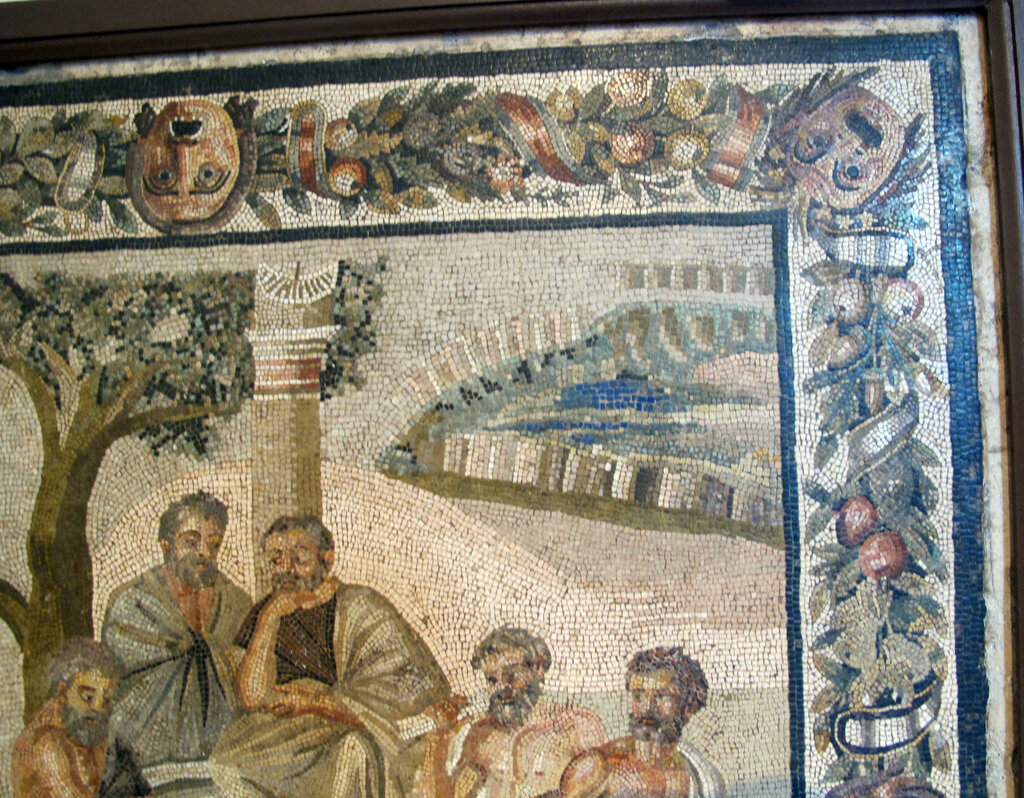
The result was a philosophy that could be practiced in degrees. One could appreciate the Epicurean critique of superstition and fear of death, as articulated beautifully by , without having to fully subscribe to the idea that the soul dissolves into constituent atoms upon death. The aesthetic was modular; one could select the parts that resonated, leaving the abstruse physics behind. This flexibility was the key to its widespread influence, turning a niche Athenian school into a lasting feature of the Greco-Roman intellectual landscape.
Ataraxia: This state of tranquil freedom from worry was the ultimate goal for Epicureans.
This public-facing aesthetic was, in essence, a triumph of marketing. The 'product'—tranquility—was excellent, but the original 'user manual'—the physics—was too dense. By creating more accessible entry points through art, literature, and lifestyle examples, later Epicureans optimized the philosophy for a mass market, ensuring its legacy was not just intellectual, but deeply and lastingly cultural.
Let's test your understanding of how Epicureanism evolved from a strict doctrine into a widespread cultural force.
According to the text, what was the most significant transformation of Epicureanism as it spread into the broader Hellenistic and Roman world?
Lucretius's metaphor of 'honey on the rim of the cup' was used to illustrate a shift in strategy. What does this metaphor represent?
The transformation of Epicureanism shows that for an idea to achieve broad cultural resonance, its core emotional appeal must often be untethered from its complex original framework, allowing it to adapt and thrive in new contexts.