Helicopter Flight Dynamics
Introduction to Helicopter Aerodynamics
Wings That Spin
Unlike airplanes that use fixed wings to generate lift, helicopters rely on a set of rotating wings called rotor blades. These aren't just flat paddles slicing through the air. Each blade is a sophisticated airfoil, carefully shaped to manipulate air pressure and create the lift needed to get off the ground.
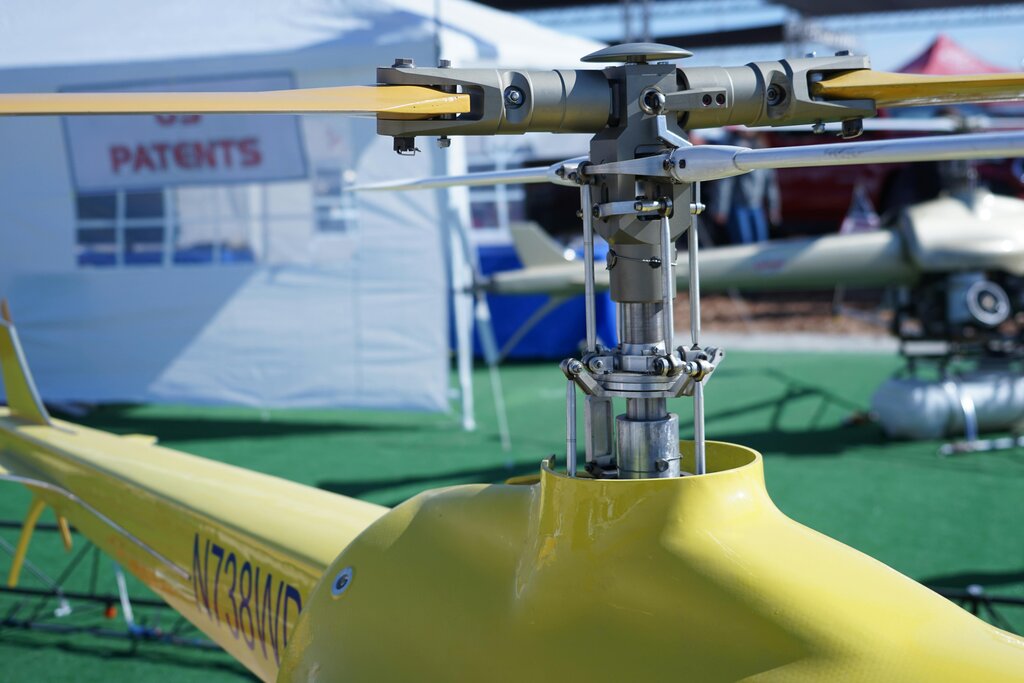
Just like an airplane wing, a helicopter's rotor blade is curved on top and flatter on the bottom. As the blade spins, it cuts through the air, forcing air to travel faster over the curved upper surface than the flatter lower surface. According to Bernoulli's principle, this difference in speed creates a pressure difference: lower pressure above the blade and higher pressure below it. This pressure imbalance generates an upward force, which we call lift.
Four primary forces influence flight: lift, weight, thrust, and drag.
For a helicopter to hover, the lift generated by the spinning rotor blades must exactly balance its weight. To climb, the lift must be greater than its weight. But this is just part of the story. The blades don't just spin; they also change their angle as they rotate, a concept known as pitch.
An Ever-Changing Angle
The angle at which a rotor blade meets the oncoming air is called the angle of attack. By increasing this angle, pilots can generate more lift. However, a helicopter's rotor system is a dynamic and complex environment. A blade moving forward into the direction of flight moves much faster relative to the air than a blade moving backward on the other side. This is called dissymmetry of lift.
If this speed difference weren't managed, the advancing blade would generate much more lift than the retreating blade, causing the helicopter to roll over. To counteract this, helicopters have a mechanism that automatically reduces the angle of attack on the advancing blade (decreasing its lift) and increases it on the retreating blade (increasing its lift). This constant adjustment, known as flapping and feathering, keeps the lift balanced across the entire rotor disk, allowing for stable flight.
Unique Forces at Play
Beyond lift, helicopter rotors contend with several other unique aerodynamic forces. One of the most important is torque. As the engine spins the main rotor in one direction, Newton's third law dictates that the helicopter's body will try to spin in the opposite direction. This is why most helicopters have a tail rotor; it pushes sideways to counteract the torque and keep the aircraft pointing straight.
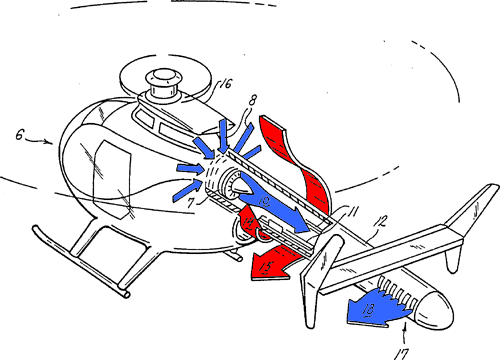
Another phenomenon is translational lift. When a helicopter hovers, its blades are constantly working in their own downwash, which is turbulent and inefficient. As the helicopter begins to move forward, it flies into undisturbed air. This smoother airflow over the rotor disk makes the blades much more efficient, providing a noticeable increase in lift without any extra power from the engine.
The key difference between fixed-wing and rotary-wing aerodynamics lies in this constantly changing, asymmetrical airflow. An airplane wing experiences relatively stable conditions, while a helicopter blade's environment changes with every degree of rotation.
These principles form the foundation of helicopter flight. By understanding how the spinning airfoils generate and balance lift while managing unique forces like torque, we can appreciate the incredible engineering that allows these machines to take to the skies.
What is the primary reason a helicopter rotor blade is curved on top and flatter on the bottom?
What is the purpose of a helicopter's tail rotor?