Hegel's Philosophy Explained
Introduction to Hegel
Who Was Hegel?
Georg Wilhelm Friedrich Hegel was born in Stuttgart, Germany, in 1770. He grew up in a world crackling with new ideas and revolutionary energy. As a young theology student, he and his roommates, the philosopher Friedrich Schelling and the poet Friedrich Hölderlin, were captivated by the French Revolution. They saw it as a monumental step forward for human freedom.
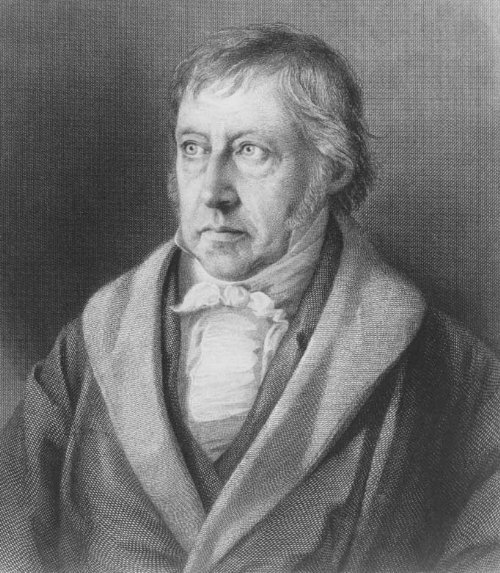
Hegel’s career wasn't an immediate success. He worked as a private tutor and a newspaper editor before finally landing a professorship. His big break came when he was appointed to the most prestigious philosophy chair in Germany at the University of Berlin. There, his lectures became famous, attracting students from all over Europe. He became the dominant voice in German philosophy until his death in 1831.
A World in Upheaval
To understand Hegel, you have to understand his time. He lived through one of the most chaotic periods in European history. The French Revolution upended centuries of tradition, and Napoleon's armies marched across the continent, dismantling old empires. For Hegel, these weren't just random, violent events. He saw them as history in motion, a painful but necessary process of humanity striving toward greater freedom and self-awareness.
He was a key figure in a movement called German Idealism. Thinkers like Immanuel Kant had argued that our minds actively shape our experience of reality. Hegel and his contemporaries took this idea and ran with it. They wanted to create a complete system of thought that could explain everything, from the laws of logic to the movements of history and the purpose of art, religion, and philosophy.
Hegel's Big Ideas
Hegel's writing is notoriously difficult, but his core project is straightforward: to understand the rational structure of reality. His most famous works map out this grand vision.
- Phenomenology of Spirit (1807): This book traces the development of human consciousness, from basic sensory experience to absolute knowledge. It’s a journey of the mind discovering itself and its place in the world.
- Science of Logic (1812–1816): Here, Hegel attempts to outline the fundamental categories of thought itself, the very structure of reason.
- Elements of the Philosophy of Right (1820): This work applies his philosophy to society, exploring the concepts of freedom, rights, the family, and the state.
To navigate these ideas, Hegel developed his own vocabulary. Here are a few key terms to get you started.
Geist
noun
A German word that translates to "mind" or "spirit." For Hegel, it refers to the single, collective consciousness of humanity that develops and unfolds throughout history.
You can think of Geist as the main character in the story of history. It's not a supernatural being, but rather the sum total of human culture, reason, and spirit, constantly learning and evolving.
The Dialectic: A Process of Growth
Hegel argued that progress isn't linear. It happens through a process of conflict and resolution. While he never used this exact terminology, this process is often simplified into three stages:
This cycle isn't just for arguments. Hegel saw it everywhere: in the rise and fall of civilizations, the development of art, and the evolution of philosophical thought. Each synthesis becomes a new thesis, and the process begins again, driving Geist toward a deeper understanding of itself. This ultimate state of complete self-knowledge is what Hegel called the Absolute Idea.
Ready to check your understanding?
What major historical event profoundly influenced Hegel during his youth, shaping his view of history as a process toward greater human freedom?
In Hegel's philosophy, what is the term for the sum total of human culture, reason, and spirit that evolves through history?
Hegel's philosophy provides a powerful framework for thinking about history, society, and consciousness. By seeing the world as a dynamic, unfolding process, he challenged us to find reason and progress even in times of conflict and change.