Hegel's Phenomenology of Spirit Explained
Introduction to Hegel
The Philosopher of Spirit
Georg Wilhelm Friedrich Hegel was born in Stuttgart, Germany, in 1770. His life spanned a period of immense change, including the French Revolution and the Napoleonic Wars. These events deeply influenced his thinking, prompting him to seek a philosophical system that could explain the dramatic unfolding of history.
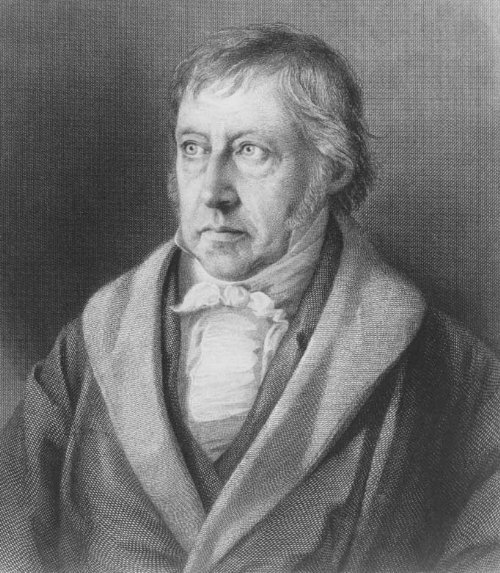
Hegel was a central figure in a movement known as German Idealism. This wasn't about being idealistic in the everyday sense. For these philosophers, the ultimate reality wasn't physical matter but mind, consciousness, or what Hegel called Geist—a German word that means both mind and spirit. They believed that to understand the world, we must first understand the structures of thought itself. This movement built upon the groundbreaking work of Immanuel Kant, who had argued that our minds actively shape our experience of reality. The Idealists took this idea and ran with it, trying to create a complete picture of how consciousness and the world relate.
Hegel's Major Works
Hegel was a systematic thinker who aimed to create a comprehensive philosophy. His ideas are spread across several dense and challenging books.
| Work | Year Published | Core Idea |
|---|---|---|
| Phenomenology of Spirit | 1807 | Traces the development of consciousness from simple awareness to absolute knowledge. |
| Science of Logic | 1812–1816 | Explores the fundamental categories of thought and being. |
| Elements of the Philosophy of Right | 1820 | Outlines his political philosophy, focusing on the state and freedom. |
| Lectures on the Philosophy of History | Posthumous | Argues that history is the rational process of freedom realizing itself in the world. |
These works are interconnected, each exploring a different facet of his overarching system. Together, they attempt to show how reality, in all its forms—from logic and nature to art, religion, and politics—is the expression of a single, rational spirit.
Phenomenology of Spirit
The Phenomenology of Spirit is arguably Hegel's most famous and influential work. The book is a philosophical journey, an epic story of consciousness itself. Hegel isn't just telling us his conclusions; he's showing us the path that consciousness takes to reach them.
The book tracks the evolution of the mind, starting from the most basic level of sensory experience and moving through progressively more complex stages of self-awareness and understanding.
Imagine consciousness as a character in a story. It starts out naive, simply taking in the world. But as it tries to make sense of things, it keeps running into contradictions and problems. Each time it solves a problem, it moves to a new, more sophisticated level of understanding. This process of overcoming contradictions is what Hegel famously calls the dialectic. The Phenomenology is the grand narrative of this dialectical journey, showing how consciousness develops through its own experiences and struggles toward a final, complete self-knowledge.
Which philosophical movement was Georg Wilhelm Friedrich Hegel a central figure in?
According to the text, what is the best description of Hegel's concept of the dialectic?