Hedge Funds and Bridgewater Associates for Investment Research
Hedge Fund Basics
What Is a Hedge Fund?
A hedge fund is a private investment partnership. Its main goal is to generate high returns for its investors, regardless of whether the overall market is going up or down. The name comes from the idea of "hedging," which means using various strategies to reduce risk. While some funds focus heavily on this, others might take on significant risk in pursuit of higher profits.
Unlike funds you might find in a standard retirement account, hedge funds are not open to the general public. They are designed for a specific type of client: sophisticated investors who meet certain income or net worth requirements. This exclusivity allows hedge funds to operate with more flexibility than other investment vehicles.
Not Your Average Fund
The most common point of comparison for a hedge fund is a mutual fund. While both pool money from investors to buy securities, they operate very differently. A mutual fund is like a public bus—highly regulated, following a set route, and open to almost everyone. A hedge fund is more like a high-performance race car—built for speed and agility, driven by a specialist, and accessible to only a few.
| Feature | Hedge Fund | Mutual Fund |
|---|---|---|
| Investors | Accredited investors, institutional clients | General public |
| Regulation | Lightly regulated | Heavily regulated (e.g., by the SEC) |
| Strategies | Flexible; can use derivatives, short selling, leverage | Restricted; typically long-only stocks and bonds |
| Fees | Management fee + performance fee (e.g., 2 and 20) | Primarily a management fee (expense ratio) |
| Liquidity | Low; often requires long lock-up periods | High; can usually sell shares daily |
This flexibility is a hedge fund's superpower. Because they face fewer regulations, they can invest in almost anything—stocks, bonds, real estate, currencies, or derivatives. They can also use complex strategies like short-selling (betting that an asset's price will fall) and leverage (using borrowed money to amplify potential returns), which are off-limits for most mutual funds.
This freedom comes with a trade-off. Investors often have to lock up their money for a set period, sometimes years, giving the fund manager time to execute long-term strategies.
The People Involved
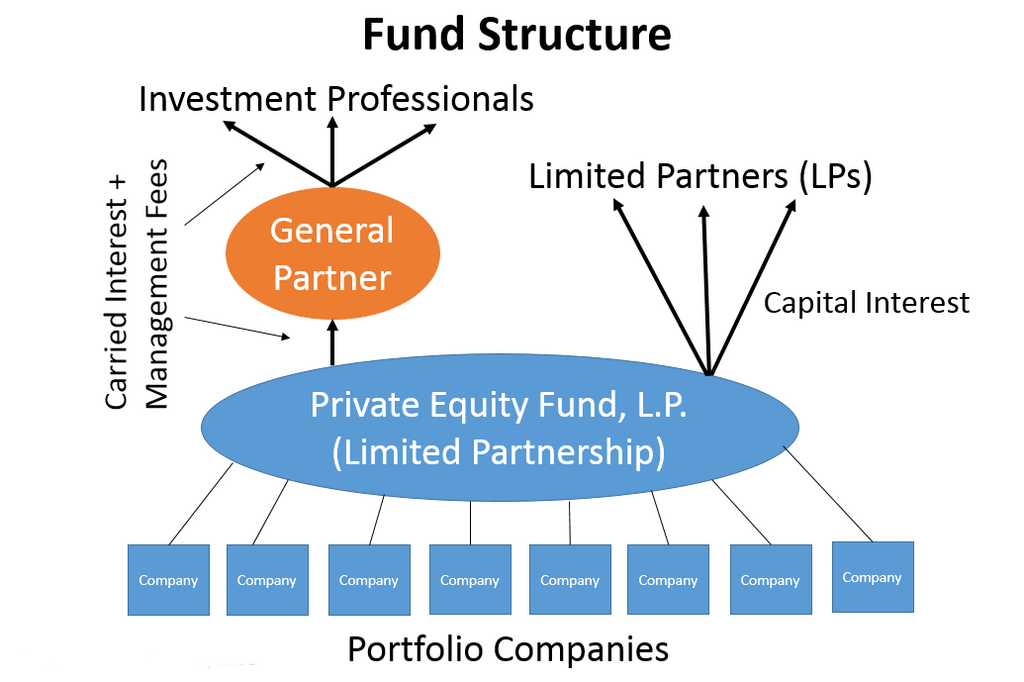
A hedge fund typically operates as a partnership. There are two main roles: the General Partner and the Limited Partners.
The General Partner (GP) is the brains of the operation. This is the fund manager or management firm that makes all the investment decisions. GPs are expected to have significant expertise and often invest a large amount of their own money into the fund. This is known as having "skin in the game," which helps align their interests with those of the investors.
The Limited Partners (LPs) are the investors who provide the capital. They can be high-net-worth individuals, pension funds, university endowments, or other institutions. Their liability is limited to the amount of money they invest. They entrust their capital to the GP and do not participate in the day-to-day investment decisions.
Paying for Performance
Hedge fund fee structures are designed to reward performance. The most common model is known as "Two and Twenty."
2% Management Fee: An annual fee charged on the total assets under management (AUM). This covers the fund's operational expenses, like salaries, rent, and research.
20% Performance Fee: A fee taken as a percentage of the fund's profits. This is the manager's main incentive to generate high returns.
To ensure fairness, performance fees are often subject to a couple of conditions:
-
High-Water Mark: A manager can only earn a performance fee on new profits. If the fund loses value, it must recover all losses and surpass its previous peak value before the manager can take a performance fee again.
-
Hurdle Rate: Some funds have a minimum rate of return that must be achieved before performance fees are charged. For example, if the hurdle rate is 5%, the manager only earns a performance fee on profits above that 5% return.
This structure heavily aligns the interests of the GP with the LPs. If the investors don't make money, the manager's compensation is significantly reduced.
The regulatory landscape for hedge funds has evolved over time. While they are exempt from many of the registration and reporting requirements that apply to mutual funds, they aren't completely unregulated. In the U.S., for instance, the Dodd-Frank Act of 2010 increased oversight, requiring many hedge fund advisors to register with the Securities and Exchange Commission (SEC) and provide information about their trades and portfolios.
The rationale for lighter regulation is that hedge fund investors are considered "sophisticated." The law assumes they are capable of assessing the risks involved and can afford potential losses without catastrophic consequences. This allows managers the freedom to pursue complex, high-risk strategies that would be unsuitable for the general public.
What is the primary objective of a hedge fund?
In the structure of a hedge fund, the investors who provide capital but do not participate in daily investment decisions are known as:
With these fundamentals in place, you have a solid foundation for understanding the world of hedge funds.