Hebrew Roots to Conversation
Introduction to Biblical Hebrew
The Hebrew Alphabet
The Hebrew alphabet, or Aleph-Bet, is the foundation for reading both Biblical and Modern Hebrew. It consists of 22 letters, and here's the first thing to know: they are all consonants. The language is also written from right to left, the opposite of English.
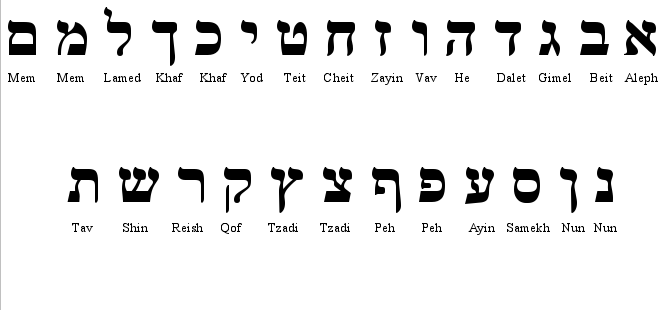
Five of these letters have a special sofit, or final form, that is only used when the letter appears at the end of a word. The sound of the letter doesn't change, just its shape. It’s like how English used to have a different 's' (ſ) for the start or middle of a word.
| Letter | Name | Regular Form | Final Form |
|---|---|---|---|
| Kaf | כַּף | כ | ך |
| Mem | מֵם | מ | ם |
| Nun | נוּן | נ | ן |
| Peh | פֶּה | פ | ף |
| Tzadi | צַדִי | צ | ץ |
Adding the Vowels
If all the letters are consonants, you might be wondering how anything gets pronounced. Originally, ancient Hebrew texts were written without vowels. Readers simply knew which vowel sounds to supply from memory and context.
Over time, a system of markings called niqqud (נִקּוּד) was developed to preserve the traditional pronunciation, especially for the Hebrew Bible. These dots and dashes are placed above, below, or inside the consonants to represent vowel sounds.
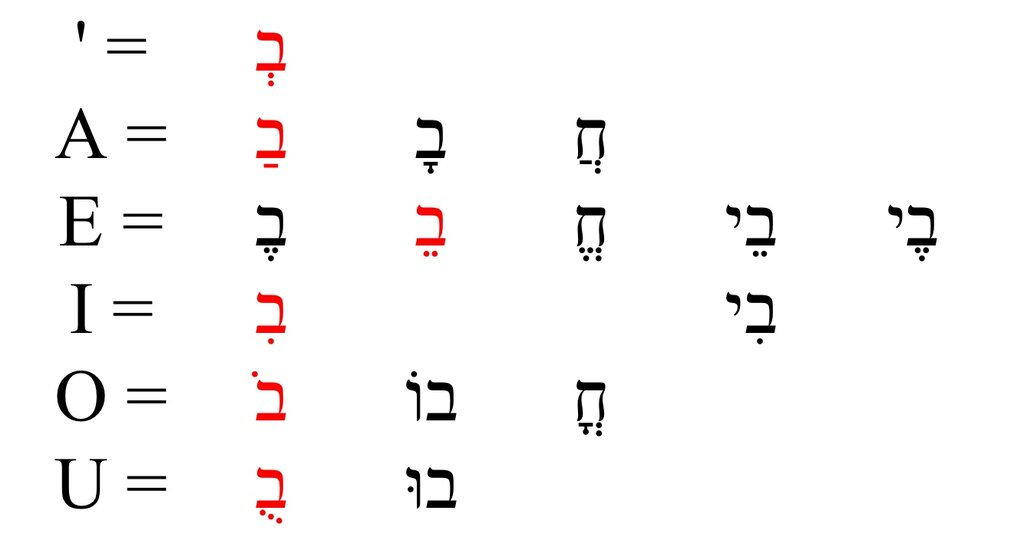
For anyone learning Biblical Hebrew, the niqqud are essential. They remove the guesswork. In modern Israel, most books, newspapers, and signs are printed without vowels, but they are always used in the Bible, prayer books, and materials for children or new learners.
Vowels in Hebrew aren't separate letters. They're markings that tell you how to pronounce the consonants.
Basic Pronunciation
Let's see how consonants and vowels work together by looking at one of the most famous Hebrew words.
peace, hello, goodbye
Here’s how the word breaks down:
-
שָׁ — This is the letter Shin (ש), which makes an "sh" sound. The dot on the top right confirms this (if it were on the left, it would be a Sin and make an "s" sound). The T-shaped vowel mark underneath is a qamatz, which makes an "ah" sound. Together, they make the syllable sha.
-
לוֹ — Next is the letter Lamed (ל), which sounds like "l." It's followed by the letter Vav (ו) with a dot above it. This combination, called a holam malei, creates a long "o" sound. Together, you get lo.
-
ם — The last letter is the final form of Mem (ם), which makes a simple "m" sound. There's no vowel mark, so the sound closes the word.
Put it all together, and you get sha-lom.
One other mark to know is the dagesh, a dot placed inside a letter. It can change a letter's sound. For example, the letter פ without a dagesh is pronounced "f" (like in sofit). But with a dot inside (פּ), it’s pronounced "p."
Let's check your understanding of these core concepts.
What is the primary function of the system of markings called niqqud?
A letter like 'ם' is known as a sofit letter. When is this form of a letter used?
Mastering the alphabet and vowels is the essential first step. With these fundamentals, you're ready to start reading and understanding the words of the Hebrew Bible.