Hebrew Cursive Script Mastery
Introduction to Hebrew Alphabet
The Hebrew Aleph-Bet
Welcome to the Hebrew alphabet, often called the Aleph-Bet, after its first two letters, Aleph and Bet. It's a bit different from the English alphabet you're used to. For one, it's an abjad, which means it's made up entirely of consonants. Vowels are typically marked with small dots and dashes above or below the letters, but we'll get to those later. For now, just focus on the letters themselves.
The most important thing to remember is that Hebrew is written and read from right to left. It might feel strange at first, but you'll get the hang of it quickly.
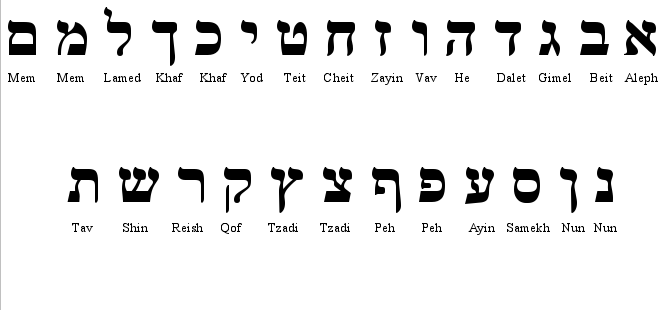
There are 22 letters in total. Let's start by looking at the first eleven. We'll cover their name and the sound they make. Many of them will have sounds that are very familiar.
| Letter | Name | Sound |
|---|---|---|
| א | Aleph | Silent (carries the vowel sound) |
| ב | Bet | B as in 'boy' or V as in 'vase' |
| ג | Gimel | G as in 'go' |
| ד | Dalet | D as in 'dog' |
| ה | Heh | H as in 'hello' |
| ו | Vav | V as in 'vase' or U as in 'blue' |
| ז | Zayin | Z as in 'zoo' |
| ח | Chet | A throaty 'ch' sound, like in 'Bach' |
| ט | Tet | T as in 'top' |
| י | Yud | Y as in 'yes' |
| כ | Kaf | K as in 'king' or 'ch' like in 'Bach' |
Great. Notice that some letters, like Bet and Kaf, can have two different sounds. This is often indicated by a small dot inside the letter called a dagesh, but for now, just be aware of the possibilities.
Ready for the second half? Here are the remaining eleven letters.
| Letter | Name | Sound |
|---|---|---|
| ל | Lamed | L as in 'love' |
| מ | Mem | M as in 'mother' |
| נ | Nun | N as in 'no' |
| ס | Samekh | S as in 'snake' |
| ע | Ayin | Silent (a guttural sound from the throat) |
| פ | Pe | P as in 'park' or F as in 'farm' |
| צ | Tzadi | 'ts' as in 'cats' |
| ק | Kuf | K as in 'king' |
| ר | Resh | R as in 'run' (often rolled) |
| ש | Shin | 'sh' as in 'shoe' or S as in 'snake' |
| ת | Tav | T as in 'top' |
Letters with Final Forms
Five Hebrew letters change their shape when they appear at the very end of a word. These are called final forms, or sofit forms. The sound of the letter doesn't change, just its appearance. This feature helps you immediately see where a word ends, which is useful because there are no capital letters in Hebrew.
Think of final forms as the period at the end of a letter's journey in a word. It signals a hard stop.
The five letters with final forms are Kaf, Mem, Nun, Pe, and Tzadi. Here’s how they look side-by-side.
| Letter | Standard Form | Final Form | Name |
|---|---|---|---|
| Kaf | כ | ך | Kaf Sofit |
| Mem | מ | ם | Mem Sofit |
| Nun | נ | ן | Nun Sofit |
| Pe | פ | ף | Pe Sofit |
| Tzadi | צ | ץ | Tzadi Sofit |
You'll notice the final forms often have a straight, descending line. This makes them easy to spot at the end of a word. For example, the word for king is מלך (melekh). It starts with a standard Mem (מ) and ends with a final Kaf (ך).
Now let's see how well you can recognize these new shapes and concepts.
In which direction is Hebrew text written and read?
The Hebrew alphabet is described as an "abjad". What does this mean?
That's your introduction to the printed Hebrew letters. The next step is to practice recognizing them until they become familiar friends. Don't worry about memorizing them all at once; focus on a few at a time.