Heat Treatment Processes Explained
Introduction to Heat Treatment
Shaping Metals with Fire
At its heart, heat treatment is a controlled process of heating and cooling metals to change their internal structure. The goal isn't to melt or reshape the metal, but to alter its properties to make it better for a specific job. Think of it like baking. You start with flour, eggs, and sugar. Depending on how you combine them and how long you bake them at what temperature, you can get a fluffy cake or a hard cookie. The ingredients are the same, but the final product is vastly different. Heat treatment does the same for metals.
It’s a way to unlock a material’s hidden potential, tailoring its characteristics without changing its shape.
Metallurgy
noun
The branch of science and technology concerned with the properties of metals and their production and purification.
Tougher, Stronger, Harder
The main reason we heat-treat metals is to adjust their mechanical properties. These properties determine how a material behaves under force. By carefully managing temperature and time, metallurgists can fine-tune a metal's characteristics to get the perfect balance for its intended use.
Key properties that can be modified include:
- Hardness: A material's resistance to scratching and indentation.
- Strength: The ability to withstand an applied force without breaking or deforming permanently.
- Toughness: The ability to absorb energy and deform without fracturing. Think of it as resistance to breaking from a sudden impact.
- Ductility: The ability to be stretched or drawn into a wire without breaking.
Often, these properties involve a trade-off. A treatment that makes a metal extremely hard might also make it brittle, reducing its toughness. The art of metallurgy is finding the sweet spot.
Beyond these mechanical traits, heat treatment also changes a metal's physical properties. The process rearranges the microscopic crystals, or grains, that make up the metal. Controlling the size and structure of these grains is key to achieving the desired properties. A finer grain structure, for instance, often leads to higher strength.
From Tools to Turbines
Heat treatment is not a niche laboratory technique; it's a cornerstone of modern manufacturing. Nearly every metal product you encounter has likely undergone some form of heat treatment to ensure it performs correctly and safely.
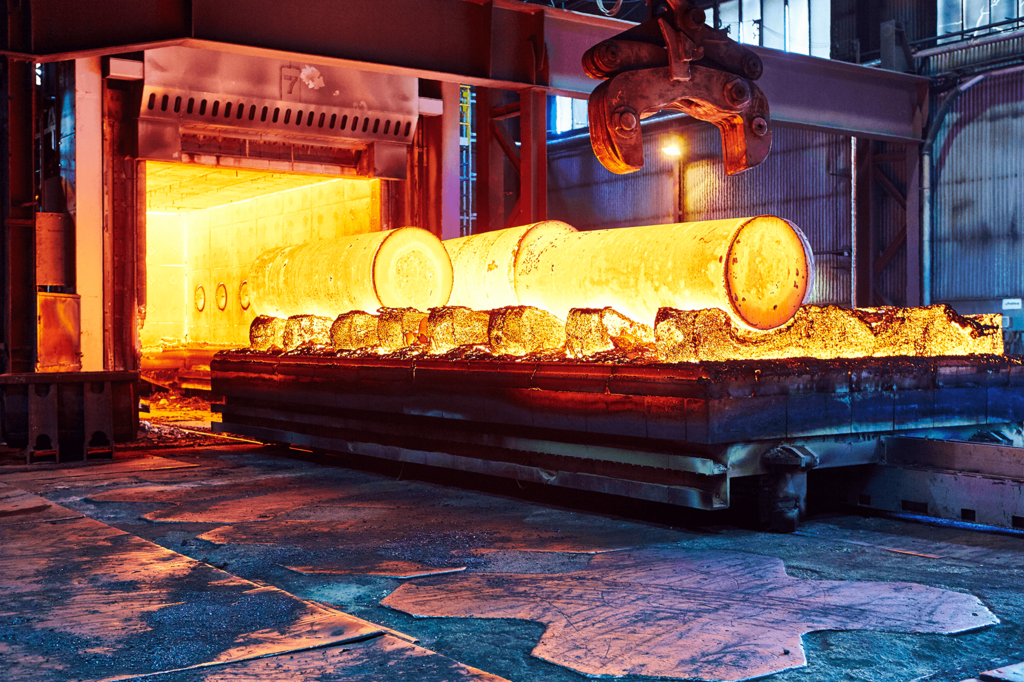
Common applications are everywhere:
- Automotive Industry: Engine components like crankshafts and gears are heat-treated for strength and wear resistance. Car bodies are treated to make them strong yet formable.
- Aerospace: Turbine blades in jet engines must withstand extreme temperatures and stress. Specialized heat treatments give them the required durability.
- Toolmaking: Hand tools like hammers and wrenches need to be hard enough to not deform in use but tough enough not to shatter. The cutting edges of drill bits and saw blades are hardened to keep them sharp.
- Construction: The steel beams and rebar that form the skeleton of buildings are treated to ensure they can bear immense loads.
By manipulating heat, we can transform a standard piece of steel into a high-performance component, making our machines more efficient, our structures safer, and our tools more reliable.
What is the primary goal of heat treating metals?
If a treatment makes a metal extremely hard, it will likely become more brittle, which is a decrease in its __________.