Heat Pumps Explained
Introduction to Heat Pumps
Moving Heat, Not Making It
Think about how a refrigerator works. It doesn't create cold; it moves heat from inside the box to the outside, leaving the inside cool. A heat pump does the same thing, but on a larger scale. It's a device that transfers thermal energy from one location to another.
Unlike a furnace that burns fuel to create heat, a heat pump simply moves existing heat. This makes it incredibly efficient. The magic of a heat pump is that it can work in two directions. In the winter, it pulls heat from the cold outdoors and moves it inside your house. In the summer, it reverses the process, pulling heat from your house and moving it outdoors, just like an air conditioner.
The Four Key Players
Every heat pump operates on a refrigeration cycle, which relies on four main components working together. A special fluid called a refrigerant continuously circulates through these parts, absorbing, transporting, and releasing heat.
Here’s what each component does:
-
Evaporator: This is where the magic begins. The cold, liquid refrigerant flows through the evaporator coil. As air from the heat source (like the outside air) passes over it, the refrigerant absorbs the heat and boils, turning into a low-pressure gas. It's essentially a heat sponge.
-
Compressor: This is the heart of the system. It takes the low-pressure gas from the evaporator and squeezes it, increasing its pressure. This process adds a lot of energy, making the gas very hot. The compressor does the work that makes moving heat from a cold place to a warm place possible.
-
Condenser: The hot, high-pressure gas now moves to the condenser. Here, it releases its heat into the surrounding area (like the air inside your house). As it cools, the refrigerant condenses back into a high-pressure liquid.
-
Expansion Valve: Finally, the high-pressure liquid passes through the expansion valve. This valve reduces the pressure of the refrigerant, causing its temperature to drop dramatically. The cold, low-pressure liquid is now ready to return to the evaporator and start the cycle all over again.
The entire process relies on a simple physical principle: when a liquid evaporates, it absorbs heat, and when a gas condenses, it releases heat.
Heating and Cooling Modes
A heat pump uses the same cycle for both heating and cooling. The only difference is the direction of heat transfer, which is controlled by a reversing valve.
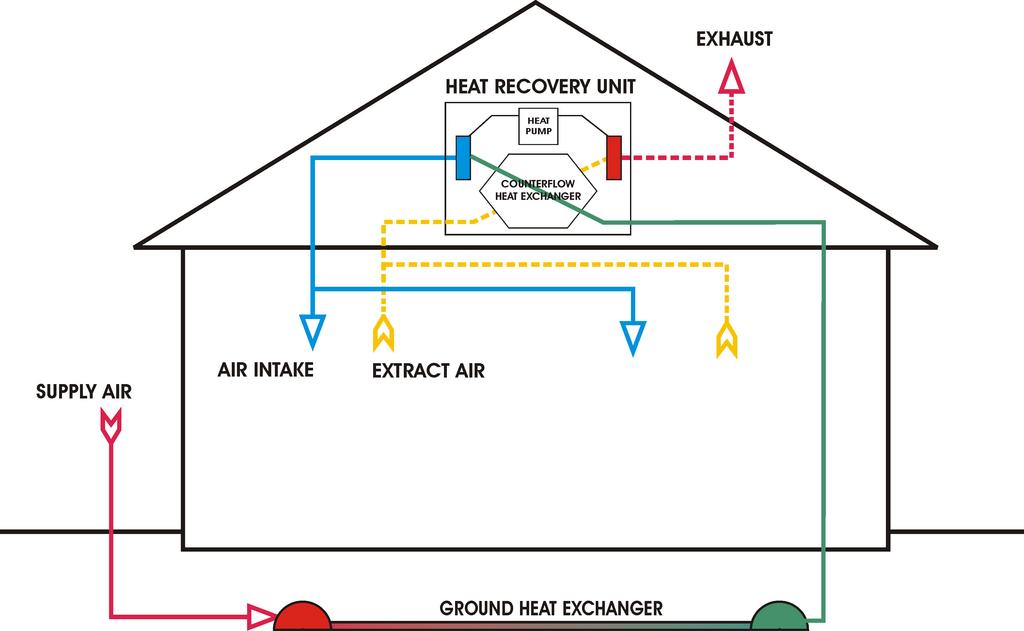
Heating Mode
In winter, the outdoor coil acts as the evaporator and the indoor coil acts as the condenser. The refrigerant absorbs heat from the cold outdoor air and releases it inside your home. Even when it feels cold outside, there's still thermal energy in the air that the heat pump can extract.
Cooling Mode
In summer, the reversing valve flips the flow of the refrigerant. The indoor coil becomes the evaporator, absorbing heat from the air inside your house. The outdoor coil becomes the condenser, releasing that heat into the outside air. In this mode, the heat pump functions exactly like a standard air conditioner.
By reversing the roles of the two coils, a single device can provide year-round comfort. This elegant and efficient process is the foundation of how all heat pumps work, whether they draw heat from the air, the ground, or a water source.
What is the fundamental principle behind how a heat pump works?
In the refrigeration cycle, which component takes a low-pressure gas and squeezes it, increasing its temperature and pressure?
This ability to both heat and cool makes heat pumps a versatile and efficient solution for climate control.