Heat Pump Water Heating Explained
Introduction to Heat Pump Water Heaters
A Smarter Way to Heat Water
Most water heaters are simple. They use electric coils or burn gas to generate heat, much like a stove boils a pot of water. It's a direct, brute-force approach that works but consumes a lot of energy.
A heat pump water heater (HPWH) is different. Instead of generating heat from scratch, it moves existing heat from the surrounding air into the water in its tank. Think of it like a refrigerator, but working in reverse. A fridge pulls heat from its insulated box and releases it into the room. A heat pump water heater pulls heat from the room and puts it into the water.
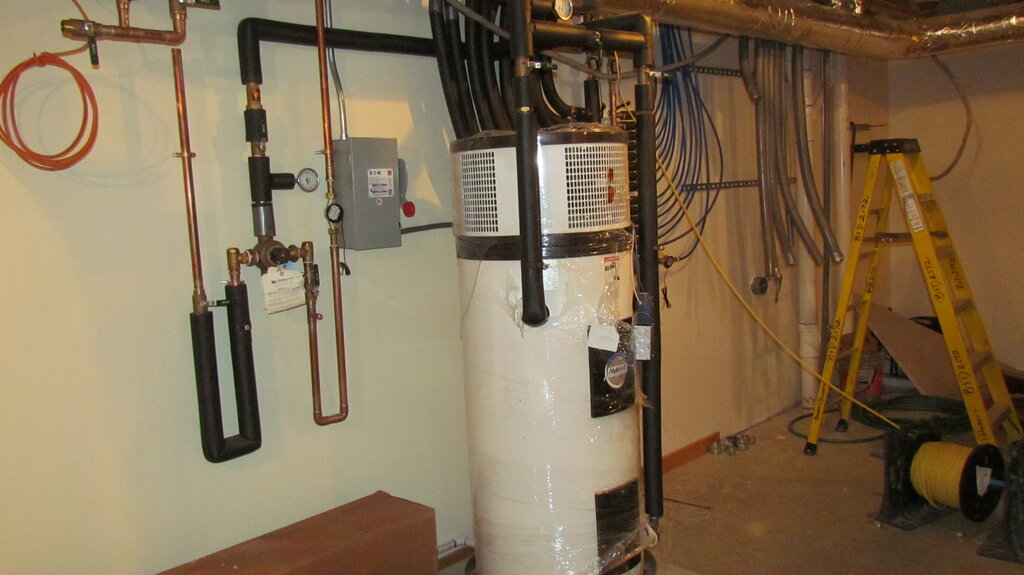
This process of transferring heat is far more efficient than creating it. Because of this clever trick, HPWHs can be two to three times more energy-efficient than their traditional counterparts. They are a type of hybrid system, often containing standard electric heating elements as a backup for times of high demand.
How They Work
The magic behind a heat pump lies in a continuous cycle involving a special fluid called a refrigerant. This cycle is driven by four main components: an evaporator, a compressor, a condenser, and an expansion valve.
- A fan pulls in ambient air and passes it over the evaporator coils, which contain the cold, liquid refrigerant.
- The heat from the air is absorbed by the refrigerant, causing it to boil and turn into a gas.
- This gas is then moved to the compressor, which increases its pressure. Compressing the gas makes it very hot.
- The hot, pressurized gas flows through condenser coils wrapped around the water tank. The heat transfers from the coils to the water, warming it up. As the gas cools, it turns back into a liquid.
- The high-pressure liquid then passes through an expansion valve, which lowers its pressure and temperature, preparing it to start the cycle all over again.
This entire process happens inside a unit mounted on top of an insulated water storage tank. Because it pulls heat from the air, a HPWH also cools and dehumidifies the space where it's located. This means it needs to be installed in a room with at least 1,000 cubic feet of air space (a 10x12-foot room, for example) to function properly.
The Efficiency Edge
Comparing a heat pump water heater to a traditional one reveals a stark difference in how they use energy. A conventional electric water heater is essentially 100% efficient, meaning all the electricity it uses is converted directly into heat. A gas heater's efficiency varies, but much of its energy is lost as exhaust.
A HPWH, on the other hand, can have an efficiency of 200% to 300%. This might sound impossible, but it makes sense when you remember it's not creating heat, just moving it. For every unit of electricity it consumes to run the compressor and fan, it moves two to three units of heat into the water.
| Feature | Heat Pump Water Heater | Traditional Electric | Traditional Gas |
|---|---|---|---|
| Principle | Moves heat from air to water | Creates heat with electric coils | Creates heat by burning gas |
| Energy Use | Very low | High | Moderate |
| Upfront Cost | Highest | Low | Moderate |
| Operating Cost | Lowest | High | Moderate |
| Installation | Needs open space (40-90°F) | Simple, any location | Needs gas line and venting |
While the upfront cost of a HPWH is higher, the long-term savings on energy bills can be significant, often paying for the difference in just a few years. However, they aren't perfect for every situation. They heat water more slowly than traditional models and produce a cool, dry exhaust air, which might not be desirable in colder climates during winter.
Ready to check your understanding?
What is the primary way a heat pump water heater (HPWH) heats water?
A refrigerator pulls heat from inside its box and releases it into the room. A heat pump water heater pulls heat from the _______ and releases it into the ______.
By moving heat instead of making it, heat pump water heaters offer a highly efficient way to get hot water, saving energy and money over the long run.