Heart Rate Variability Explained
Introduction to Heart Rate Variability
More Than Just a Beat
Your heart is a remarkable organ, but it doesn't beat with the perfect regularity of a metronome. If you were to measure the exact time between each heartbeat, you'd find that the intervals are constantly changing by tiny fractions of a second. This natural fluctuation is known as Heart Rate Variability, or HRV.
Think of it this way: a heart rate of 60 beats per minute doesn't mean there's exactly one second between each beat. One interval might be 0.9 seconds, the next 1.15 seconds, the one after that 0.98 seconds, and so on. HRV is the measurement of these subtle variations.
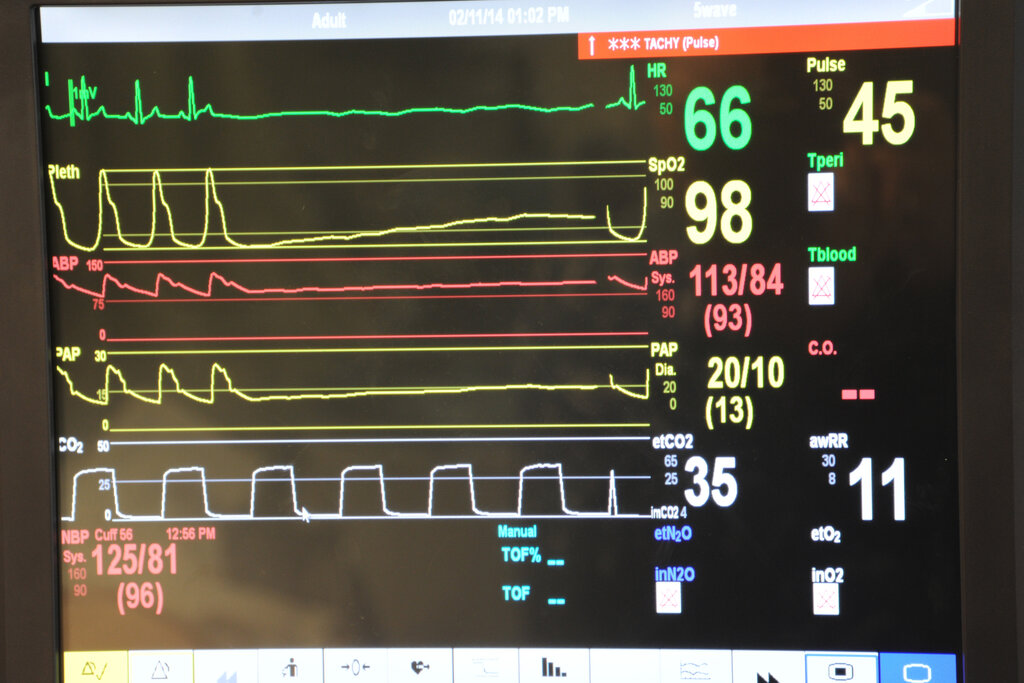
This variability isn't random noise. It's a direct reflection of how well your body is adapting to stress, challenges, and daily life. A healthy heart is one that can quickly adjust its rhythm as needed, showing a high degree of variability. But what's controlling these adjustments?
The Nervous System's Tug of War
The key player behind HRV is your Autonomic Nervous System (ANS). This is the part of your nervous system that runs on autopilot, managing essential functions like breathing, digestion, and, of course, your heart rate. The ANS has two main branches that are in a constant, dynamic balance.
| Branch | Nickname | Function |
|---|---|---|
| Sympathetic | Fight or Flight | Speeds up your heart rate to prepare for action or stress. |
| Parasympathetic | Rest and Digest | Slows down your heart rate to conserve energy and promote recovery. |
You can think of these two systems like the gas pedal and the brake in a car. The sympathetic system is the gas, revving up your heart when you need to face a challenge. The parasympathetic system is the brake, slowing things down when it's time to relax and recover.
HRV is the result of these two systems sending signals to your heart's natural pacemaker, the sinoatrial node. A constant interplay between these 'speed up' and 'slow down' messages causes the beat-to-beat intervals to vary.
A Window into Your Health
Because HRV reflects the balance of your autonomic nervous system, it serves as a powerful, non-invasive indicator of your body's overall resilience.
Generally, a higher HRV is a sign of good health and fitness. It suggests that your nervous system is balanced and highly responsive, able to efficiently shift gears between stress and relaxation. Your body is well-equipped to adapt to its environment.
Conversely, a consistently low HRV can indicate that your body is under stress, whether from poor sleep, overtraining, emotional strain, or illness. It suggests that one branch of the nervous system, usually the 'fight or flight' sympathetic system, is dominating. This chronic stress state can reduce your body's ability to cope and recover.
Higher HRV suggests your body is adaptable and resilient. Lower HRV can be a sign that your body is struggling to cope with stress.
By observing HRV, we get a glimpse into how well our internal systems are functioning and how our lifestyle choices impact our physiological state. It's a sensitive measure of the connection between our mind, body, and overall well-being.
Ready to test your knowledge?
What is Heart Rate Variability (HRV)?
Which part of the nervous system is primarily responsible for controlling the fluctuations measured by HRV?
Understanding HRV gives us a deeper appreciation for the complex, dynamic nature of our own physiology.