Healthcare System Fluency for Venture Capital
Healthcare System Overview
Mapping the U.S. Healthcare System
The U.S. healthcare system isn't one single entity. It's a complex patchwork of public and private organizations, each with its own rules and roles. Unlike countries with a nationalized health service, the U.S. model is a hybrid, blending government-funded programs with a dominant private insurance market. This creates a unique landscape of providers, payers, and patients navigating a web of interconnected services.
Federal vs. State Power
In the U.S., both federal and state governments have a hand in shaping healthcare, but their responsibilities differ. Think of the federal government as setting the national baseline. It runs large-scale programs like Medicare, which covers seniors and some individuals with disabilities. Federal agencies, such as the Department of Health and Human Services (HHS), establish broad health policies and oversee national public health initiatives.
State governments, on the other hand, handle the on-the-ground implementation and regulation. They are responsible for licensing healthcare professionals and facilities, regulating private insurance companies operating within their borders, and administering Medicaid, the joint federal-state program for low-income individuals. This division of power means that healthcare access and regulations can vary significantly from one state to another.
Public and Private Sectors
The U.S. healthcare system is broadly divided into two sectors: public and private. The public sector includes government-funded health programs. The largest are Medicare, for Americans 65 and older, and Medicaid, for individuals and families with low incomes. Other public programs include the Children's Health Insurance Program (CHIP) and care for veterans through the Department of Veterans Affairs (VA).
The private sector is where most non-elderly Americans get their health coverage, primarily through insurance plans provided by employers. This sector also includes plans people buy on their own through state or federal marketplaces. Private insurance companies, which can be for-profit or non-profit, negotiate rates with healthcare providers and process claims for their members.
| Feature | Public Sector | Private Sector |
|---|---|---|
| Funding Source | Taxes (Federal, State) | Premiums (Employers, Individuals) |
| Main Population | Seniors, low-income individuals, veterans | Employed individuals and their families |
| Examples | Medicare, Medicaid, VA | Employer-sponsored plans, Marketplace plans |
The Key Stakeholders
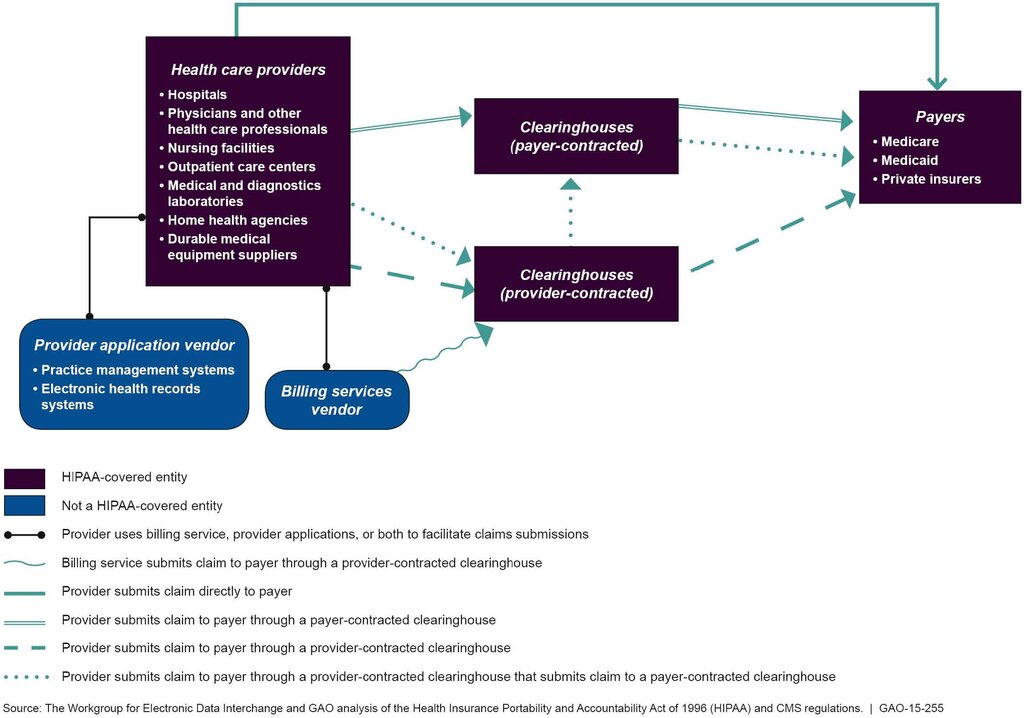
Three main groups interact to make the healthcare system function: providers, payers, and patients. Understanding their roles is key to seeing the whole picture.
Providers are the people and places that deliver medical care. This includes doctors, nurses, specialists, hospitals, clinics, and pharmacies. Their primary role is to diagnose and treat patients.
Next are the payers. These are the entities that finance healthcare services. Payers include private insurance companies (like UnitedHealth or Blue Cross Blue Shield) and public programs (like Medicare and Medicaid). They cover the costs of care by collecting premiums or taxes and reimbursing providers.
Patients are at the center of the system. As the consumers of healthcare, their needs and choices drive the demand for services. Patients share in the cost of their care through deductibles, co-pays, and insurance premiums.
The relationship between these three groups defines the core of healthcare delivery. Patients seek care from providers, and payers reimburse providers for the services rendered. This interplay forms the foundation of the U.S. healthcare system's structure.
Which of the following best describes the fundamental structure of the U.S. healthcare system?
In the U.S. healthcare system, entities like Blue Cross Blue Shield and Medicare are primarily known as what?