Healthcare Business Development Northern California
Technology and Innovation in Healthcare
The New Frontier of Healthcare
Technology is no longer just a backstage support system in healthcare. It's the main act. For a Business Development Director, understanding this shift is as critical as analyzing market trends or negotiating partnerships. The most significant growth opportunities now lie at the intersection of healthcare, technology, and patient experience.
Integrating innovation isn't about chasing every new gadget. It’s a strategic decision rooted in your organization's goals, market position, and financial planning. A well-placed technological investment can streamline operations, drastically improve patient outcomes, and create a powerful competitive advantage that is difficult for others to replicate.
The MedTech industry is entering a period of accelerated transformation driven by artificial intelligence (AI), digital health, and robotics, and venture investors are taking notice.
Emerging Technologies to Watch
Several key technologies are reshaping what's possible in healthcare. Staying ahead means knowing not just what they are, but what they can do for your business.
Artificial Intelligence (AI) and Machine Learning (ML) are a major force, moving beyond simple automation. AI algorithms can now analyze medical images with incredible accuracy, predict patient risk factors from vast datasets, and personalize treatment plans in ways previously unimaginable. On the business side, AI streamlines administrative tasks, from scheduling to billing, freeing up resources for patient care.
Robotics is another transformative area. Surgical robots, for example, enable minimally invasive procedures that lead to faster recovery times and fewer complications. This isn't just a clinical improvement; it's a value proposition that attracts patients and top surgical talent.
The Internet of Things (IoT) is connecting patients to their care teams like never before. Wearable sensors, smart glucose monitors, and other connected devices provide a continuous stream of real-time health data. For business development, this opens doors to new remote patient monitoring services, chronic care management programs, and preventative health initiatives.
| Technology | Clinical Application | Business Development Opportunity |
|---|---|---|
| Artificial Intelligence | Predictive diagnostics, personalized medicine | Develop new diagnostic services, optimize resource allocation |
| Robotics | Minimally invasive surgery, rehabilitation | Market as a center of excellence, attract top surgeons |
| Internet of Things (IoT) | Remote patient monitoring, chronic disease management | Create subscription-based monitoring services, reduce readmissions |
Integrating Innovation Strategically
Adopting new technology requires more than just a purchase order. It requires a plan that aligns with your strategic goals, as we've discussed in previous sections on planning and leadership. A successful integration strategy considers the impact on people, processes, and the technology itself.
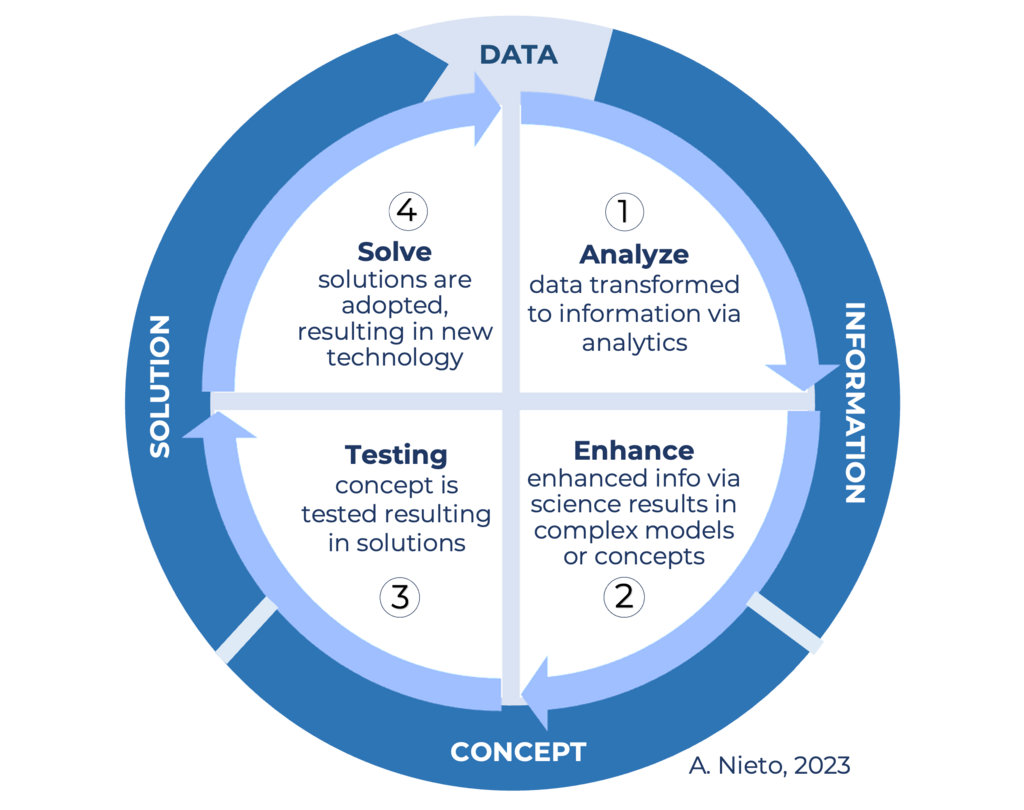
Start by identifying a clear problem you want to solve. Are you trying to reduce patient wait times? Improve surgical outcomes? Lower operational costs? Your goal will determine which technology is the right fit. A new telehealth platform, for instance, is a powerful tool for expanding patient access, while an AI-driven scheduling system is better suited for optimizing clinic workflow.
Next, build a cross-functional team. As a leader, your role is to bring together clinicians, IT specialists, finance experts, and project managers. This ensures that any new initiative is not only technologically sound but also clinically relevant, financially viable, and smoothly implemented. This is where your leadership and change management skills become crucial.
Finally, measure your success. Define key performance indicators (KPIs) before you launch. This could be patient satisfaction scores, readmission rates, or cost per patient visit. Tracking these metrics allows you to demonstrate the return on investment and build a case for future innovation.
By following a structured approach, you move from simply acquiring technology to strategically deploying innovation that creates lasting value and a strong competitive edge.
For a Business Development Director in healthcare, why is understanding the shift towards technology considered a critical skill?
A healthcare organization wants to launch a new program for managing patients with chronic diabetes remotely. Which technology would be most instrumental in providing a continuous stream of real-time health data for this program?
Technology is not just an operational tool; it's a strategic asset that can redefine healthcare delivery. By understanding emerging trends and integrating them thoughtfully, you can drive meaningful growth and create a more efficient, patient-centered organization.