Health Headlines vs. Scientific Abstracts
Understanding Scientific Abstracts
The Abstract's Big Job
A scientific abstract is a short summary of a research paper. Think of it like a movie trailer. It gives you the main plot points without making you sit through the whole film. Its main purpose is to help you quickly decide if the entire article is relevant to your interests or research question.
Your first step should be to read the abstract, which provides a brief summary of the paper.
Reading abstracts saves you a massive amount of time. Instead of reading dozens of full articles, you can scan their abstracts to find the few that are truly important. It's the first filter in any research process.
Not All Abstracts Are the Same
Abstracts come in a few different flavors depending on their goal. While most are informative, you might encounter other types.
| Type | Purpose | What It Contains |
|---|---|---|
| Informative | To be a mini-version of the paper | Background, objective, methods, key results, and conclusion. This is the most common type. |
| Indicative | To describe what the paper is about | Outlines the scope of the article without giving away results or conclusions. Often used for review articles or opinion pieces. |
| Evaluative | To critique the paper | Includes the author's judgment about the study's validity, importance, or contribution to the field. It’s less common. |
Most of the time, you'll be reading informative abstracts. They are dense with information and follow a predictable structure.
Anatomy of an Abstract
Informative abstracts are typically a single paragraph but pack in the essential components of the entire study. Understanding this structure helps you pull out the information you need efficiently.
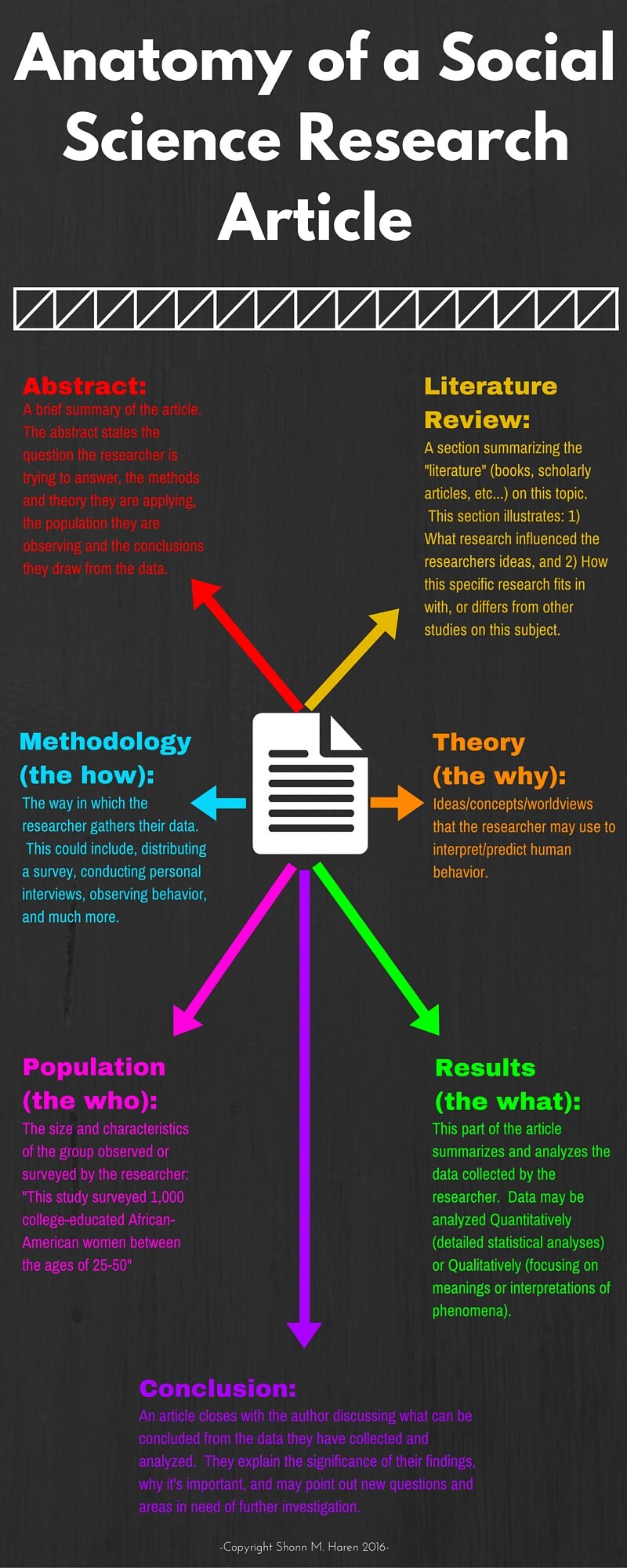
Here are the five key parts you'll find in most informative abstracts, usually in this order:
- Background: A sentence or two setting the stage. It introduces the broader problem or research area and explains why the study is important.
- Objectives: This is the specific question the researchers set out to answer. It might be stated as a hypothesis, a question, or a statement of purpose.
- Methods: A brief explanation of how the research was conducted. What was the experiment, survey, or analysis? Who or what were the subjects? This part tells you about the doing.
- Results: The punchline. This section states the key findings of the study. It's purely factual and often includes the most important data or statistics.
- Conclusion: The final sentences explain the meaning of the results. What is the takeaway message? The authors might suggest implications of their work or directions for future research.
Reading for Relevance
Now, let's put it all together. When you read an abstract, you're on a mission to answer one question: should I read the full paper? Here’s a quick strategy to find your answer.
Start by reading the objectives. If the research question isn't relevant to you, you can stop right there. If it is, move on.
Next, jump to the conclusion. Does the main takeaway seem useful or interesting? The conclusion tells you what the authors think is the most important outcome of their work.
Finally, scan the methods. Does the way they conducted the study seem sound? If they studied mice but you're interested in humans, the paper might be less relevant. A quick look at the methods helps you gauge the study's applicability and a first-glance sense of its validity.
If the objective is relevant, the conclusion is interesting, and the methods seem appropriate, you've found an article worth reading in full.
Time to test your skills.
What is the main purpose of a scientific abstract?
Which of the following correctly lists the five key parts of an informative abstract in their typical order?