HDR Modeling Explained
Introduction to HDR
Seeing the Whole Picture
Have you ever taken a photo of a beautiful sunset, only to find that the picture doesn't do it justice? Either the sky looks great and the landscape is a dark silhouette, or the landscape is perfectly lit and the sky is a washed-out, white blob. This common problem is all about dynamic range.
Dynamic Range
noun
In imaging, this is the ratio between the brightest and darkest parts of a scene that a camera can capture at the same time.
Standard cameras have a limited, or Standard Dynamic Range (SDR). They can't capture the full spectrum of light that our eyes can see in a high-contrast scene. They're forced to choose: expose for the bright parts (highlights) or the dark parts (shadows). You can't have both.
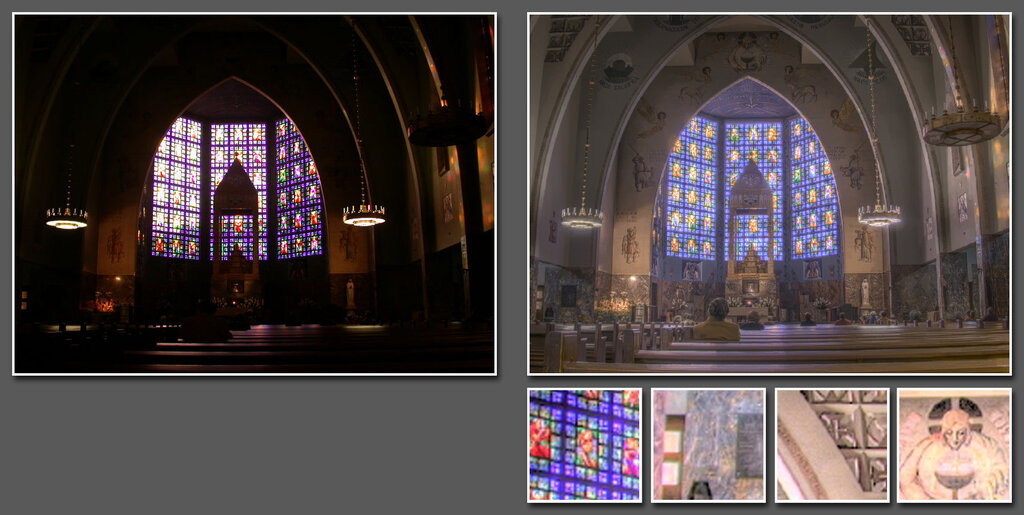
This is where High Dynamic Range (HDR) imaging comes in. Instead of taking one picture, HDR takes multiple photos at different exposure levels.
An underexposed shot captures all the details in the bright areas without blowing them out. A normal shot gets the mid-tones right. And an overexposed shot reveals all the hidden details in the darkest shadows. Software then intelligently merges the best parts of all these photos into one image that's rich in detail from the darkest black to the brightest white.
HDR is a technique which combines several photos of the same subject taken at different exposures: The darker pictures have details in the highlights and vice versa.
Why It Looks More Real
The goal of HDR isn't to create unnatural, hyper-realistic images. It's to create photos that more closely resemble what we see with our own eyes. The human visual system has an incredibly high dynamic range. When you look at that sunset, your eyes are constantly adjusting, allowing you to perceive detail in the brilliant clouds and the dim landscape simultaneously.
HDR technology tries to replicate this amazing biological feat. By expanding the range of light and color an image can contain, it produces a more lifelike result.
This technology is now widespread. It's used in professional photography, smartphone cameras, video games, and TV displays. In each case, the aim is the same: to provide a viewing experience that is more vibrant, detailed, and true to life. It bridges the gap between what the camera sees and what you see.