Haskell Proficiency for Software Engineers
Introduction to Haskell
Meet Haskell
Haskell is a programming language built on a different set of ideas than most. It's known as a purely functional language, which means it treats computation like solving a mathematical equation. Instead of giving the computer a step-by-step list of commands, you describe the result you want. This approach can lead to code that is more predictable and easier to reason about.
Three core concepts define Haskell: it's purely functional, statically typed, and uses lazy evaluation. Let's break down what that means.
Haskell’s design is centered around pure functions and immutable data.
Thinking Functionally
The functional programming paradigm is a different way of thinking about code. It’s less about telling the computer how to do something and more about describing what to do.
Pure Functions: A pure function is like a reliable vending machine. If you press B4, you get a candy bar, every single time. It doesn't matter how many times you've used the machine or what someone else bought. Given the same input, a pure function will always produce the same output, without any side effects like changing a global variable or writing to a file.
Immutability: In Haskell, data is immutable, meaning it can't be changed after it's created. If you have a list of numbers and want to add another one, you don't change the original list. Instead, you create a new list that includes the new number. This prevents a whole category of bugs where data is unexpectedly modified.
Static Typing: Haskell has a strong, static type system. This means the compiler checks your code to ensure you're not trying to, say, add a number to a string of text. This catches many errors before you even run the program, acting as a powerful safety net.
This focus on correctness and predictability is why Haskell is often used in fields where bugs can be catastrophic, like aerospace and finance.
Haskell vs. Imperative Languages
Most popular languages, like Python, Java, or C++, are imperative. They require you to write a sequence of commands that modify the program's state. You manage variables that change over time and write loops that repeat instructions.
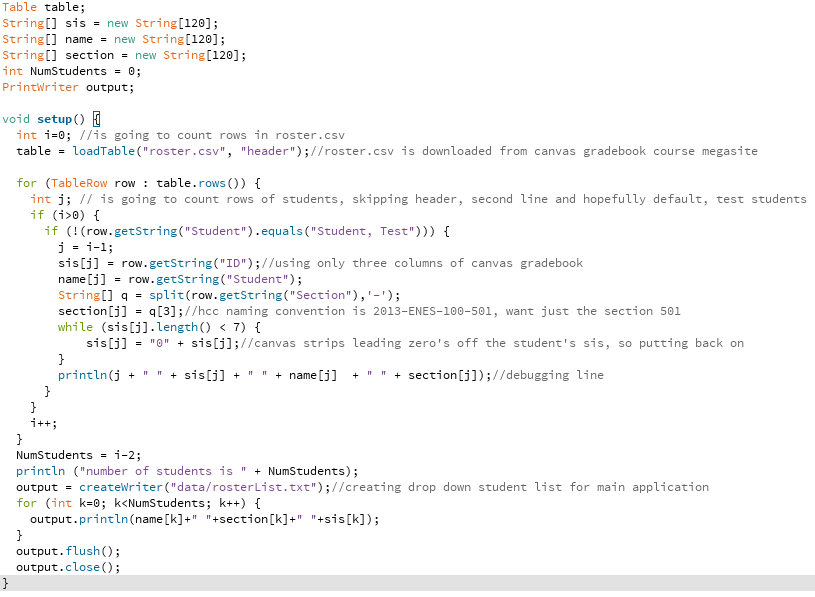
Haskell's functional approach is fundamentally different. Instead of loops, you use functions that operate on data structures, often with recursion. Instead of variables that change, you pass data from one function to the next, transforming it at each step.
| Feature | Imperative (e.g., Python) | Functional (Haskell) |
|---|---|---|
| Core Idea | A sequence of commands | A series of function evaluations |
| State | Mutable state is common | Avoids mutable state |
| Data | Data structures can be changed | Data is immutable |
| Side Effects | Common and managed explicitly | Avoided in pure functions |
| Flow Control | Loops (for, while) | Recursion, higher-order functions |
This might seem strange at first, but it encourages a more modular and declarative style of programming. You build complex programs by composing simple, reliable functions.
Setting Up Your Environment
To start writing Haskell, you need the Glasgow Haskell Compiler (GHC), which is the standard compiler for the language. The easiest way to get it, along with other essential tools, is by using GHCup. It's a universal installer for the Haskell toolchain.
After installing GHCup, you'll have GHC and a build tool called Cabal. GHC includes an interactive environment called GHCi, which lets you experiment with Haskell code in real time. You can start it from your terminal by simply typing ghci.
% ghci
GHCi, version 9.2.5: https://www.haskell.org/ghc/  :? for help
Prelude> let message = "Hello, Haskell!"
Prelude> putStrLn message
Hello, Haskell!
With these tools installed, you're ready to start exploring the language. You can write code in any text editor and compile it with GHC or load it into a GHCi session to test things out.
Haskell is primarily based on which programming paradigm?
What is the defining characteristic of a pure function?