Hashimoto's Pathogenesis and Clinical Management
Immunological Pathogenesis
The Immune System's Civil War
In Hashimoto's Thyroiditis, the immune system mistakenly declares war on the thyroid gland. This isn't a simple case of a sluggish thyroid; it's a complex, targeted assault orchestrated by the body's own defense forces. The main culprits are lymphocytes—specifically T-cells and B-cells—which infiltrate the thyroid and begin a campaign of destruction.
This process begins when specialized immune cells known as (APCs) process thyroid proteins, like thyroglobulin (Tg) and thyroid peroxidase (TPO), and present them to T-cells as if they were foreign invaders. This misidentification triggers a cascade of inflammatory responses, turning the thyroid into a battlefield.
T-Cell Imbalance
A healthy immune system maintains a delicate balance between different types of T-helper (Th) cells. In Hashimoto's, this balance is broken. The response shifts dramatically towards a Th1-dominant profile. These Th1 cells release inflammatory cytokines like interferon-gamma (IFN-γ) and tumor necrosis factor-alpha (TNF-α), which recruit more immune cells to the thyroid and increase inflammation.
Adding to the problem is an imbalance between two other crucial T-cell types: aggressive Th17 cells and peace-keeping Regulatory T-cells (). In Hashimoto's, Th17 cell activity increases while Treg function falters. Th17 cells secrete IL-17, a potent cytokine that promotes tissue inflammation and damage. Meanwhile, the reduced number of effective Tregs means there are fewer cells to put the brakes on this autoimmune attack, allowing the destruction to proceed unchecked.
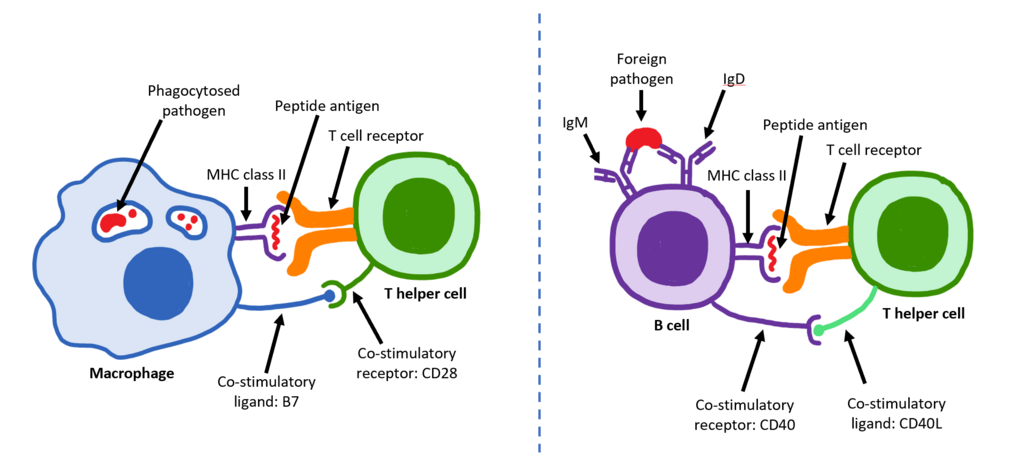
This combination of overactive Th1 and Th17 cells, along with underactive Tregs, creates a perfect storm of chronic inflammation within the thyroid gland. The gland becomes swollen with immune cells, a condition known as lymphocytic infiltration, which is a hallmark of the disease.
The Attack on Thyroid Cells
The inflammatory environment created by T-cells sets the stage for the direct destruction of thyroid follicular cells, or thyrocytes. This happens primarily through a process of programmed cell death called apoptosis. The inflammatory cytokines, particularly TNF-α and IFN-γ, signal thyrocytes to express a "death receptor" on their surface known as Fas. Activated T-cells, in turn, express the corresponding ligand, (Fas ligand).
When FasL on a T-cell binds to Fas on a thyrocyte, it's like a molecular kill switch. The thyrocyte receives an irreversible signal to self-destruct. As more and more thyrocytes undergo apoptosis, the thyroid gland's ability to produce hormones diminishes.
This process creates a vicious cycle. As thyrocytes die, they become 'leaky,' releasing their internal contents—including TPO and Tg proteins—into the surrounding tissue. These proteins are then picked up by more APCs, which present them to more T-cells, further fueling the autoimmune attack.
B-Cells and Autoantibodies
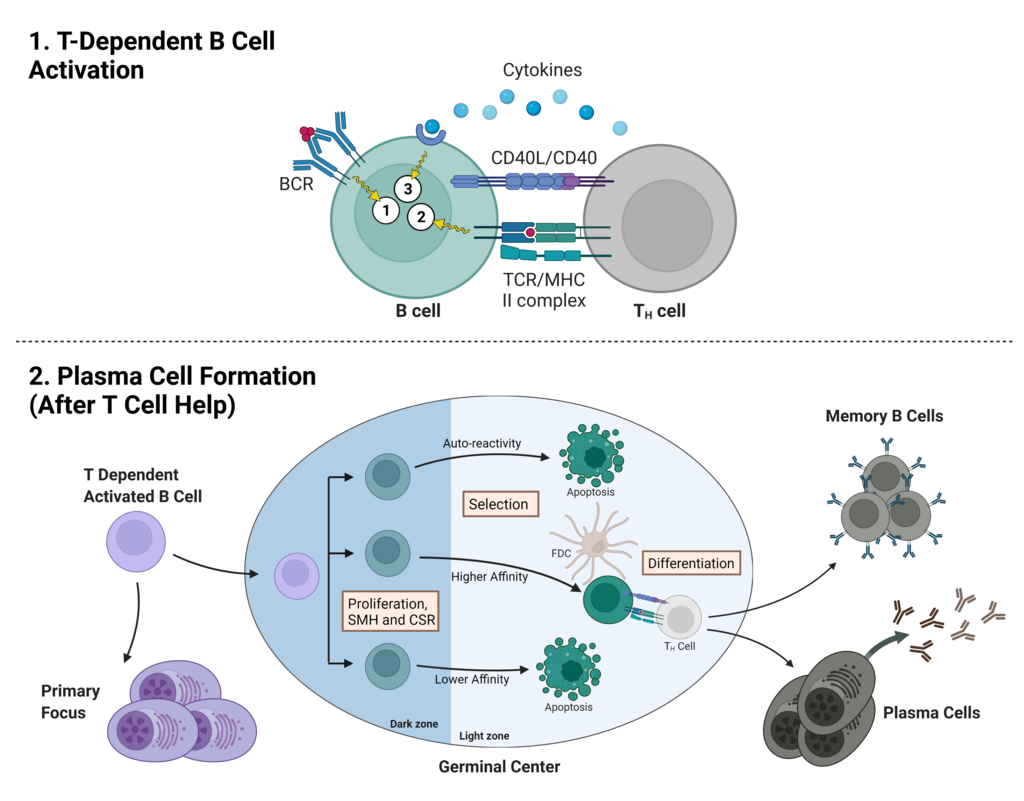
While T-cells are the primary drivers of tissue destruction, B-cells play a critical supporting role. Activated by helper T-cells, B-cells differentiate into plasma cells and begin producing large quantities of autoantibodies. In Hashimoto's, the two most significant autoantibodies are Thyroid Peroxidase antibodies (TPOAb) and Thyroglobulin antibodies (TgAb).
These antibodies bind to their target proteins within the thyroid. While they may not be the main cause of cell death, their presence serves as a clear marker of the autoimmune process. They contribute to the inflammation and can help cytotoxic T-cells identify and destroy thyrocytes, acting like a beacon for the attack.
Understanding this complex immunological dance is key. It explains why simply monitoring TSH levels may not tell the whole story. A patient can have 'normal' TSH but still experience symptoms because the underlying autoimmune attack continues to simmer, causing inflammation and slowly degrading the thyroid's function. The battle is at the cellular level, and its effects can be felt long before hormone levels fall out of the standard range.