Harnessing Your Subconscious Mind
Understanding the Subconscious Mind
Beyond the Surface
Think of your mind as an iceberg. The small tip you see above the water is your conscious mind. It's what you're aware of right now: the words you're reading, the feeling of the device in your hands, the thoughts you're deliberately thinking. It handles logic, reasoning, and short-term memory. But just like an iceberg, the vast majority of your mind lies hidden beneath the surface.
This massive, unseen portion is the subconscious mind. It's a vast repository of everything you've ever experienced, learned, or felt. It stores your memories, beliefs, habits, and automatic bodily functions. While you're not actively aware of it, it's constantly working, influencing your every move.
The Mind on Autopilot
The primary job of the subconscious is efficiency. It automates countless tasks so your conscious mind doesn't have to. Think about your morning routine. Do you consciously decide to brush your teeth, get dressed, or make coffee? Probably not. These actions are habits, run by your subconscious. It's also responsible for skills you've mastered, like riding a bike or typing on a keyboard. Once learned, they become automatic.
This automation extends to our thoughts and feelings. A gut feeling or a sudden intuition is your subconscious processing vast amounts of information from past experiences and presenting a conclusion to your conscious mind. When you instantly like or dislike someone, it's often your subconscious recognizing subtle patterns and cues that you're not consciously aware of.
Your subconscious mind is the silent co-pilot of your life, navigating based on a lifetime of programming.
Even your physical body relies on it. You don't consciously tell your heart to beat, your lungs to breathe, or your cells to repair themselves. These vital functions are managed flawlessly by the subconscious, freeing up your conscious attention for other things.
Historical Perspectives
While philosophers have pondered the hidden parts of the mind for centuries, it was Sigmund Freud who brought the concept into the mainstream. He saw the unconscious (a term he used more often than subconscious) as a place where we store repressed thoughts, traumatic memories, and primal urges.
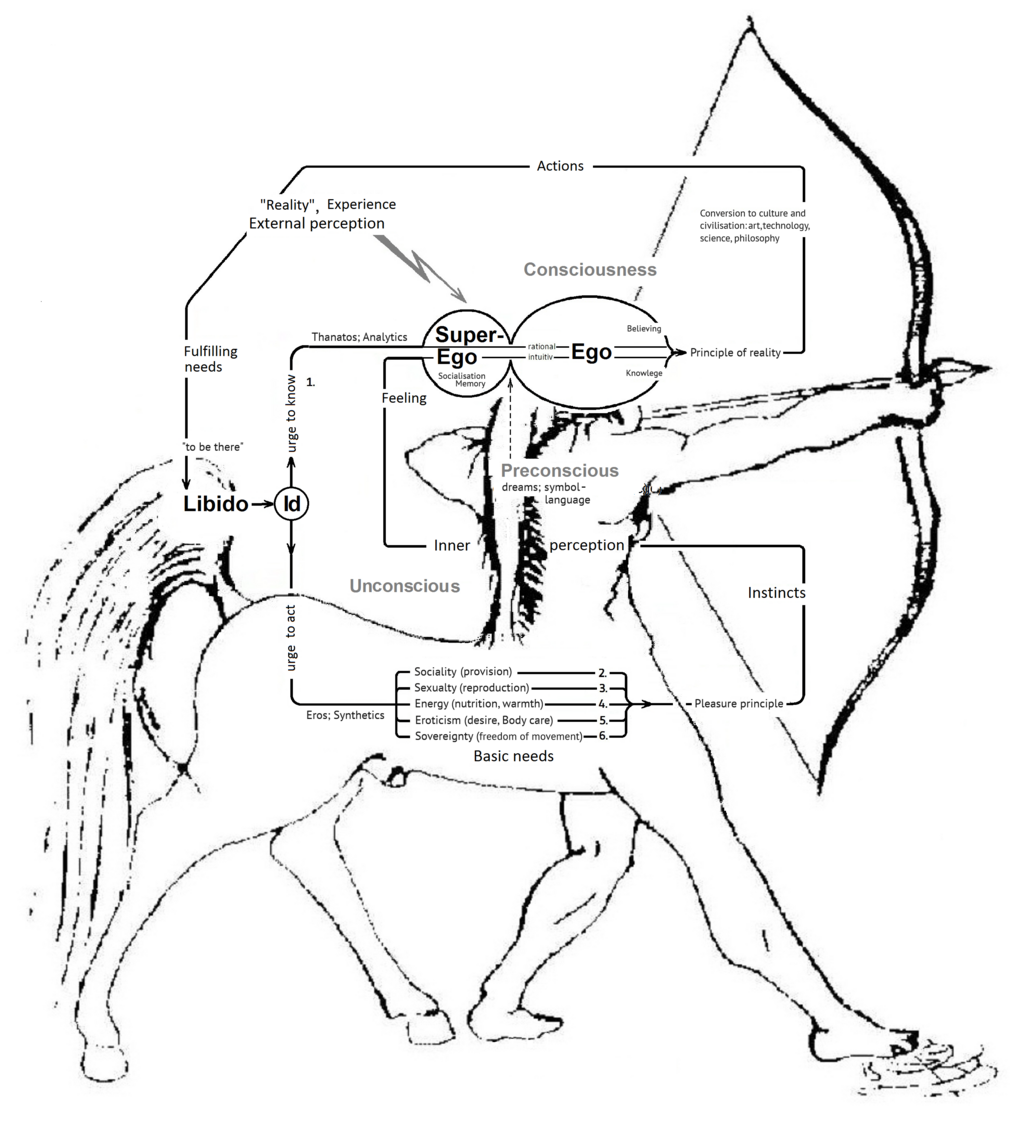
Freud's student, Carl Jung, expanded on this idea. He agreed about the personal unconscious but also proposed a deeper layer called the "collective unconscious." Jung believed this was a shared reservoir of experiences and symbols, or archetypes, common to all humans across cultures and time. Think of universal concepts like the hero, the mother, or the shadow, which appear in myths and stories worldwide.
Today, cognitive science has moved beyond these early theories but confirms their central insight: most of our mental processing happens outside of our direct awareness. Modern research focuses on the specific ways these automatic processes shape our behavior, from forming biases to making split-second decisions.
Let's test your understanding of the subconscious mind and its role.
Using the iceberg analogy, which part of the mind represents the vast, hidden portion beneath the surface?
Which of the following tasks is NOT primarily managed by the subconscious mind?
Understanding the division between the conscious and subconscious is the first step in recognizing how your inner world shapes your outer reality.