Harnessing Nuclear Fusion
Introduction to Nuclear Fusion
The Power of Stars
Nuclear fusion is the process of combining small, light atomic nuclei to form a single, heavier nucleus. When this happens, a tremendous amount of energy is released. It's the same fundamental process that powers the sun and all other stars, creating the light and heat that make life on Earth possible.
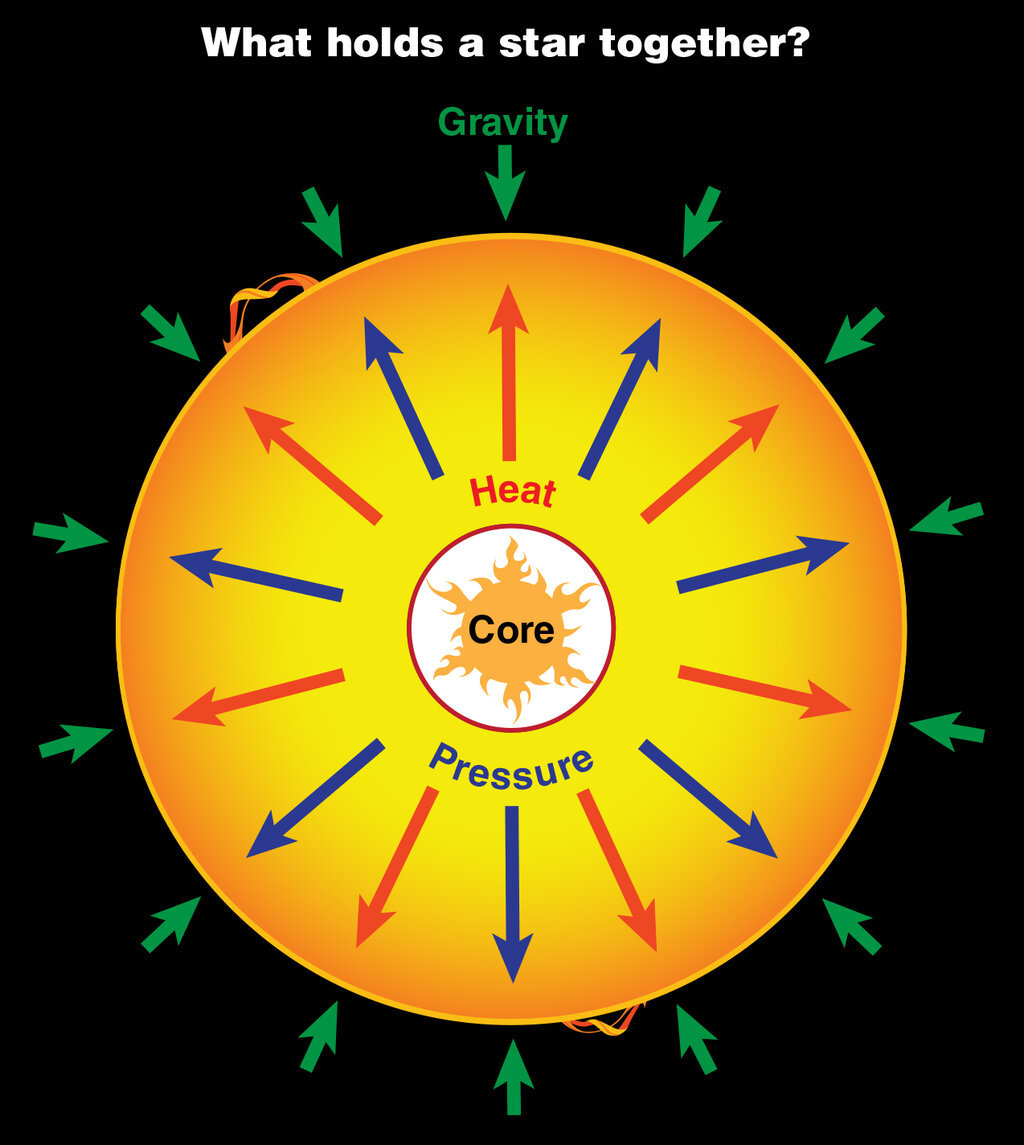
At the heart of every atom is a nucleus, which is packed with positively charged protons. Just like magnets with the same poles facing each other, these nuclei naturally repel one another. This force of repulsion, called the Coulomb barrier, is incredibly strong. To get nuclei to fuse, you have to overcome it.
A Recipe for Fusion
Overcoming the Coulomb barrier requires two key ingredients: extreme temperature and intense pressure.
First, you need temperatures of over 100 million degrees Celsius. At these temperatures, matter doesn't exist as a solid, liquid, or gas. Instead, it becomes a plasma, a superheated state where electrons are stripped away from their atoms, leaving a sea of charged nuclei and free electrons. The intense heat gives the nuclei enough kinetic energy, or speed, to slam into each other with enough force to overcome their mutual repulsion.
Second, you need immense pressure. High pressure squeezes the nuclei close together, increasing their density and the likelihood that they will collide and fuse.
High temperature gives nuclei the speed to overcome repulsion, while high pressure increases the chances they will meet in the first place.
The Deuterium-Tritium Reaction
While many fusion reactions are possible, one of the most studied for terrestrial applications involves two isotopes, or versions, of hydrogen: deuterium (H) and tritium (H). Deuterium has one proton and one neutron, while tritium has one proton and two neutrons.
isotope
noun
Variants of a particular chemical element which differ in neutron number, and consequently in nucleon number.
When a deuterium nucleus and a tritium nucleus are forced together under the right conditions, they fuse. The result is one helium nucleus (He), a spare high-energy neutron (), and a significant release of energy.
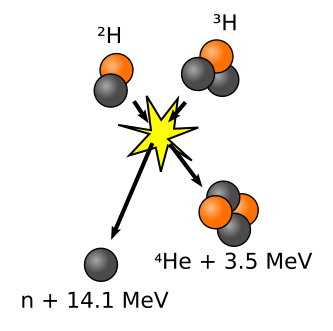
The reaction can be written like this:
The 17.6 mega-electron volts (MeV) of energy released is millions of times more than the energy released from a typical chemical reaction, like burning fuel.
Achieving Net Energy
Creating the conditions for fusion takes a massive amount of energy. For a fusion reactor to be practical, it must produce more energy than it consumes. The specific conditions needed to achieve this are described by the Lawson criterion.
The Lawson criterion defines the minimum conditions needed for a fusion reactor to reach ignition, where the reaction becomes self-sustaining.
This criterion is a "triple product" of three key variables:
- Plasma density (): The number of nuclei per unit volume.
- Energy confinement time ("): The amount of time the plasma can be held at a high temperature before it cools down.
- Plasma temperature (): The temperature of the fuel.
For a fusion reaction to produce a net gain of energy, the product of these three values must exceed a certain threshold.
A related concept is the fusion energy gain factor, known as Q. This is a simple ratio that measures the performance of a fusion reactor.
A value of 1 means the reactor has reached "breakeven," producing exactly as much power as was put in to heat it. A value greater than 1 means the reactor is producing a net energy gain. The ultimate goal is a high value, which indicates an efficient and powerful fusion process.
What is the primary challenge that must be overcome for two atomic nuclei to fuse together?
At the extreme temperatures required for fusion, matter exists in which state?
Understanding these core principles is the first step toward appreciating the immense potential of nuclear fusion.