Hamlet: Ideological Context and Analysis
Humanist Philosophical Tensions
A Mind in Conflict
Prince Hamlet's struggle is more than just personal grief and a desire for revenge. His mind is a battleground for two competing worldviews: the waning influence of medieval scholasticism and the rise of Renaissance Humanism. Scholasticism viewed the world through the lens of divine providence, where faith, hierarchy, and a God-given order were paramount. Knowledge was something received from authority, primarily the Church and ancient texts.
In contrast, the blossoming Humanist movement celebrated human potential, reason, and individual agency. It encouraged a return to classical Greek and Roman sources to understand humanity's place in the universe. Hamlet, a student at Wittenberg—a centre of Humanist thought—is steeped in this new philosophy. Yet, the rotten state of Denmark, with its murder and incestuous marriage, throws the optimistic ideals of Humanism into sharp relief against a dark, seemingly pre-ordained reality. This creates a profound crisis of knowledge, or epistemological uncertainty. Hamlet can no longer trust his senses, his relationships, or the very foundation of his worldview.
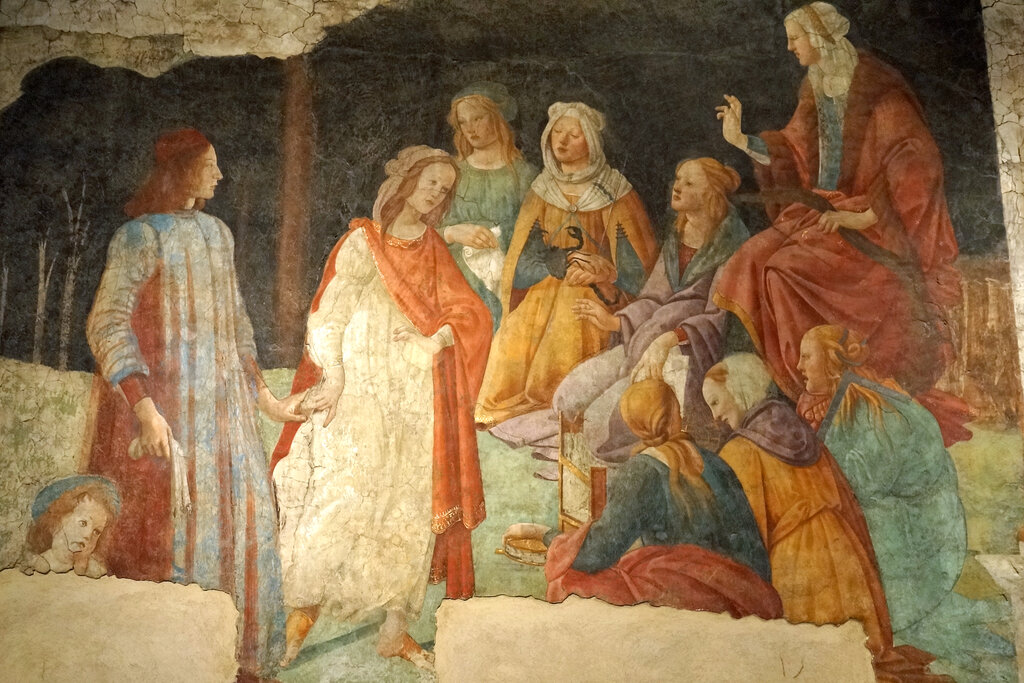
A key influence on Elizabethan thought was the Italian philosopher Pico della Mirandola. His famous "Oration on the Dignity of Man" is a quintessential Humanist text. Pico argued that humanity is unique because we have no fixed nature; we are free to shape ourselves, to become either brutish or divine through our own will and intellect. This radical idea of human freedom and potential was thrilling and became a cornerstone of Renaissance thinking. It's this optimistic vision of humanity’s capacity for greatness that forms the backdrop for Hamlet's deep disillusionment.
Quintessence of Dust
Nowhere is this tension more apparent than in one of Hamlet's most famous speeches. He begins by reciting a perfect summary of the Humanist ideal of humanity, almost as if reading from a textbook.
“What a piece of work is a man! How noble in reason, how infinite in faculty! In form and moving how express and admirable! In action how like an angel, in apprehension how like a god! The beauty of the world, the paragon of animals!”
This is pure Pico della Mirandola. It's a celebration of human reason, potential, and our place at the apex of creation. But then, faced with the treachery of his friends Rosencrantz and Guildenstern, his worldview collapses. His soaring praise grinds to a halt.
“And yet, to me, what is this quintessence of dust?”
With this single line, Hamlet demolishes the entire Humanist monument. If humans are so noble and god-like, how can they be so base, so treacherous? He sees the yawning gap between the ideal and the reality. His mother’s hasty marriage and his uncle’s villainy have proven that for all our “godlike reason,” humans are still base matter, mere dust. This isn't just teenage angst; it’s a profound philosophical critique.
His decision to put on an “antic disposition”—to feign madness—is a direct response to this crisis. When reason has failed and knowledge is uncertain, madness becomes a tool. It allows him to probe the corruption around him, to test people's loyalties, and to speak truths that a sane prince never could. It is a form of radical scepticism in action, the only logical response for a man who can no longer trust the world he was taught to believe in.
According to the provided text, Hamlet's internal struggle primarily represents a clash between which two major worldviews?
What core idea from Pico della Mirandola's "Oration on the Dignity of Man" is highlighted as a cornerstone of Renaissance Humanism?
Hamlet's internal conflict thus represents a pivotal moment in Western thought, caught between the certainty of faith and the dawning, and often terrifying, age of human reason.