H.323 Protocol Suite
Architectural Foundation
The H.323 protocol suite is not just a single blueprint; it is a comprehensive, multi-part framework developed by the to govern real-time multimedia communication over packet-switched networks. It functions as an umbrella standard, tying together various sub-protocols to coordinate everything from call initiation to the actual exchange of media. To understand how these moving parts fit together, we can visualize the typical H.323 protocol stack.
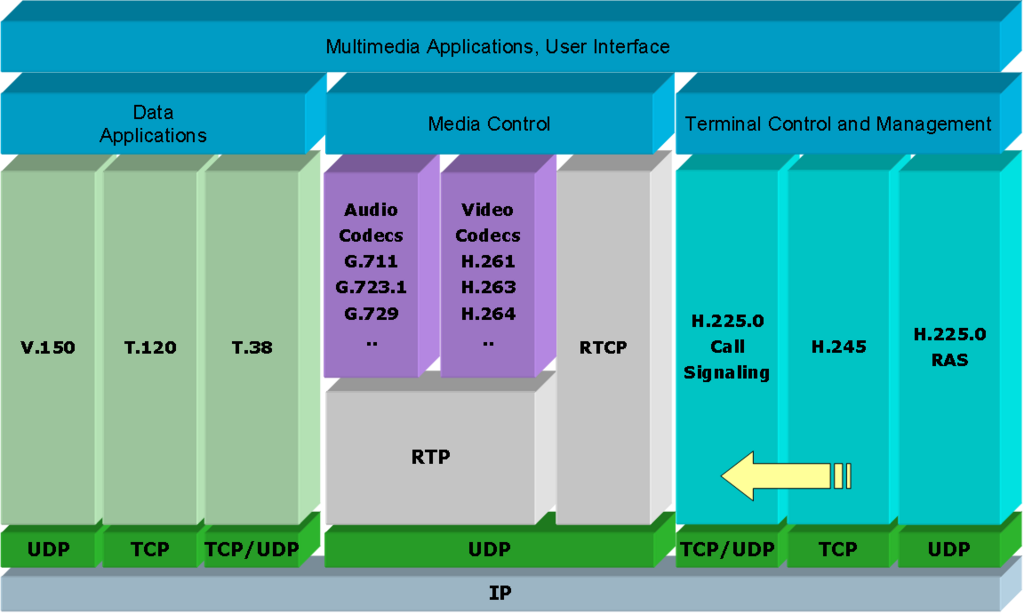
Within this architecture, the workload is distributed across four critical hardware and software components. First are the Terminals, which are the user endpoints like IP phones or desktop video software. When multiple terminals need to participate in a single call, a Multipoint Control Unit (MCU) acts as the bridge, managing the multi-point conference resources. To connect this modern packet network with older legacy telephone systems, Gateways are deployed to perform the necessary signaling and media translations.
The final major component is the Gatekeeper, which acts as the brains of the H.323 system. It is responsible for critical administrative tasks like address translation (converting phone numbers or aliases to IP addresses), admission control, and bandwidth management. Gatekeepers ensure the network is not overloaded by multimedia traffic. Let's see how well you can identify these main components and their functions.