Gymnastics for Spanish Teens
Introduction to Gymnastics
A Sport Through Time
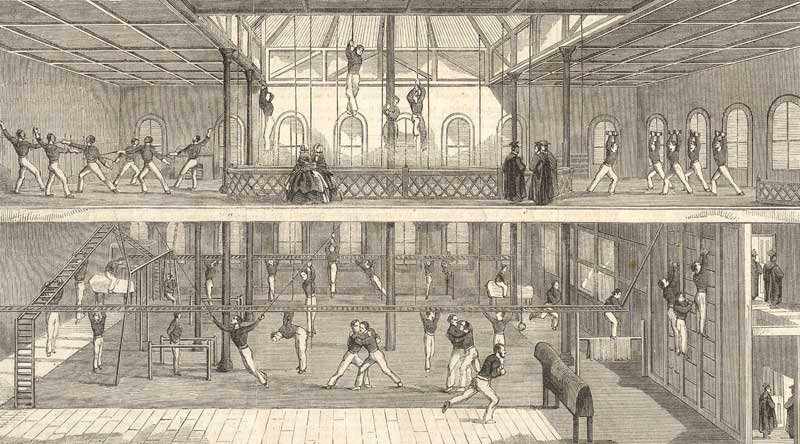
The roots of gymnastics stretch back to ancient Greece. The word itself comes from the Greek word gymnos, which means "naked." In those days, athletes practiced in the nude in a place called a gymnasium. These exercises weren't for competition, but to prepare young men for the physical demands of being a soldier. They focused on skills like running, jumping, throwing, and wrestling.
Over centuries, these foundational movements evolved. In the late 1700s and early 1800s, educators in Germany developed a more formal system of exercises using stationary apparatus, like the balance beam and parallel bars. This new form, known as "artistic gymnastics," aimed to develop the body in a harmonious way. When the modern Olympic Games began in 1896, gymnastics was one of the original sports, cementing its place in the modern world.
The Many Faces of Gymnastics
Gymnastics isn't just one sport; it's a family of different disciplines, each with its own unique style and set of skills. The most well-known type is Artistic Gymnastics, which is what most people picture when they think of the Olympics. It combines strength, power, flexibility, and grace.
Men and women compete in different events within Artistic Gymnastics, tailored to showcase different physical attributes.
| Men's Artistic Events | Women's Artistic Events |
|---|---|
| Floor Exercise | Vault |
| Pommel Horse | Uneven Bars |
| Still Rings | Balance Beam |
| Vault | Floor Exercise |
| Parallel Bars | |
| Horizontal Bar |
Beyond Artistic Gymnastics, there are other captivating disciplines. Rhythmic Gymnastics blends elements of ballet and dance with the handling of apparatus like a rope, hoop, ball, clubs, or ribbon. It's a sport that emphasizes elegance and expression.
Another Olympic discipline is Trampoline Gymnastics. Athletes perform high-flying acrobatic skills after bouncing on a trampoline. It requires incredible spatial awareness and precision.
More Than Just Flips
The benefits of gymnastics go far beyond learning to tumble. On a physical level, it's one of the most comprehensive workouts you can do. It builds full-body strength, as gymnasts must be able to lift and control their own body weight in various positions. It also develops exceptional flexibility, agility, and balance.
This powerful combination of skills is often called functional fitness. The core strength and coordination gained in gymnastics can translate to better performance in almost any other sport or physical activity.
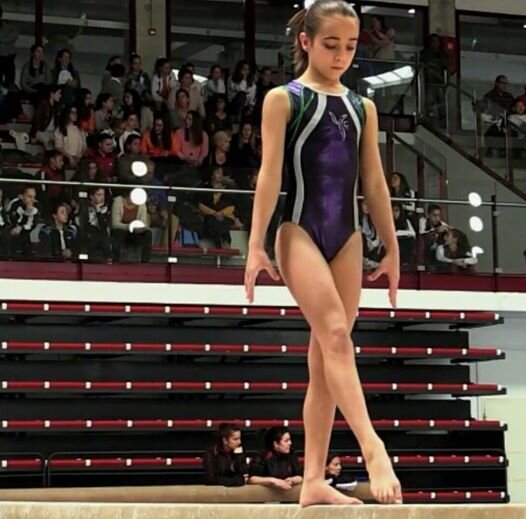
The mental benefits are just as significant. Learning a new skill, especially one that seems impossible at first, requires immense focus and discipline. Gymnasts learn to break down complex movements into smaller, manageable steps and persevere through countless repetitions.
This process builds incredible mental resilience. Facing a challenging skill, falling, and getting back up to try again teaches determination and courage. Successfully mastering a routine builds a deep sense of self-confidence that extends far outside the gym.
Gymnastics trains the mind to be as flexible and strong as the body.
Let's review the main types of gymnastics we've covered.
Now, check your understanding of the fundamentals.
The word 'gymnastics' is derived from the Greek word 'gymnos'. What does 'gymnos' mean?
What was the primary purpose of gymnastics in ancient Greece?
From its ancient origins to its modern forms, gymnastics is a foundational sport that develops a complete athlete, both physically and mentally.