Gut Microbiota and Parkinson's Disease
Introduction to Parkinson's Disease
What is Parkinson's Disease?
Parkinson's disease is a condition where parts of the brain become progressively damaged over many years. It's a neurodegenerative disorder, meaning it's caused by the gradual loss of nerve cells, or neurons, in a specific area of the brain. After Alzheimer's, it's the second-most common neurodegenerative disease worldwide.
While it's most known for affecting movement, Parkinson's also brings a range of other challenges. The disease affects people in different ways, and not everyone will experience the same symptoms or progression. Understanding what happens inside the brain is the first step to understanding the disease itself.
The Brain's Inner Workings
To understand Parkinson's, we need to talk about dopamine. Dopamine is a chemical messenger, a neurotransmitter, that plays a vital role in how we move. It carries signals between nerve cells, helping to coordinate smooth, controlled muscle movements.
A small area in the midbrain called the substantia nigra is the brain's main dopamine factory. In Parkinson's disease, the neurons in this area begin to malfunction and die. As these dopamine-producing cells are lost, the brain receives fewer and fewer signals to direct movement. This shortage of dopamine is what causes the primary motor symptoms of the disease.
But what causes these neurons to die? A key piece of the puzzle is a protein called alpha-synuclein (α-synuclein). In a healthy brain, this protein has a particular job to do. In Parkinson's, however, it misfolds and clumps together into toxic aggregates. These clumps are known as Lewy bodies.
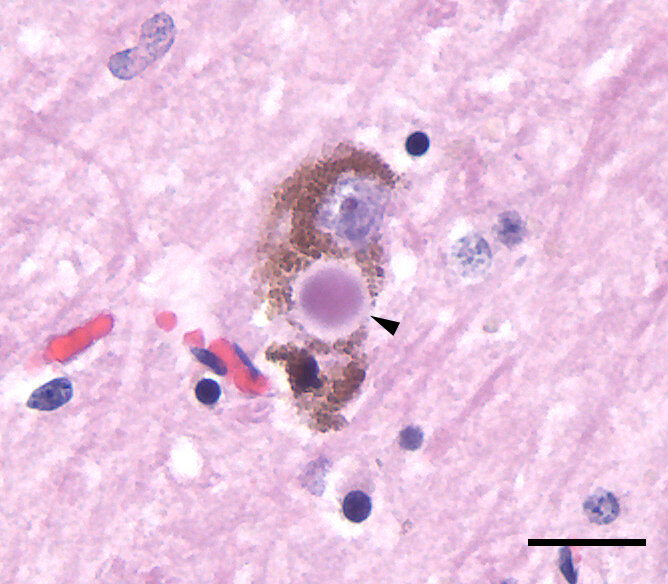
The presence of Lewy bodies is a classic hallmark of Parkinson's disease. Scientists believe these protein clumps disrupt normal cell function and contribute directly to the death of dopamine-producing neurons.
Signs and Symptoms
The symptoms of Parkinson's are typically divided into two categories: motor (related to movement) and non-motor. They usually start slowly and worsen over time.
The four main motor symptoms are tremor, slowness of movement, rigidity, and balance problems.
- Tremor: This often begins as a slight shaking in a hand or fingers, especially when at rest.
- Bradykinesia: This is a medical term for slowness of movement. It can make simple tasks difficult and time-consuming, and may appear as a shuffling walk or a loss of spontaneous facial expressions.
- Rigidity: Stiffness in the limbs, neck, or trunk can be painful and limit the range of motion.
- Postural Instability: Impaired balance and coordination can develop later in the disease, increasing the risk of falls.
Beyond the visible motor symptoms, people with Parkinson's also experience a wide range of non-motor symptoms. These can be just as challenging and include things like depression, anxiety, sleep disorders, loss of smell, and cognitive changes.
Diagnosis and Treatment
Diagnosing Parkinson's can be tricky, especially in its early stages. There isn't a single definitive test for it. A diagnosis is usually made by a neurologist based on a person's medical history, a review of their signs and symptoms, and a neurological and physical examination.
In some cases, a doctor might order a DaTscan, an imaging test that can help visualize the dopamine system in the brain. This can support a diagnosis but doesn't provide a definite yes or no on its own.
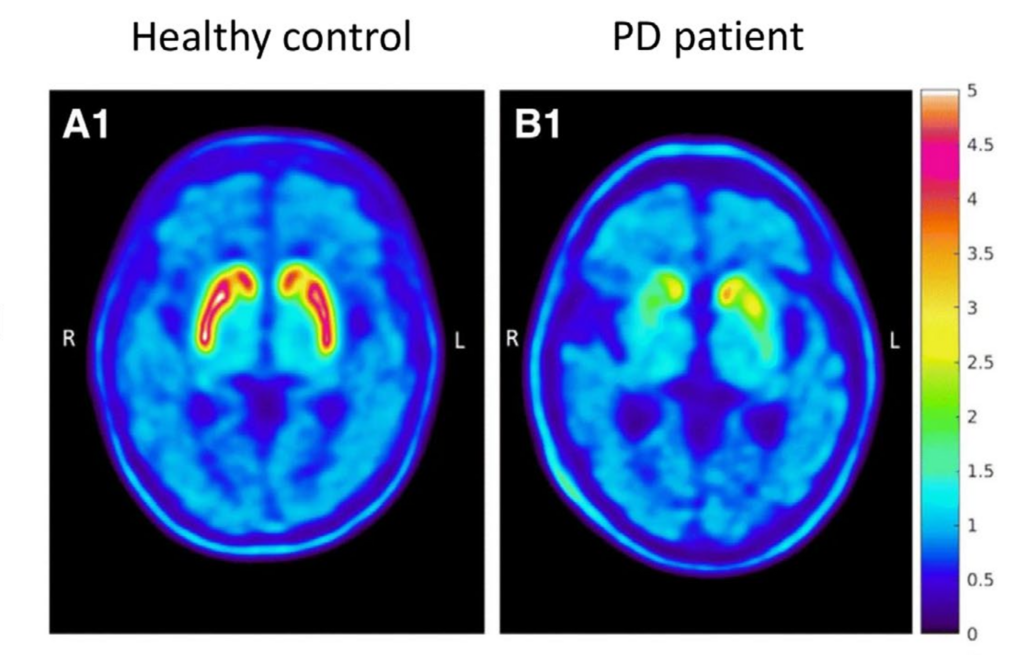
While there is currently no cure for Parkinson's disease, a variety of treatments can help manage the symptoms. The goal is to improve quality of life.
Treatments are divided into pharmacological (medication) and non-pharmacological (therapies and lifestyle) approaches.
The most common and effective medication for Parkinson's is levodopa. The body converts levodopa into dopamine, directly addressing the chemical shortage in the brain. Other medications work by mimicking dopamine or preventing its breakdown. Non-pharmacological treatments are also crucial. Physical therapy, occupational therapy, and speech therapy can help with balance, movement, and communication. Regular exercise is especially important for maintaining mobility and flexibility. In some advanced cases, a surgical procedure called Deep Brain Stimulation (DBS) may be an option to help control motor symptoms.
Time to review what we've covered.
What is the primary cause of the main motor symptoms, such as tremors and slowness of movement, in Parkinson's disease?
A key pathological hallmark of Parkinson's disease involves the misfolding of the alpha-synuclein protein into toxic aggregates. What are these clumps called?
Managing Parkinson's involves a comprehensive approach, combining medication, therapy, and lifestyle changes to address its wide-ranging symptoms.