Gulbarga A Karnataka Historical Journey
Early History
A Crossroads of Empires
Before it became the seat of a sultanate, the region now known as Kalaburagi was a prize sought by many of South India's most powerful dynasties. Its strategic location in the Deccan plateau made it a vital territory, a crossroads of culture and conflict for centuries.
From the 8th to the 10th centuries, the area fell under the vast domain of the Rashtrakuta dynasty. While not their capital, Kalaburagi was an important part of their core territory. The Rashtrakutas established a powerful kingdom with its capital at Manyakheta, modern-day Malkhed, just south of Kalaburagi. Their rule brought stability and fostered the growth of Kannada literature and impressive rock-cut architecture, like the Kailasa temple at Ellora.
The Age of the Chalukyas
Following the decline of the Rashtrakutas, power shifted to the Western Chalukyas in the late 10th century. They established their capital at Kalyani, today's Basavakalyan, which is also in the Kalaburagi region. This dynasty dominated the Deccan for nearly 200 years. During their reign, the area flourished, becoming a center for temple construction and the development of a unique architectural style that blended elements from both northern and southern India.
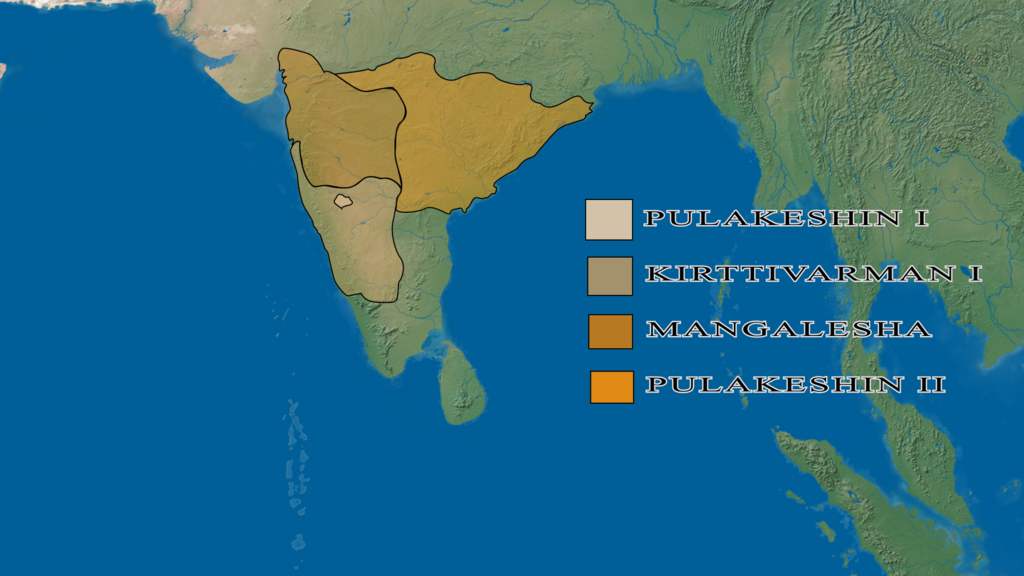
The Chalukyas' grip on power wasn't absolute. Their rule was briefly interrupted in the 12th century by the Kalachuris, a dynasty that initially served as their feudatories. The Kalachuris seized the throne at Kalyani and ruled for a short but socially transformative period. This era saw the rise of the social reformer Basavanna and the Lingayatism movement, which had a lasting impact on the region's culture and society.
A Contested Land
As the Chalukya-Kalachuri power waned, the Kalaburagi region became a battleground for emerging powers. Three major dynasties vied for control.
From the north, the Yadavas of Devagiri pushed south. From the south, the Hoysalas of Dwarasamudra expanded north. From the east, the Kakatiyas of Warangal exerted their influence.
This period was marked by constant warfare and shifting allegiances. The Yadavas and Hoysalas, in particular, fought fiercely over the fertile lands between the Krishna and Tungabhadra rivers, with the Kalaburagi area often at the heart of the conflict. The Kakatiyas, a powerful Telugu-speaking dynasty, also played a significant role, raiding and influencing the politics of the eastern parts of the region.
This prolonged struggle weakened all three kingdoms, leaving them vulnerable. By the end of the 13th century, the political landscape of the Deccan was fragmented, setting the stage for a new wave of conquerors and the beginning of a completely different chapter in Kalaburagi's history.
Let's review the key players in Kalaburagi's early history.
Which dynasty, ruling from their capital at Manyakheta, controlled the Kalaburagi region from the 8th to the 10th centuries?
The brief but socially transformative rule of which dynasty saw the rise of the reformer Basavanna and the Lingayatism movement?