Guitar Making Fundamentals
Introduction to Guitar Construction
The Anatomy of a Guitar
At its core, a guitar is a simple machine for making music. It's a collection of carefully chosen parts working together to turn the vibration of a string into sound. Whether acoustic or electric, all guitars share a fundamental structure.
Let's break down the four main sections.
- Body: This is the main part of the guitar. It anchors the strings and, in an acoustic guitar, its hollow chamber amplifies their sound. The shape and size of the body dramatically affect the guitar's tone and volume.
- Neck: The long piece of wood that extends from the body. Your fretting hand holds the neck to press down on the strings.
- Fretboard: A thin slab of wood glued to the front of the neck. It's embedded with metal strips called frets, which act as dividers to create different notes when you press a string against them.
- Headstock: Located at the end of the neck, the headstock holds the tuning pegs. These pegs adjust the tension of the strings, which changes their pitch.
Acoustic vs. Electric
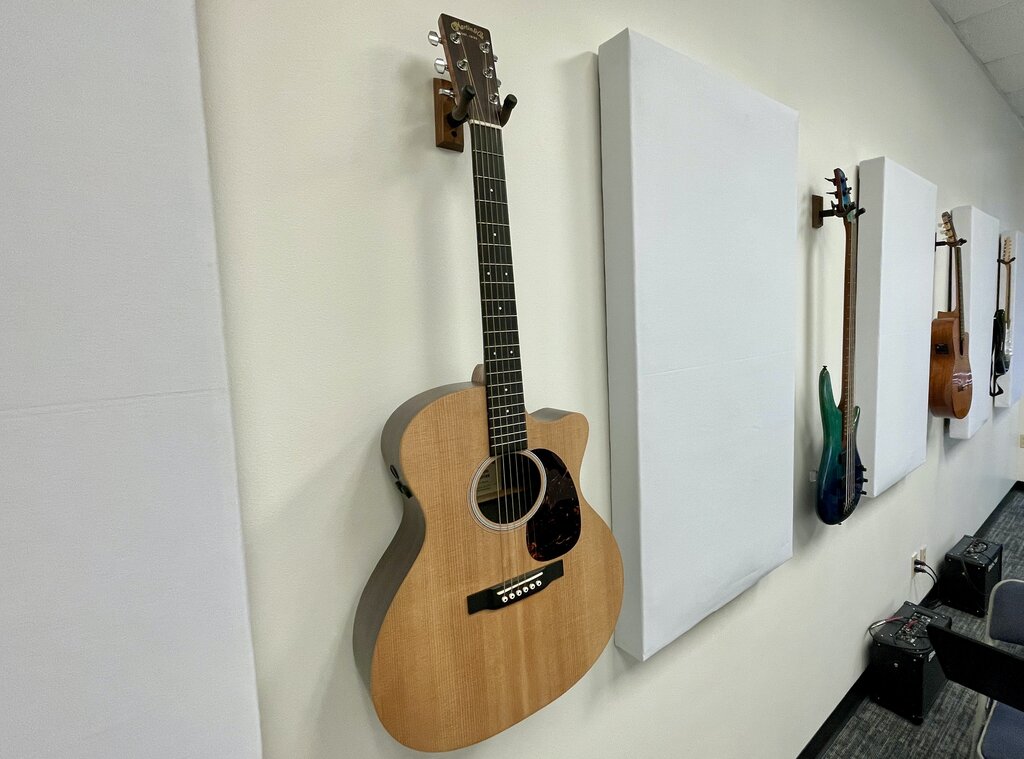
The most significant difference between an acoustic and an electric guitar is how they make sound. An acoustic guitar is a self-contained instrument. When you pluck a string, its vibration travels through the bridge to the guitar's top wood (the soundboard). The hollow body acts as a resonance chamber, naturally amplifying this vibration and projecting it out of the soundhole.
An electric guitar relies on technology. It has a solid or semi-hollow body that doesn't amplify the sound much on its own. Instead, it uses magnetic pickups, which are essentially small magnets wrapped in wire coils. When a metal string vibrates in the pickup's magnetic field, it creates a small electrical current. This signal is sent through a cable to an amplifier, which boosts it and plays it through a speaker.
This difference dictates their construction. Acoustic guitars must be lightweight and resonant, so they are built from thin pieces of wood carefully braced for strength. Electric guitars are typically made from solid slabs of wood, as resonance is less of a concern than sustain, which is the ability to hold a note for a long time.
Acoustic guitars create sound with air. Electric guitars create sound with electricity.
The Luthier's Palette
luthier
noun
A craftsperson who builds or repairs string instruments.
Guitar making, or lutherie, is an art of material science. The choice of wood is critical, especially for acoustic guitars, as it shapes the instrument's voice. Woods used for their acoustic properties are called tonewoods. Different species produce different sounds. For example, spruce is often used for acoustic tops because it's strong, light, and produces a clear, bright tone. Mahogany, used for backs and necks, offers a warmer, more mellow sound.
Electric guitars also use tonewoods like alder, ash, and maple, but their effect on the final sound is a topic of endless debate among players. Since the pickups and amplifier do most of the tonal heavy lifting, the wood's density and sustain are often considered more important than its resonant qualities.
Besides wood, guitars use metal for frets, tuning machines, and hardware. Plastic is common for nuts, saddles, and pickguards, which protect the body from scratches.
Tools of the Trade
Building a guitar requires a unique set of tools. While large factories use computer-controlled machines for precision and speed, many luthiers still rely on hand tools that have been used for centuries. These allow for a level of detail and customization that mass production can't always match.

Essential tools include saws for cutting wood to shape, hand planes for smoothing surfaces, chisels for carving joints and details, and various clamps for gluing pieces together. Specialized tools are also necessary, such as fret files for shaping the frets and reamers for fitting tuning pegs.
Each tool plays a specific role in transforming raw planks of wood into a responsive, playable musical instrument. It's a process that demands both precision and artistry.
Time to check what you've learned.
What is the primary function of the hollow body in an acoustic guitar?
An electric guitar generates its sound primarily through...
Understanding these basic elements of guitar construction gives you a foundation for appreciating the instrument on a deeper level.