Guitar Fundamentals for Beginners
Guitar Anatomy
Know Your Instrument
Before you can play a song, it helps to know your way around the guitar. Understanding its different parts will make learning easier and help you take better care of your instrument. Think of it like learning the names of your tools before starting a project.
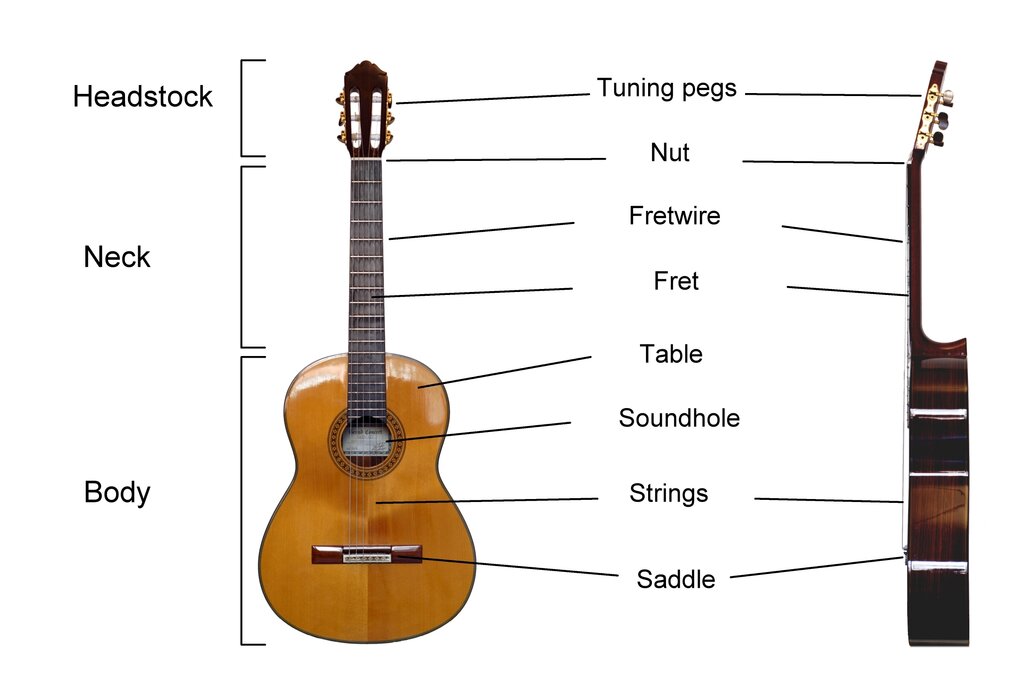
Let's break down the key parts you'll be using every time you play.
Body: This is the largest part of the guitar. On an acoustic guitar, the body is hollow and has a soundhole. When you pluck a string, the vibrations travel through the bridge to the body, which amplifies the sound naturally. The body of an electric guitar is typically solid and holds the electronic components that capture and transmit the sound.
Neck & Fretboard: The neck is the long piece of wood that extends from the body. The flat surface on the front of the neck is the fretboard. This is where you'll press down on the strings. The metal strips running across the fretboard are called frets. Pressing a string against a fret changes its length, which changes the note it plays.
Strings: Most guitars have six strings. They run from the bridge on the body to the tuning pegs on the headstock. When plucked or strummed, they vibrate to create sound. The thickest string produces the lowest note, and the thinnest string produces the highest.
Bridge: The bridge is located on the body and holds the strings in place. It transfers the vibrations from the strings into the guitar's body, which is crucial for creating the instrument's tone and volume.
Tuning Pegs: These are located on the headstock, at the very end of the neck. Each string is attached to a tuning peg. Turning a peg tightens or loosens its string, which raises or lowers its pitch. This is how you tune your guitar.
How to Hold the Guitar
Now that you know the parts, let's talk about how to hold the instrument. Proper posture isn't just about looking professional; it helps you play comfortably for longer and prevents bad habits that can lead to strain or injury.
Sit up straight in a chair without arms. Rest the curved part of the guitar's body on your right thigh if you're right-handed. The guitar's neck should point away from you, angled slightly upward. Your strumming arm should rest comfortably over the top of the body.

Your hands are where the magic happens, so their position is key.
Fretting Hand: This is the hand that presses the strings on the fretboard (usually your left hand for right-handed players). Your thumb should rest on the back of the neck, roughly opposite your middle finger. Use the tips of your other fingers to press down on the strings, keeping them curved like you're holding a ball. Aim to press just behind the fret, not on top of it.
Strumming Hand: This hand (usually your right) is responsible for creating the sound by strumming or picking the strings. It should hover over the soundhole or pickups. Whether you use a pick or your fingers, keep your wrist relaxed. A stiff wrist will make your playing sound rigid and can get tiring quickly.
Proper posture and holding the guitar correctly are essential for beginners to play comfortably and avoid strain.
Let's check what you've learned.
What is the primary function of the guitar's body?
Pressing a string against a metal fret changes its ______ to produce a different note.
Getting comfortable with your guitar's anatomy and how to hold it is the first real step in your journey. These fundamentals will support everything else you learn.