Guitar Fretboard Triads and Theory
Fretboard Basics
The Fretboard Roadmap
Think of the guitar neck as a grid. The six strings are tuned to specific pitches when you play them open, without pressing down on any frets. Standard tuning, from the thickest string (lowest pitch) to the thinnest (highest pitch), is E-A-D-G-B-E.
A common mnemonic to remember the string names is Eddie Ate Dynamite, Good Bye Eddie.
The metal strips along the neck are called frets. When you press a string down behind a fret, you shorten its vibrating length, which raises its pitch. Each fret you move up the neck raises the pitch by one half-step, also called a semitone.
The musical alphabet consists of seven notes: A, B, C, D, E, F, and G. After G, the cycle repeats with A, but at a higher pitch. Between most of these notes are sharps (♯) or flats (♭). For example, the note between G and A is G♯ (G-sharp) or A♭ (A-flat).
There are two exceptions: there is no sharp between B and C, and no sharp between E and F. These pairs are natural half-steps, meaning they are only one fret apart. The full chromatic sequence looks like this:
A - A♯/B♭ - B - C - C♯/D♭ - D - D♯/E♭ - E - F - F♯/G♭ - G - G♯/A♭
Finding Any Note
With this information, you can find any note on the fretboard. Start with the name of the open string and count up one half-step for each fret.
For example, let's find the note G on the 6th string (the low E string). The open string is E. The first fret is F (a natural half-step). The second fret is F♯. The third fret is G. It's that simple.
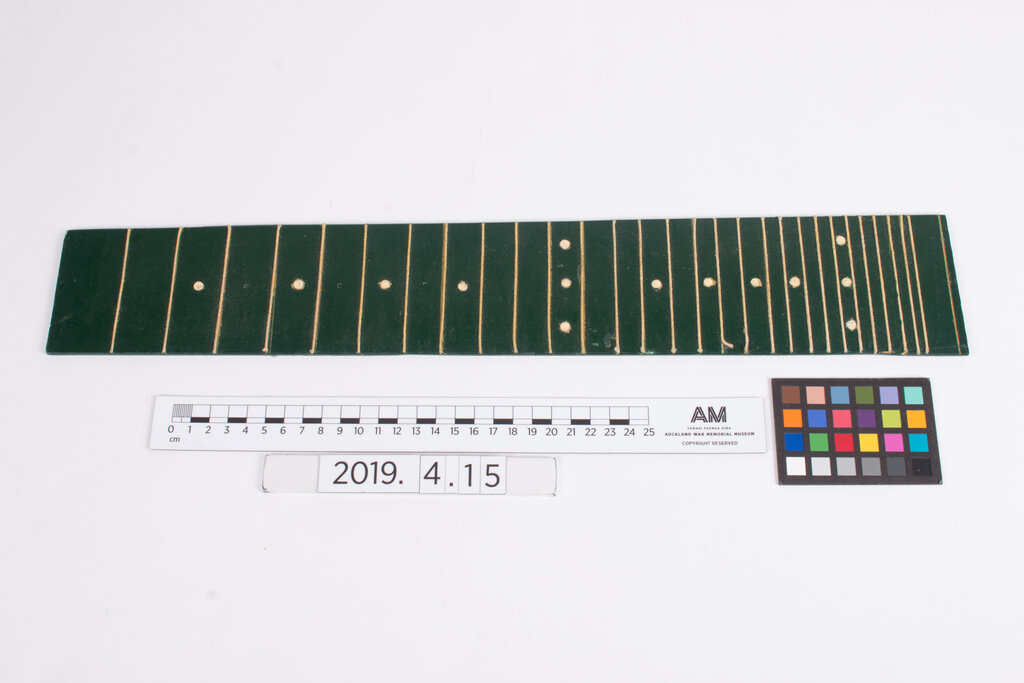
You'll notice that the 12th fret of any string is the same note as the open string, just one octave higher. The pattern of notes from the open string to the 11th fret repeats starting from the 12th fret. This makes the 12th fret a crucial landmark. Most guitars have double dots on the fretboard to mark it.
Memorization Tricks
Memorizing the fretboard is one of the toughest areas of learning the guitar that you will encounter.
Trying to memorize every note at once can be overwhelming. Instead, use a few simple tricks to break it down into manageable pieces.
1. Learn the Natural Notes First: Focus only on the notes A, B, C, D, E, F, and G. Once you have those down, filling in the sharps and flats is easy because they are just one fret away.
2. Master the E and A Strings: Many fundamental concepts in guitar, like barre chords and scales, are built from root notes on the two lowest strings (E and A). If you know these two strings well, you have a strong foundation for the rest of the neck.
3. Use Octave Shapes: An octave is the same note at a higher or lower pitch. You can find octaves all over the fretboard using consistent shapes. For example, if you find a note on the low E string, you can find its octave two strings higher (on the D string) and two frets up.
This trick works for notes starting on the E and A strings. A slightly different shape applies elsewhere, but mastering this one gives you a powerful tool for navigating the neck.
Don't try to rush it. Learning the fretboard is a gradual process. Spend a few minutes each day identifying notes, and soon the layout will become second nature.