Guitar for Seniors
Guitar Basics
Finding Your First Guitar
Choosing the right guitar is the most important first step. A comfortable instrument makes learning enjoyable and is much kinder to your hands and fingers. The goal is to find a guitar that feels like a partner, not a challenge.
There are a few types to consider. Classical guitars use nylon strings, which are softer and easier to press down than the steel strings found on most acoustic guitars. This can make a big difference if you have stiff or sensitive fingers.
If you prefer the sound of a steel-string acoustic, look for a smaller body size, sometimes called a "concert" or "parlor" guitar. They are easier to hold than larger dreadnought models. Also, ask for one with "light-gauge" strings, as they require less pressure.
Electric guitars are another great option. They have the thinnest strings and the lowest tension, making them the easiest type to play physically.
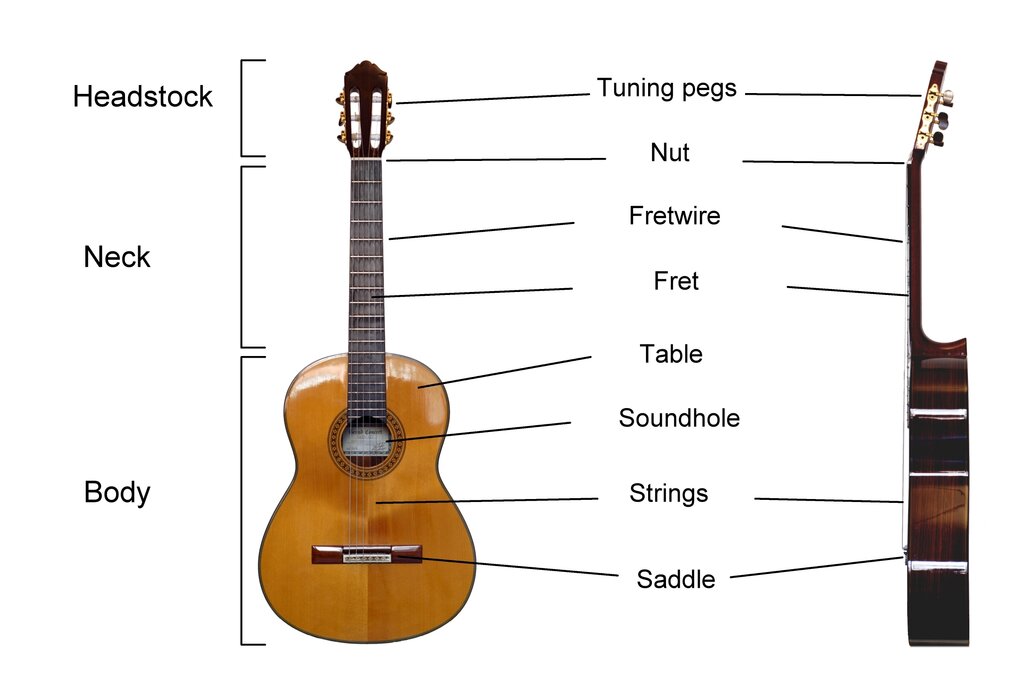
Regardless of the type you choose, ask about the guitar's "action." This refers to the height of the strings from the fretboard. A lower action makes the strings much easier to press. Most new guitars benefit from a professional "setup" at a music store, where a technician can adjust the action to make it as comfortable as possible.
One of the most overlooked mistakes beginners make is starting with a guitar that’s too big, too heavy, or simply uncomfortable.
Holding the Guitar Comfortably
How you hold your guitar is just as important as the instrument itself. Good posture prevents soreness in your back, neck, and shoulders, allowing you to practice for longer without discomfort.
Find a sturdy chair without arms and sit toward the front edge, with both feet flat on the floor. Most players rest the waist of the guitar on their right thigh (for a right-handed player). Your strumming arm should rest gently over the top of the guitar's body, letting your hand fall naturally over the soundhole. Your fretting hand should support the neck, with your thumb resting on the back.

Avoid hunching your shoulders or letting your fretting-hand wrist bend at a sharp angle. The key is to stay relaxed. A guitar strap can be helpful, even when sitting, as it helps support the instrument's weight and keeps it in the ideal position.
The guitar should feel balanced and secure, so your hands are free to focus on playing, not on holding it up.
Your First Strums
Strumming is the rhythmic engine of most guitar music. It's a simple motion, but doing it well makes everything sound better. You can use your thumb or a pick. A thin pick is often a good place to start, as it's more flexible and forgiving.

Let's begin with the simplest strum: a downstroke. Mute the strings by lightly resting your fretting-hand fingers across them. Now, using your pick or thumb, brush down across all six strings. The motion should come from your wrist, not your whole arm. Try to hit all the strings evenly. Do this over and over, counting a steady "1, 2, 3, 4."
Downstroke Practice: 1, 2, 3, 4 (Strum down on each beat)
Once you're comfortable with downstrokes, you can add upstrokes. The upstroke happens on the "and" between the beats. It's a lighter, quicker motion, brushing up across the strings.
A classic beginner pattern is Down-Down-Up-Up-Down-Up. Practice it slowly until the rhythm feels natural.
Beginner Strumming Pattern: 1, 2-and, 3-and, 4 (Down, Down-Up, Down-Up, Down)
Begin each pattern slowly, focusing on hitting the right strings cleanly.
Don't worry about chords yet. The goal right now is to build a steady, comfortable rhythm. Once this motion feels automatic, adding chords will be much easier.
Now, let's test what you've learned.
For a beginner with sensitive fingers, which type of guitar is often recommended because its strings are softer and easier to press?
What does a guitar's "action" refer to?
Starting a new instrument is an adventure. Be patient with yourself, focus on comfort, and enjoy the process of making music.