Growth Stage Investing Diligence
Growth Stage VC Overview
Beyond the Startup Phase
Venture capital isn't just for brand-new companies with a bold idea. Once a business has a proven product and a steady stream of customers, it enters a new phase: the growth stage. This is where a different kind of funding comes in, known as growth stage venture capital or growth equity.
Think of it this way: early-stage investing is like funding the construction of a single, powerful race car. Growth stage investing is about building the factory to produce thousands of them.
At this point, the company has moved past the initial uncertainty. It has found what's called product-market fit—a real demand for what it sells. The primary goal is no longer to prove the concept, but to scale it aggressively. This means expanding into new markets, hiring more staff, and investing heavily in marketing and sales to capture a larger share of the market.
growth capital
noun
Financing provided to relatively mature companies that are looking to expand or restructure operations, enter new markets, or finance a major acquisition without a change of control of the business.
Spotting a Growth Stage Company
So what separates a growth stage company from an early-stage startup? The key difference is the reduction of risk. Early-stage investors are betting on an idea and a team. Growth stage investors are betting on a proven business model with clear traction.
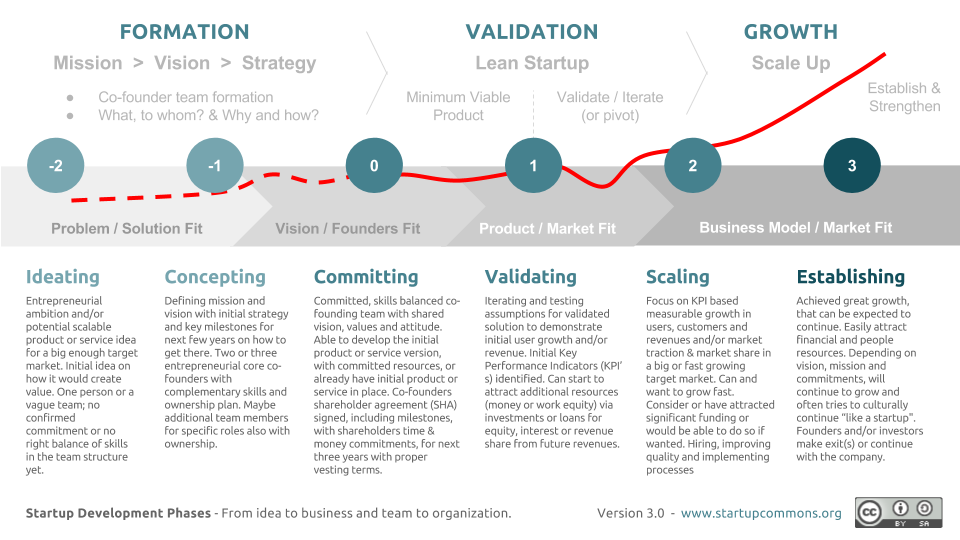
Companies at this stage have predictable revenue streams and a solid customer base. They have figured out how to acquire customers efficiently and can demonstrate that the value of a customer over their lifetime is significantly higher than the cost to acquire them. The main challenge is no longer survival, but effective and rapid expansion.
| Characteristic | Early-Stage Company | Growth-Stage Company |
|---|---|---|
| Primary Goal | Prove the business model | Scale the business model |
| Revenue | Little to none; inconsistent | Significant and growing predictably |
| Product | Minimum Viable Product (MVP) | Fully developed and validated |
| Key Risk | Product-market fit risk | Execution and competition risk |
| Team Size | Small, often just founders | Expanding, with specialized roles |
The Investor's Role
Investors at the growth stage do more than just write checks. Since the focus is on scaling, these investors often bring deep operational experience to the table. They've seen how other companies have navigated similar growth paths and can provide valuable guidance.
VCs often take an active role in mentoring founders, offering strategic guidance, and leveraging their networks to facilitate partnerships and market entry strategies.
Their involvement can be hands-on. A growth stage investor might help a company:
- Recruit executives: Finding a Chief Financial Officer (CFO) or Vice President of Sales with experience in scaling is crucial.
- Optimize operations: Improving efficiency in everything from manufacturing to customer support to handle increased demand.
- Prepare for the future: Offering strategic advice on major decisions, like expanding internationally or even preparing for an acquisition or an Initial Public Offering (IPO).
The relationship is a partnership aimed at turning a successful small business into a major market leader. The capital provides the fuel, and the investor's expertise helps steer the ship through the turbulent waters of rapid growth.
What is the primary goal of a company that receives growth stage venture capital?
The key difference between an early-stage and a growth-stage company for an investor is the reduction of risk.
Growth stage investing bridges the gap between a promising startup and an established market player, providing the resources and expertise needed to scale successfully.