Growth Marketing Fundamentals
Introduction to Growth Marketing
Beyond Traditional Marketing
Marketing used to be a lot simpler. You'd buy an ad, hope people saw it, and cross your fingers that sales would go up. The main goal was building brand awareness. But the digital world changed the game. Now, we can track almost everything. This shift gave rise to a new approach: growth marketing.
Growth marketing isn't just about getting your name out there. It's a data-driven process focused on one thing: growing a business. Instead of only focusing on attracting new customers, it looks at the entire customer journey, from the first time someone hears about a product to the moment they become a loyal fan. This entire path is often called the marketing funnel.
Marketing Funnel
noun
A model that illustrates the customer's journey with a business, from initial awareness through to purchase and beyond.
Think of traditional marketing as fishing with a giant net. You cast it wide and hope you catch something. Growth marketing is more like spear fishing. It's precise, targeted, and every action is measured to see if it worked. It’s a mindset focused on continuous improvement.
| Feature | Traditional Marketing | Growth Marketing |
|---|---|---|
| Focus | Brand awareness, top of funnel | Entire customer journey |
| Approach | Campaign-based, broad reach | Experiment-based, targeted |
| Decision Making | Based on experience, gut feelings | Based on data and analytics |
| Timeline | Long-term campaigns | Short, rapid cycles of testing |
| Team | Siloed marketing department | Cross-functional team (eng, data) |
The Growth Mindset
At its core, growth marketing is guided by a few key principles. It's less a list of tactics and more a way of thinking about how a business grows.
First, it's relentlessly customer-centric. Growth doesn't come from tricking people into buying something. It comes from deeply understanding what a customer needs and then delivering it. The entire process is geared toward solving real problems for real people.
Your product, your messaging, and your user experience are all built around the customer's world, not the other way around.
Second, it's data-driven. Every decision is a hypothesis waiting to be tested. Instead of saying, "I think this headline will work better," a growth marketer says, "Let's test this new headline against our current one and see what the data tells us." Opinions are fine, but data wins the argument.
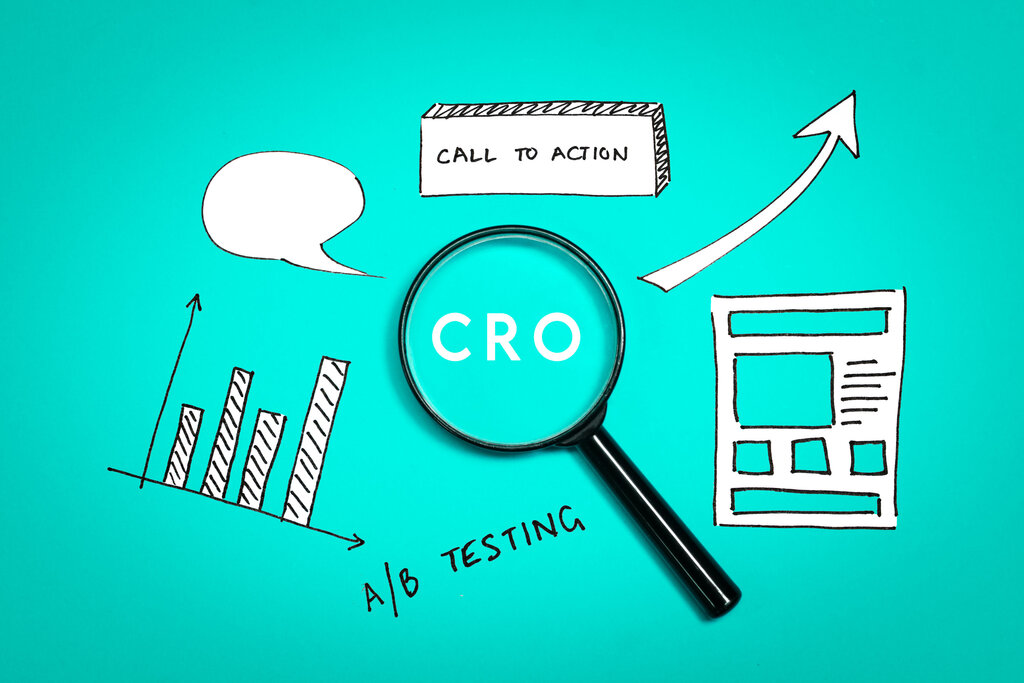
This leads to the third and most important principle: rapid experimentation. Growth is found through a constant process of trying new things, measuring the results, and learning from them. This is often done through A/B tests, where you show two different versions of something (like a webpage or an email) to different users to see which one performs better. The goal is to learn quickly, discard what doesn't work, and double down on what does.
Combined with decision-making velocity, customer obsession, and also with relentless experimentation, these tools become startup accelerators.
It Takes a Team
Because growth marketing touches the entire customer journey, it can't be handled by the marketing department alone. It requires a cross-functional team that breaks down the traditional silos between departments.
A typical growth team might include marketers, engineers, data analysts, and product managers. Why? Because a growth experiment might not be a new ad campaign. It could be a change to the product's sign-up flow, a new feature to encourage sharing, or a tweak to the pricing model. You need engineers to build it, analysts to measure it, and product managers to guide it. Everyone works together toward the same goal: scalable growth.
This collaborative approach allows the team to move quickly and test ideas across the entire business, finding growth opportunities that would otherwise be missed.
Time to check what you've learned.
What is the primary focus of growth marketing that distinguishes it from traditional marketing?
According to the principles of growth marketing, what is the best way to validate a new idea for a website headline?
Growth marketing is a fundamental shift in how businesses approach customer acquisition and retention. By focusing on data, experimentation, and the full customer journey, it creates a sustainable, scalable engine for growth.