Growth Hacking for Two-Sided Marketplaces
Introduction to Growth Hacking
What is Growth Hacking?
Growth hacking isn't just a buzzword for marketing. It's a mindset and a method focused entirely on one thing: growth. A traditional marketer might focus on brand awareness or public relations, but a growth hacker uses data, creativity, and technology to find scalable ways to acquire and retain users.
Think of it like this: a traditional marketer is a painter creating a beautiful billboard, hoping people see it. A growth hacker is a scientist in a lab, constantly running experiments to find the most effective formula for growth, then scaling it up.
This approach involves looking at the entire customer journey, not just the top of the funnel. It blends marketing, product development, and data analysis to turn every part of the business into a growth engine. The goal is to build growth mechanisms directly into the product itself.
Core Principles
Growth hacking is guided by a few key principles that distinguish it from traditional marketing.
Experimentation
noun
The practice of constantly testing new ideas (hypotheses) to discover what works best. This involves a cycle of ideating, prioritizing, testing, and analyzing results to make data-informed decisions.
First, it's data-driven. Every decision is based on measurable results. Instead of relying on gut feelings, growth hackers track metrics obsessively to understand user behavior and validate their strategies.
Second, it embraces rapid experimentation. The process involves quickly testing new channels, messages, and product features in small-scale experiments. Winning ideas are scaled up, while failures are discarded without wasting resources.
Finally, growth hacking focuses on the entire customer funnel. It's not enough to attract visitors; a growth hacker works to convert them into active, engaged users who refer others. This holistic view ensures that efforts are directed where they'll have the biggest impact on sustainable growth.
The Two-Sided Marketplace Puzzle
A two-sided marketplace is a platform that connects two distinct groups of users who provide each other with value. Think of Uber (riders and drivers), Airbnb (guests and hosts), or eBay (buyers and sellers). These platforms don't create the inventory themselves; they create the connection.
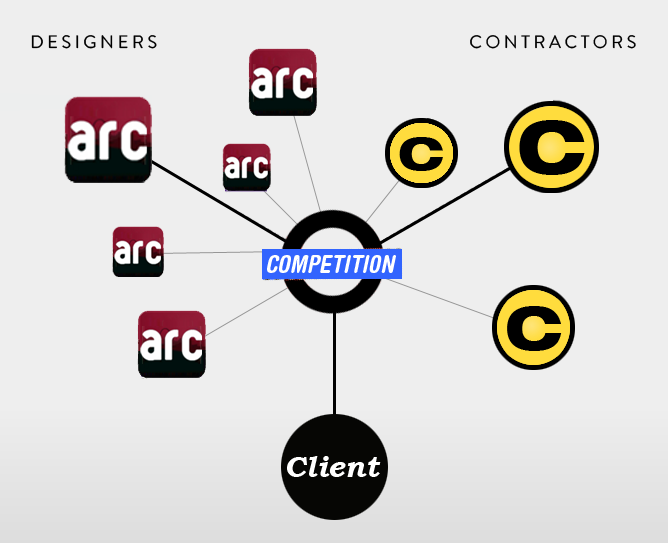
The biggest hurdle for any new marketplace is the classic "chicken-and-egg" problem. How do you attract buyers if there are no sellers? And how do you attract sellers if there are no buyers? You need both to create a functioning market, but each group's decision to join depends on the presence of the other.
Solving this puzzle is the first and most critical challenge. You can't just launch and hope both sides show up. You must have a deliberate strategy to build one side of the market first, or both in tandem.
Challenges and Opportunities
Beyond the initial chicken-and-egg problem, two-sided marketplaces face unique challenges. You have to balance supply and demand carefully. Too many drivers and not enough riders leads to frustrated drivers. Too many riders and not enough drivers leads to a poor customer experience. Trust is also paramount, as the platform is responsible for facilitating transactions between strangers.
However, the opportunities are massive. Once a marketplace reaches critical mass, it benefits from powerful network effects. This means that with each new user that joins, the platform becomes more valuable for every other user. A rideshare app with one driver is useless, but one with thousands is indispensable. This creates a powerful competitive advantage, often called a "moat," that makes it very difficult for new players to compete.
Growth hacking provides the framework for overcoming these challenges and unlocking the power of network effects. It's about finding the right lever to pull—like subsidizing one side of the market or focusing on a hyper-specific niche to start—to get the flywheel spinning.